6,99 €
6,99 €
inkl. MwSt.
Sofort per Download lieferbar

0 °P sammeln
6,99 €
Als Download kaufen
6,99 €
inkl. MwSt.
Sofort per Download lieferbar
0 °P sammeln
Jetzt verschenken
Alle Infos zum eBook verschenken
6,99 €
inkl. MwSt.
Sofort per Download lieferbar
Alle Infos zum eBook verschenken
0 °P sammeln

Andere Kunden interessierten sich auch für
") Spain on the Table (eBook, ePUB)6,99 €
Spain on the Table (eBook, ePUB)6,99 €") The Chocolate Compendium (eBook, ePUB)6,99 €
The Chocolate Compendium (eBook, ePUB)6,99 €") The United plates of America (eBook, ePUB)6,99 €
The United plates of America (eBook, ePUB)6,99 €") The art of the dough (eBook, ePUB)6,99 €
The art of the dough (eBook, ePUB)6,99 €") L'Italia a Tavola (eBook, ePUB)6,99 €
L'Italia a Tavola (eBook, ePUB)6,99 €") The Sephardic Kitchen in Europe (eBook, ePUB)6,99 €
The Sephardic Kitchen in Europe (eBook, ePUB)6,99 €") The Lamb Manual (eBook, ePUB)6,99 €
The Lamb Manual (eBook, ePUB)6,99 €



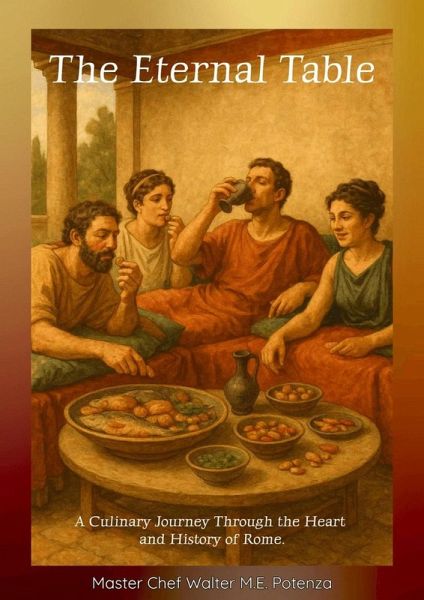
This book delves into the rich tapestry of Roman cuisine, tracing its evolution over three thousand years. It begins by examining the historical influences that have shaped food in Rome, from the basic grain dishes consumed by early soldiers to the exotic flavors introduced through imperial trade routes. The narrative highlights the significant contributions of the Jewish-Roman community and celebrates the enduring principles of cucina povera, which reflect the heart and soul of Rome's culinary identity. A tribute to essential ingredients follows, focusing on key components such as guanciale and pecorino. This section emphasizes how local and seasonal produce forms the foundation of Roman cooking, arguing that true culinary magic arises from a few high-quality ingredients rather than complex preparations. The exploration continues beyond individual dishes to encompass daily life in Rome. It paints a vivid picture of bustling markets and neighborhood trattorias, illustrating how communal meals play a vital role in family dynamics and social interactions within the city. The book then turns its focus to four iconic pasta dishes-Carbonara, Amatriciana, Gricia, and Cacio e Pepe-providing an in-depth analysis of their historical significance and preparation techniques. These pastas are presented as quintessential representations of Roman culinary philosophy. Finally, it broadens its scope to include diverse secondi dishes and street food culture in Rome. Highlighting innovative "nose-to-tail" practices alongside beloved street snacks like supplì and pizza al taglio, this work captures the vibrant essence of eating in one of the world's most storied cities.
Dieser Download kann aus rechtlichen Gründen nur mit Rechnungsadresse in A, B, CY, CZ, D, DK, EW, E, FIN, F, GR, H, IRL, I, LT, L, LR, M, NL, PL, P, R, S, SLO, SK ausgeliefert werden.