Sie sind bereits eingeloggt. Klicken Sie auf 2. tolino select Abo, um fortzufahren.
Bitte loggen Sie sich zunächst in Ihr Kundenkonto ein oder registrieren Sie sich bei bücher.de, um das eBook-Abo tolino select nutzen zu können.
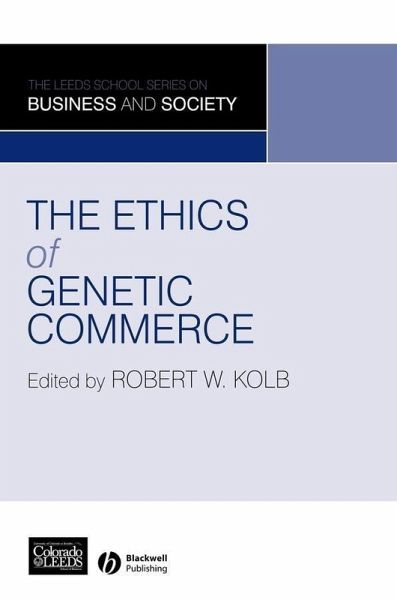
Our rapidly expanding genetic knowledge today points toward a near future in which the elements of humanity closest to our moral core may themselves be produced, manipulated, commodified, and exchanged. * * Explores the moral and ethical concerns derived from an increasing knowledge of genetics and the variety of its commercial applications * A major contribution to the emerging understanding of the role that ethics will play in genetic commerce * Written by experts from the academic and corporate sector, with diverse backgrounds in business, social science, and philosophy * Addresses a range…mehr
Our rapidly expanding genetic knowledge today points toward a near future in which the elements of humanity closest to our moral core may themselves be produced, manipulated, commodified, and exchanged. * * Explores the moral and ethical concerns derived from an increasing knowledge of genetics and the variety of its commercial applications * A major contribution to the emerging understanding of the role that ethics will play in genetic commerce * Written by experts from the academic and corporate sector, with diverse backgrounds in business, social science, and philosophy * Addresses a range of relevant issues, including genetic screening, the use of individual's genetic information, the rise of genetically modified foods, patenting, pharmaceutical mergers and monopolization, and the implications of genetic testing on non-human mammals
Dieser Download kann aus rechtlichen Gründen nur mit Rechnungsadresse in D ausgeliefert werden.
Die Herstellerinformationen sind derzeit nicht verfügbar.
Autorenporträt
Robert W. Kolb holds the Frank W. Considine Chair in Applied Ethics at Loyola University Chicago. He was formerly Assistant Dean for Business and Society (2003-2006) at the University of Colorado, and John S. and James L. Knight Professor of Finance at the University of Miami. He is author and co-author of numerous texts in finance, including Futures, Options, and Swaps, 5e (with James A. Overdahl, Blackwell, 2007) and Understanding Futures Markets, 6e (with James A. Overdahl, Blackwell, 2006).
Inhaltsangabe
Preface. Part I: Genetic Screening. 1. Is a Genetics Screening Program for Job Applicants Ethical? An Analysis of the Conditions Necessary for Required Genetic Screenings in the Hiring Process (Thomas Harter). 2. The Business of Genetic Screening (Duane Windsor). 3. Genetic Commerce: The Challenges for Human Resource Management (Karen S. Markel and Lizabeth A. Barclay). 4. Geneticize Me! The Case for Direct-to-Consumer Genetic Testing (Ronald Munson). 5. Proscription, Prescription, or Market Process? Comments on Genetic Screening (Eugene Heath). Part II: Genetically Modified Foods. 6. Transgenic Organisms, the European Union, and the World Trade Organization(Dennis Cooley). 7. Commercialization of the Agrarian Ideal and Arguments against the New "Green Revolution: Feeding the World with "Frankenfoods"? (Johann A. Klaasen). 8. Corporate Decisions about GM Food Labeling (Chris MacDonald and Melissa Whellams). 9. Moral Imagination, Stakeholder Engagement, and Genetically Modified Organisms (Denis Arnold). Part III: Corporate Governance and Genetic Commerce. 10. Who Owns My Ideas About Your Body? (Asher Meir). 11. Pharmaceutical Mergers and Genetic Technology: A Problematic Combination (Michael Potts). 12. Stakeholder Care Theory: The Case of Genetic Engineering (Jamie R. Hendry). 13. Unresolved Issues and Further Questions: Meir, Potts and Hendry (Laura Hartman)
Preface. Part I: Genetic Screening. 1. Is a Genetics Screening Program for Job Applicants Ethical? An Analysis of the Conditions Necessary for Required Genetic Screenings in the Hiring Process (Thomas Harter). 2. The Business of Genetic Screening (Duane Windsor). 3. Genetic Commerce: The Challenges for Human Resource Management (Karen S. Markel and Lizabeth A. Barclay). 4. Geneticize Me! The Case for Direct-to-Consumer Genetic Testing (Ronald Munson). 5. Proscription, Prescription, or Market Process? Comments on Genetic Screening (Eugene Heath). Part II: Genetically Modified Foods. 6. Transgenic Organisms, the European Union, and the World Trade Organization(Dennis Cooley). 7. Commercialization of the Agrarian Ideal and Arguments against the New "Green Revolution: Feeding the World with "Frankenfoods"? (Johann A. Klaasen). 8. Corporate Decisions about GM Food Labeling (Chris MacDonald and Melissa Whellams). 9. Moral Imagination, Stakeholder Engagement, and Genetically Modified Organisms (Denis Arnold). Part III: Corporate Governance and Genetic Commerce. 10. Who Owns My Ideas About Your Body? (Asher Meir). 11. Pharmaceutical Mergers and Genetic Technology: A Problematic Combination (Michael Potts). 12. Stakeholder Care Theory: The Case of Genetic Engineering (Jamie R. Hendry). 13. Unresolved Issues and Further Questions: Meir, Potts and Hendry (Laura Hartman)
Rezensionen
"These essays demonstrate the critical importance of applied ethicsas we all grapple with the biotechnology revolution. These scholarsuse ethics to illustrate the conflicts that emerge fromcommercializing genetic technologies and to indicate how moralreasoning could help society make better decisions about how todeploy them. A much needed contribution to understanding theexpanding role of genetic technologies in our world." Keith Douglass Warner, Santa ClaraUniversity
Es gelten unsere Allgemeinen Geschäftsbedingungen: www.buecher.de/agb
Impressum
www.buecher.de ist ein Internetauftritt der buecher.de internetstores GmbH
Geschäftsführung: Monica Sawhney | Roland Kölbl | Günter Hilger
Sitz der Gesellschaft: Batheyer Straße 115 - 117, 58099 Hagen
Postanschrift: Bürgermeister-Wegele-Str. 12, 86167 Augsburg
Amtsgericht Hagen HRB 13257
Steuernummer: 321/5800/1497
USt-IdNr: DE450055826