Mim Carlson, Margaret Donohoe
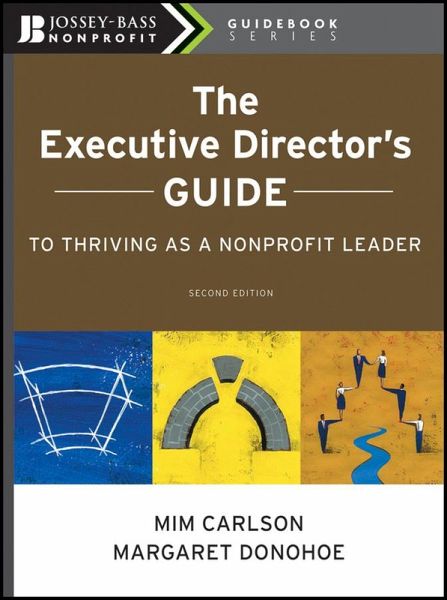
The Executive Director's Guide to Thriving as a Nonprofit Leader (eBook, ePUB)
29,99 €
29,99 €
inkl. MwSt.
Sofort per Download lieferbar

0 °P sammeln
29,99 €
Als Download kaufen
29,99 €
inkl. MwSt.
Sofort per Download lieferbar
0 °P sammeln
Jetzt verschenken
Alle Infos zum eBook verschenken
29,99 €
inkl. MwSt.
Sofort per Download lieferbar
Alle Infos zum eBook verschenken
0 °P sammeln
Mim Carlson, Margaret Donohoe
The Executive Director's Guide to Thriving as a Nonprofit Leader (eBook, ePUB)
- Format: ePub
- Merkliste
- Auf die Merkliste
- Bewerten Bewerten
- Teilen
- Produkt teilen
- Produkterinnerung
- Produkterinnerung

Bitte loggen Sie sich zunächst in Ihr Kundenkonto ein oder registrieren Sie sich bei
bücher.de, um das eBook-Abo tolino select nutzen zu können.
Hier können Sie sich einloggen
Hier können Sie sich einloggen
Sie sind bereits eingeloggt. Klicken Sie auf 2. tolino select Abo, um fortzufahren.
Bitte loggen Sie sich zunächst in Ihr Kundenkonto ein oder registrieren Sie sich bei bücher.de, um das eBook-Abo tolino select nutzen zu können.
As the position of nonprofit ED becomes more demanding, there is a need for an up-to-date resource. This revised edition of the best-selling book is filled with management advice for succeeding as an executive director. This new edition includes thoroughly updated information and new content. It covers topics on timely issues and practical strategies including: Avoiding Burnout, Accountability, Professional Networking, Financial Literacy, Measuring Effectiveness, and much more. Ideal for ED s and board members, the book also includes new cases and stories from the field and practical tips sidebars.…mehr
- Geräte: eReader
- mit Kopierschutz
- eBook Hilfe
- Größe: 6.89MB
Andere Kunden interessierten sich auch für
") Mim CarlsonThe Executive Director's Guide to Thriving as a Nonprofit Leader (eBook, PDF)29,99 €
Mim CarlsonThe Executive Director's Guide to Thriving as a Nonprofit Leader (eBook, PDF)29,99 €") BoardsourceThe Nonprofit Board Answer Book (eBook, ePUB)34,99 €
BoardsourceThe Nonprofit Board Answer Book (eBook, ePUB)34,99 €") June J. BradhamThe Truth About What Nonprofit Boards Want (eBook, ePUB)40,99 €
June J. BradhamThe Truth About What Nonprofit Boards Want (eBook, ePUB)40,99 €") Alison GreenManaging to Change the World (eBook, ePUB)25,99 €
Alison GreenManaging to Change the World (eBook, ePUB)25,99 €") Patrick DunneNon-Executive Director's Handbook (eBook, ePUB)67,95 €
Patrick DunneNon-Executive Director's Handbook (eBook, ePUB)67,95 €") BoardsourceThe Handbook of Nonprofit Governance (eBook, ePUB)89,99 €
BoardsourceThe Handbook of Nonprofit Governance (eBook, ePUB)89,99 €") Caroline OliverGetting Started with Policy Governance (eBook, ePUB)40,99 €
Caroline OliverGetting Started with Policy Governance (eBook, ePUB)40,99 €-
-
-

As the position of nonprofit ED becomes more demanding, there is a need for an up-to-date resource. This revised edition of the best-selling book is filled with management advice for succeeding as an executive director. This new edition includes thoroughly updated information and new content. It covers topics on timely issues and practical strategies including: Avoiding Burnout, Accountability, Professional Networking, Financial Literacy, Measuring Effectiveness, and much more. Ideal for ED s and board members, the book also includes new cases and stories from the field and practical tips sidebars.
Dieser Download kann aus rechtlichen Gründen nur mit Rechnungsadresse in D ausgeliefert werden.
Produktdetails
- Produktdetails
- Verlag: Wiley
- Erscheinungstermin: 24. Mai 2010
- Englisch
- ISBN-13: 9780470603932
- Artikelnr.: 38209647
- Verlag: Wiley
- Erscheinungstermin: 24. Mai 2010
- Englisch
- ISBN-13: 9780470603932
- Artikelnr.: 38209647
- Herstellerkennzeichnung Die Herstellerinformationen sind derzeit nicht verfügbar.
Mim Carlson is the former executive director of the Berkeley-East Bay Humane Society and is currently interim executive director at Florence Crittenton Services (www.linkedin.com/companies/florence-crittenton-services). With over twenty-five years of experience as a manager and grantwriter, Carlson has trained and consulted nationally and is a former faculty member at the University of San Francisco and California State University, Hayward.
Margaret Donohoe is a nonprofit consultant who focuses her experience, insight, and energy on helping a new generation of nonprofit leaders navigate the many opportunities and challenges of this career choice. She has more than twenty-five years' experience in the sector as an executive director, interim director for organizations in transition, and community board member.
Margaret Donohoe is a nonprofit consultant who focuses her experience, insight, and energy on helping a new generation of nonprofit leaders navigate the many opportunities and challenges of this career choice. She has more than twenty-five years' experience in the sector as an executive director, interim director for organizations in transition, and community board member.
Exhibits xv
Preface xvii
Acknowledgments xxv
The Authors xxvii
Part One Finding Your Way as Executive Director 1
One Understanding This Big Job 3
What are the roles and responsibilities of an Executive Director? 4
What is the difference between a leader and a manager? 8
When should an Executive Director lead, manage, or support others? 10
Two Developing as an Executive Director 15
What can Executive Directors do to self-reflect on skills they wish to
develop on the job? 16
How does an Executive Director find the time for professional development,
and what opportunities are available? 18
When are executive coaches helpful to an Executive Director? 22
When the going gets really tough, how does an Executive Director stay
inspired? 27
Three Finding Balance in the Role of Executive Director 31
Why are Executive Directors so susceptible to burnout? 32
How can I find balance as an Executive Director? 33
How do I set boundaries on my work life so I still have a personal life? 36
Where do I find the time to do everything an Executive Director has to do?
40
How can an Executive Director delegate when everyone is already busy? 45
Part Two Executive Director as Visionary 47
Four Understanding Nonprofit Organizational Culture 49
What does organizational culture mean? 50
How does understanding the organization's culture help the Executive
Director be more effective? 53
How does an Executive Director determine what the organization's culture
is? 55
What are some strategies for changing or moving an organization's culture
to where it needs to be in order to be successful? 59
Five Embracing Your Organization's Values 65
What are organization values and how are they found within an
organization's culture? 66
How does an Executive Director establish values as the guiding principles
in the organization? 70
What is cultural competence and why is it so important? 71
How does an Executive Director lead a culturally competent organization? 74
Six Creating a Vision and Plan 77
What is a vision and why is it important? 78
How does the Executive Director lead the way to having a shared
organizational vision? 79
Why is planning important to an organization's vision, and what is the
Executive Director's role in this process? 82
If you're always in crisis or catch-up mode as an Executive Director, how
do you find time to plan? 86
Seven Determining Organizational Effectiveness 89
What does an effective nonprofit organization look like? 90
How soon after starting should the Executive Director begin to examine the
organization's effectiveness? 94
How does an Executive Director tie personal performance and effectiveness
to that of the organization? 96
What happens if the Board and Executive Director determine the organization
is no longer effective? 100
Part Three Executive Director as Change Agent 103
Eight Embracing a Changing Nonprofit Environment 105
Why is change synonymous with the identity of the nonprofit sector? 106
What role does the Executive Director have in making change happen outside
the organization? 107
How are the lines that have traditionally defined the business and
nonprofit sectors changing? 108
What can the Executive Director do to influence funders' efforts to shape
the nonprofit sector? 110
How does the Executive Director manage effectively through boom-andbust
economic cycles? 111
What are some of the new demands for accountability and measurable outcomes
in nonprofits? 114
How are rapid changes in technology impacting the nonprofit workplace? 116
Nine Understanding Changing Life Cycle Stages in Nonprofits 119
What life cycle stage is my organization in? 121
What skills does an Executive Director need in each stage? 123
Ten Leading Organizational Change 127
How can Executive Directors help their nonprofits embrace a healthy change
process? 128
What is the Executive Director's role and that of the Board, other staff,
and volunteers in a change process? 134
How soon after a new Executive Director is hired should a change process
begin? 135
Part Four Executive Director as Relationship Builder 137
ELEVEN Nurturing a Relationship with the Board 139
What are the attributes of an effective Board, and what does it take to
create one? 140
What does a healthy relationship between a Board and its Executive Director
look like, and how is it established? 150
How does one differentiate between Board and Executive Director
responsibilities? 152
What information does the Board need, and how often? 155
Who makes what decisions in a nonprofit? 158
TWELVE Developing Relationships with Individual Board Members 161
How important is the relationship between the Executive Director and the
Board Chair? 162
What do you do if problems arise between you and the Board Chair? 164
What should an Executive Director do with a renegade Board member? 166
If Board members are not fulfilling their responsibilities, what can an
Executive Director do? 169
How much influence should an Executive Director have when recruiting new
Board members? 170
THIRTEEN Establishing Productive Staff Relationships 173
How does an Executive Director who is new to an organization build quick
credibility with paid and unpaid staff? 174
How does an Executive Director encourage positive relationships and
establish a healthy culture among staff and volunteers? 177
What are ways to build leadership and management skills among paid and
unpaid staff? 181
How does an Executive Director work across the generations to have staff
work productively together? 183
What are strategies for establishing strong lines of communication with
staff? 188
How can technology aid relationships and be used as an effective
communication tool with staff? 189
How does an Executive Director offer and receive support from staff and
volunteers while keeping an arm's-length relationship? 191
FOURTEEN Following the Founder 193
Why do relationships with Founders in transition tend to be so complicated?
194
What is the best way for an Executive Director to work with a Founder who
is still a member of the Board of Directors? 195
What does the Executive Director do if the Founder is causing serious
problems for the organization? 196
What are the pros and cons of having the Founder stay on as a staff person
or consultant? 198
Part Five Executive Director as Community Creator 201
FIFTEEN Engaging External Stakeholders 203
Who are an organization's external stakeholders? 204
How can the Executive Director develop and nurture relationships with key
stakeholders? 206
How does an Executive Director rally stakeholders for advocacy? 212
SIXTEEN Embracing Partnerships and Collaboration 215
How can Executive Directors assess the values and risks of leading their
organizations into partnerships? 217
What are ways organizations can work together informally, and how does an
Executive Director make this happen? 220
What forms of partnership exist beyond collaboration? 221
How can Executive Directors prepare their organizations to enter into
partnerships? 224
Part Six Executive Director as Resource Wizard 227
SEVENTEEN Ensuring Sound Financial Management 229
What are the major differences between for-profit and nonprofit finances?
230
Who takes the lead in fulfilling the various financial management roles in
a nonprofit? 233
What financial reports do the Board and managers need to see and how often?
236
What is the Board's role in the budgeting process? 236
After the Board passes a budget, what authority does the Executive Director
have to implement programs or contracts? 242
If there is a financial crisis, what does the Executive Director tell the
Board and staff? 243
EIGHTEEN Sustaining the Organization with Team-Based Fundraising 245
Who has the primary responsibility for raising money in a nonprofit? 246
How much of an Executive Director's time should be spent raising money? 248
Where do nonprofits find funds for overhead costs of administration and
building infrastructure? 250
Part Seven Leadership in Transition 255
NINETEEN Planning for Healthy Transitions of Leadership 257
Why is succession planning important? 258
How can an Executive Director integrate practices that support leadership
succession within the framework of existing strategic planning and
management structures? 260
Where does continuity or knowledge management fit within the framework of
succession planning? 262
What does an emergency succession plan look like? 267
TWENTY Moving On: Making Your Own Career Transition 269
How will I know it is time for a career move? 270
Why is the decision to leave so difficult for the Executive Director and
the organization? 272
How can the departing Executive Director make the leadership transition run
smoothly? 272
What are some typical career paths for former Executive Directors? 280
Conclusion 283
Resources 285
Index 305
Preface xvii
Acknowledgments xxv
The Authors xxvii
Part One Finding Your Way as Executive Director 1
One Understanding This Big Job 3
What are the roles and responsibilities of an Executive Director? 4
What is the difference between a leader and a manager? 8
When should an Executive Director lead, manage, or support others? 10
Two Developing as an Executive Director 15
What can Executive Directors do to self-reflect on skills they wish to
develop on the job? 16
How does an Executive Director find the time for professional development,
and what opportunities are available? 18
When are executive coaches helpful to an Executive Director? 22
When the going gets really tough, how does an Executive Director stay
inspired? 27
Three Finding Balance in the Role of Executive Director 31
Why are Executive Directors so susceptible to burnout? 32
How can I find balance as an Executive Director? 33
How do I set boundaries on my work life so I still have a personal life? 36
Where do I find the time to do everything an Executive Director has to do?
40
How can an Executive Director delegate when everyone is already busy? 45
Part Two Executive Director as Visionary 47
Four Understanding Nonprofit Organizational Culture 49
What does organizational culture mean? 50
How does understanding the organization's culture help the Executive
Director be more effective? 53
How does an Executive Director determine what the organization's culture
is? 55
What are some strategies for changing or moving an organization's culture
to where it needs to be in order to be successful? 59
Five Embracing Your Organization's Values 65
What are organization values and how are they found within an
organization's culture? 66
How does an Executive Director establish values as the guiding principles
in the organization? 70
What is cultural competence and why is it so important? 71
How does an Executive Director lead a culturally competent organization? 74
Six Creating a Vision and Plan 77
What is a vision and why is it important? 78
How does the Executive Director lead the way to having a shared
organizational vision? 79
Why is planning important to an organization's vision, and what is the
Executive Director's role in this process? 82
If you're always in crisis or catch-up mode as an Executive Director, how
do you find time to plan? 86
Seven Determining Organizational Effectiveness 89
What does an effective nonprofit organization look like? 90
How soon after starting should the Executive Director begin to examine the
organization's effectiveness? 94
How does an Executive Director tie personal performance and effectiveness
to that of the organization? 96
What happens if the Board and Executive Director determine the organization
is no longer effective? 100
Part Three Executive Director as Change Agent 103
Eight Embracing a Changing Nonprofit Environment 105
Why is change synonymous with the identity of the nonprofit sector? 106
What role does the Executive Director have in making change happen outside
the organization? 107
How are the lines that have traditionally defined the business and
nonprofit sectors changing? 108
What can the Executive Director do to influence funders' efforts to shape
the nonprofit sector? 110
How does the Executive Director manage effectively through boom-andbust
economic cycles? 111
What are some of the new demands for accountability and measurable outcomes
in nonprofits? 114
How are rapid changes in technology impacting the nonprofit workplace? 116
Nine Understanding Changing Life Cycle Stages in Nonprofits 119
What life cycle stage is my organization in? 121
What skills does an Executive Director need in each stage? 123
Ten Leading Organizational Change 127
How can Executive Directors help their nonprofits embrace a healthy change
process? 128
What is the Executive Director's role and that of the Board, other staff,
and volunteers in a change process? 134
How soon after a new Executive Director is hired should a change process
begin? 135
Part Four Executive Director as Relationship Builder 137
ELEVEN Nurturing a Relationship with the Board 139
What are the attributes of an effective Board, and what does it take to
create one? 140
What does a healthy relationship between a Board and its Executive Director
look like, and how is it established? 150
How does one differentiate between Board and Executive Director
responsibilities? 152
What information does the Board need, and how often? 155
Who makes what decisions in a nonprofit? 158
TWELVE Developing Relationships with Individual Board Members 161
How important is the relationship between the Executive Director and the
Board Chair? 162
What do you do if problems arise between you and the Board Chair? 164
What should an Executive Director do with a renegade Board member? 166
If Board members are not fulfilling their responsibilities, what can an
Executive Director do? 169
How much influence should an Executive Director have when recruiting new
Board members? 170
THIRTEEN Establishing Productive Staff Relationships 173
How does an Executive Director who is new to an organization build quick
credibility with paid and unpaid staff? 174
How does an Executive Director encourage positive relationships and
establish a healthy culture among staff and volunteers? 177
What are ways to build leadership and management skills among paid and
unpaid staff? 181
How does an Executive Director work across the generations to have staff
work productively together? 183
What are strategies for establishing strong lines of communication with
staff? 188
How can technology aid relationships and be used as an effective
communication tool with staff? 189
How does an Executive Director offer and receive support from staff and
volunteers while keeping an arm's-length relationship? 191
FOURTEEN Following the Founder 193
Why do relationships with Founders in transition tend to be so complicated?
194
What is the best way for an Executive Director to work with a Founder who
is still a member of the Board of Directors? 195
What does the Executive Director do if the Founder is causing serious
problems for the organization? 196
What are the pros and cons of having the Founder stay on as a staff person
or consultant? 198
Part Five Executive Director as Community Creator 201
FIFTEEN Engaging External Stakeholders 203
Who are an organization's external stakeholders? 204
How can the Executive Director develop and nurture relationships with key
stakeholders? 206
How does an Executive Director rally stakeholders for advocacy? 212
SIXTEEN Embracing Partnerships and Collaboration 215
How can Executive Directors assess the values and risks of leading their
organizations into partnerships? 217
What are ways organizations can work together informally, and how does an
Executive Director make this happen? 220
What forms of partnership exist beyond collaboration? 221
How can Executive Directors prepare their organizations to enter into
partnerships? 224
Part Six Executive Director as Resource Wizard 227
SEVENTEEN Ensuring Sound Financial Management 229
What are the major differences between for-profit and nonprofit finances?
230
Who takes the lead in fulfilling the various financial management roles in
a nonprofit? 233
What financial reports do the Board and managers need to see and how often?
236
What is the Board's role in the budgeting process? 236
After the Board passes a budget, what authority does the Executive Director
have to implement programs or contracts? 242
If there is a financial crisis, what does the Executive Director tell the
Board and staff? 243
EIGHTEEN Sustaining the Organization with Team-Based Fundraising 245
Who has the primary responsibility for raising money in a nonprofit? 246
How much of an Executive Director's time should be spent raising money? 248
Where do nonprofits find funds for overhead costs of administration and
building infrastructure? 250
Part Seven Leadership in Transition 255
NINETEEN Planning for Healthy Transitions of Leadership 257
Why is succession planning important? 258
How can an Executive Director integrate practices that support leadership
succession within the framework of existing strategic planning and
management structures? 260
Where does continuity or knowledge management fit within the framework of
succession planning? 262
What does an emergency succession plan look like? 267
TWENTY Moving On: Making Your Own Career Transition 269
How will I know it is time for a career move? 270
Why is the decision to leave so difficult for the Executive Director and
the organization? 272
How can the departing Executive Director make the leadership transition run
smoothly? 272
What are some typical career paths for former Executive Directors? 280
Conclusion 283
Resources 285
Index 305
Exhibits xv
Preface xvii
Acknowledgments xxv
The Authors xxvii
Part One Finding Your Way as Executive Director 1
One Understanding This Big Job 3
What are the roles and responsibilities of an Executive Director? 4
What is the difference between a leader and a manager? 8
When should an Executive Director lead, manage, or support others? 10
Two Developing as an Executive Director 15
What can Executive Directors do to self-reflect on skills they wish to
develop on the job? 16
How does an Executive Director find the time for professional development,
and what opportunities are available? 18
When are executive coaches helpful to an Executive Director? 22
When the going gets really tough, how does an Executive Director stay
inspired? 27
Three Finding Balance in the Role of Executive Director 31
Why are Executive Directors so susceptible to burnout? 32
How can I find balance as an Executive Director? 33
How do I set boundaries on my work life so I still have a personal life? 36
Where do I find the time to do everything an Executive Director has to do?
40
How can an Executive Director delegate when everyone is already busy? 45
Part Two Executive Director as Visionary 47
Four Understanding Nonprofit Organizational Culture 49
What does organizational culture mean? 50
How does understanding the organization's culture help the Executive
Director be more effective? 53
How does an Executive Director determine what the organization's culture
is? 55
What are some strategies for changing or moving an organization's culture
to where it needs to be in order to be successful? 59
Five Embracing Your Organization's Values 65
What are organization values and how are they found within an
organization's culture? 66
How does an Executive Director establish values as the guiding principles
in the organization? 70
What is cultural competence and why is it so important? 71
How does an Executive Director lead a culturally competent organization? 74
Six Creating a Vision and Plan 77
What is a vision and why is it important? 78
How does the Executive Director lead the way to having a shared
organizational vision? 79
Why is planning important to an organization's vision, and what is the
Executive Director's role in this process? 82
If you're always in crisis or catch-up mode as an Executive Director, how
do you find time to plan? 86
Seven Determining Organizational Effectiveness 89
What does an effective nonprofit organization look like? 90
How soon after starting should the Executive Director begin to examine the
organization's effectiveness? 94
How does an Executive Director tie personal performance and effectiveness
to that of the organization? 96
What happens if the Board and Executive Director determine the organization
is no longer effective? 100
Part Three Executive Director as Change Agent 103
Eight Embracing a Changing Nonprofit Environment 105
Why is change synonymous with the identity of the nonprofit sector? 106
What role does the Executive Director have in making change happen outside
the organization? 107
How are the lines that have traditionally defined the business and
nonprofit sectors changing? 108
What can the Executive Director do to influence funders' efforts to shape
the nonprofit sector? 110
How does the Executive Director manage effectively through boom-andbust
economic cycles? 111
What are some of the new demands for accountability and measurable outcomes
in nonprofits? 114
How are rapid changes in technology impacting the nonprofit workplace? 116
Nine Understanding Changing Life Cycle Stages in Nonprofits 119
What life cycle stage is my organization in? 121
What skills does an Executive Director need in each stage? 123
Ten Leading Organizational Change 127
How can Executive Directors help their nonprofits embrace a healthy change
process? 128
What is the Executive Director's role and that of the Board, other staff,
and volunteers in a change process? 134
How soon after a new Executive Director is hired should a change process
begin? 135
Part Four Executive Director as Relationship Builder 137
ELEVEN Nurturing a Relationship with the Board 139
What are the attributes of an effective Board, and what does it take to
create one? 140
What does a healthy relationship between a Board and its Executive Director
look like, and how is it established? 150
How does one differentiate between Board and Executive Director
responsibilities? 152
What information does the Board need, and how often? 155
Who makes what decisions in a nonprofit? 158
TWELVE Developing Relationships with Individual Board Members 161
How important is the relationship between the Executive Director and the
Board Chair? 162
What do you do if problems arise between you and the Board Chair? 164
What should an Executive Director do with a renegade Board member? 166
If Board members are not fulfilling their responsibilities, what can an
Executive Director do? 169
How much influence should an Executive Director have when recruiting new
Board members? 170
THIRTEEN Establishing Productive Staff Relationships 173
How does an Executive Director who is new to an organization build quick
credibility with paid and unpaid staff? 174
How does an Executive Director encourage positive relationships and
establish a healthy culture among staff and volunteers? 177
What are ways to build leadership and management skills among paid and
unpaid staff? 181
How does an Executive Director work across the generations to have staff
work productively together? 183
What are strategies for establishing strong lines of communication with
staff? 188
How can technology aid relationships and be used as an effective
communication tool with staff? 189
How does an Executive Director offer and receive support from staff and
volunteers while keeping an arm's-length relationship? 191
FOURTEEN Following the Founder 193
Why do relationships with Founders in transition tend to be so complicated?
194
What is the best way for an Executive Director to work with a Founder who
is still a member of the Board of Directors? 195
What does the Executive Director do if the Founder is causing serious
problems for the organization? 196
What are the pros and cons of having the Founder stay on as a staff person
or consultant? 198
Part Five Executive Director as Community Creator 201
FIFTEEN Engaging External Stakeholders 203
Who are an organization's external stakeholders? 204
How can the Executive Director develop and nurture relationships with key
stakeholders? 206
How does an Executive Director rally stakeholders for advocacy? 212
SIXTEEN Embracing Partnerships and Collaboration 215
How can Executive Directors assess the values and risks of leading their
organizations into partnerships? 217
What are ways organizations can work together informally, and how does an
Executive Director make this happen? 220
What forms of partnership exist beyond collaboration? 221
How can Executive Directors prepare their organizations to enter into
partnerships? 224
Part Six Executive Director as Resource Wizard 227
SEVENTEEN Ensuring Sound Financial Management 229
What are the major differences between for-profit and nonprofit finances?
230
Who takes the lead in fulfilling the various financial management roles in
a nonprofit? 233
What financial reports do the Board and managers need to see and how often?
236
What is the Board's role in the budgeting process? 236
After the Board passes a budget, what authority does the Executive Director
have to implement programs or contracts? 242
If there is a financial crisis, what does the Executive Director tell the
Board and staff? 243
EIGHTEEN Sustaining the Organization with Team-Based Fundraising 245
Who has the primary responsibility for raising money in a nonprofit? 246
How much of an Executive Director's time should be spent raising money? 248
Where do nonprofits find funds for overhead costs of administration and
building infrastructure? 250
Part Seven Leadership in Transition 255
NINETEEN Planning for Healthy Transitions of Leadership 257
Why is succession planning important? 258
How can an Executive Director integrate practices that support leadership
succession within the framework of existing strategic planning and
management structures? 260
Where does continuity or knowledge management fit within the framework of
succession planning? 262
What does an emergency succession plan look like? 267
TWENTY Moving On: Making Your Own Career Transition 269
How will I know it is time for a career move? 270
Why is the decision to leave so difficult for the Executive Director and
the organization? 272
How can the departing Executive Director make the leadership transition run
smoothly? 272
What are some typical career paths for former Executive Directors? 280
Conclusion 283
Resources 285
Index 305
Preface xvii
Acknowledgments xxv
The Authors xxvii
Part One Finding Your Way as Executive Director 1
One Understanding This Big Job 3
What are the roles and responsibilities of an Executive Director? 4
What is the difference between a leader and a manager? 8
When should an Executive Director lead, manage, or support others? 10
Two Developing as an Executive Director 15
What can Executive Directors do to self-reflect on skills they wish to
develop on the job? 16
How does an Executive Director find the time for professional development,
and what opportunities are available? 18
When are executive coaches helpful to an Executive Director? 22
When the going gets really tough, how does an Executive Director stay
inspired? 27
Three Finding Balance in the Role of Executive Director 31
Why are Executive Directors so susceptible to burnout? 32
How can I find balance as an Executive Director? 33
How do I set boundaries on my work life so I still have a personal life? 36
Where do I find the time to do everything an Executive Director has to do?
40
How can an Executive Director delegate when everyone is already busy? 45
Part Two Executive Director as Visionary 47
Four Understanding Nonprofit Organizational Culture 49
What does organizational culture mean? 50
How does understanding the organization's culture help the Executive
Director be more effective? 53
How does an Executive Director determine what the organization's culture
is? 55
What are some strategies for changing or moving an organization's culture
to where it needs to be in order to be successful? 59
Five Embracing Your Organization's Values 65
What are organization values and how are they found within an
organization's culture? 66
How does an Executive Director establish values as the guiding principles
in the organization? 70
What is cultural competence and why is it so important? 71
How does an Executive Director lead a culturally competent organization? 74
Six Creating a Vision and Plan 77
What is a vision and why is it important? 78
How does the Executive Director lead the way to having a shared
organizational vision? 79
Why is planning important to an organization's vision, and what is the
Executive Director's role in this process? 82
If you're always in crisis or catch-up mode as an Executive Director, how
do you find time to plan? 86
Seven Determining Organizational Effectiveness 89
What does an effective nonprofit organization look like? 90
How soon after starting should the Executive Director begin to examine the
organization's effectiveness? 94
How does an Executive Director tie personal performance and effectiveness
to that of the organization? 96
What happens if the Board and Executive Director determine the organization
is no longer effective? 100
Part Three Executive Director as Change Agent 103
Eight Embracing a Changing Nonprofit Environment 105
Why is change synonymous with the identity of the nonprofit sector? 106
What role does the Executive Director have in making change happen outside
the organization? 107
How are the lines that have traditionally defined the business and
nonprofit sectors changing? 108
What can the Executive Director do to influence funders' efforts to shape
the nonprofit sector? 110
How does the Executive Director manage effectively through boom-andbust
economic cycles? 111
What are some of the new demands for accountability and measurable outcomes
in nonprofits? 114
How are rapid changes in technology impacting the nonprofit workplace? 116
Nine Understanding Changing Life Cycle Stages in Nonprofits 119
What life cycle stage is my organization in? 121
What skills does an Executive Director need in each stage? 123
Ten Leading Organizational Change 127
How can Executive Directors help their nonprofits embrace a healthy change
process? 128
What is the Executive Director's role and that of the Board, other staff,
and volunteers in a change process? 134
How soon after a new Executive Director is hired should a change process
begin? 135
Part Four Executive Director as Relationship Builder 137
ELEVEN Nurturing a Relationship with the Board 139
What are the attributes of an effective Board, and what does it take to
create one? 140
What does a healthy relationship between a Board and its Executive Director
look like, and how is it established? 150
How does one differentiate between Board and Executive Director
responsibilities? 152
What information does the Board need, and how often? 155
Who makes what decisions in a nonprofit? 158
TWELVE Developing Relationships with Individual Board Members 161
How important is the relationship between the Executive Director and the
Board Chair? 162
What do you do if problems arise between you and the Board Chair? 164
What should an Executive Director do with a renegade Board member? 166
If Board members are not fulfilling their responsibilities, what can an
Executive Director do? 169
How much influence should an Executive Director have when recruiting new
Board members? 170
THIRTEEN Establishing Productive Staff Relationships 173
How does an Executive Director who is new to an organization build quick
credibility with paid and unpaid staff? 174
How does an Executive Director encourage positive relationships and
establish a healthy culture among staff and volunteers? 177
What are ways to build leadership and management skills among paid and
unpaid staff? 181
How does an Executive Director work across the generations to have staff
work productively together? 183
What are strategies for establishing strong lines of communication with
staff? 188
How can technology aid relationships and be used as an effective
communication tool with staff? 189
How does an Executive Director offer and receive support from staff and
volunteers while keeping an arm's-length relationship? 191
FOURTEEN Following the Founder 193
Why do relationships with Founders in transition tend to be so complicated?
194
What is the best way for an Executive Director to work with a Founder who
is still a member of the Board of Directors? 195
What does the Executive Director do if the Founder is causing serious
problems for the organization? 196
What are the pros and cons of having the Founder stay on as a staff person
or consultant? 198
Part Five Executive Director as Community Creator 201
FIFTEEN Engaging External Stakeholders 203
Who are an organization's external stakeholders? 204
How can the Executive Director develop and nurture relationships with key
stakeholders? 206
How does an Executive Director rally stakeholders for advocacy? 212
SIXTEEN Embracing Partnerships and Collaboration 215
How can Executive Directors assess the values and risks of leading their
organizations into partnerships? 217
What are ways organizations can work together informally, and how does an
Executive Director make this happen? 220
What forms of partnership exist beyond collaboration? 221
How can Executive Directors prepare their organizations to enter into
partnerships? 224
Part Six Executive Director as Resource Wizard 227
SEVENTEEN Ensuring Sound Financial Management 229
What are the major differences between for-profit and nonprofit finances?
230
Who takes the lead in fulfilling the various financial management roles in
a nonprofit? 233
What financial reports do the Board and managers need to see and how often?
236
What is the Board's role in the budgeting process? 236
After the Board passes a budget, what authority does the Executive Director
have to implement programs or contracts? 242
If there is a financial crisis, what does the Executive Director tell the
Board and staff? 243
EIGHTEEN Sustaining the Organization with Team-Based Fundraising 245
Who has the primary responsibility for raising money in a nonprofit? 246
How much of an Executive Director's time should be spent raising money? 248
Where do nonprofits find funds for overhead costs of administration and
building infrastructure? 250
Part Seven Leadership in Transition 255
NINETEEN Planning for Healthy Transitions of Leadership 257
Why is succession planning important? 258
How can an Executive Director integrate practices that support leadership
succession within the framework of existing strategic planning and
management structures? 260
Where does continuity or knowledge management fit within the framework of
succession planning? 262
What does an emergency succession plan look like? 267
TWENTY Moving On: Making Your Own Career Transition 269
How will I know it is time for a career move? 270
Why is the decision to leave so difficult for the Executive Director and
the organization? 272
How can the departing Executive Director make the leadership transition run
smoothly? 272
What are some typical career paths for former Executive Directors? 280
Conclusion 283
Resources 285
Index 305