Sie sind bereits eingeloggt. Klicken Sie auf 2. tolino select Abo, um fortzufahren.
Bitte loggen Sie sich zunächst in Ihr Kundenkonto ein oder registrieren Sie sich bei bücher.de, um das eBook-Abo tolino select nutzen zu können.
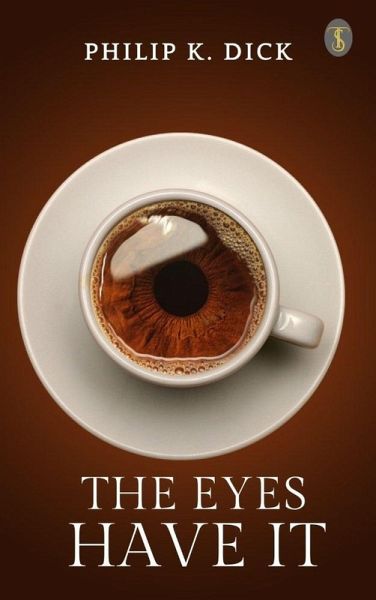
"The Eyes Have It" by Philip K. Dick is a thought-provoking science fiction short story that explores themes of perception and reality. The story follows a man who starts reading a paperback novel on a train, only to discover that the words he reads directly relate to the events and people around him. As the narrative unfolds, the line between fiction and reality becomes increasingly blurred. This captivating tale showcases Philip K. Dick's skill in crafting mind-bending narratives that challenge our understanding of the world.
"The Eyes Have It" by Philip K. Dick is a thought-provoking science fiction short story that explores themes of perception and reality. The story follows a man who starts reading a paperback novel on a train, only to discover that the words he reads directly relate to the events and people around him. As the narrative unfolds, the line between fiction and reality becomes increasingly blurred. This captivating tale showcases Philip K. Dick's skill in crafting mind-bending narratives that challenge our understanding of the world.
Dieser Download kann aus rechtlichen Gründen nur mit Rechnungsadresse in A, D ausgeliefert werden.
Die Herstellerinformationen sind derzeit nicht verfügbar.
Autorenporträt
Philip K. Dick (1928-1982) was an American science-fiction novelist, short-story writer and essayist. A contemporary of Ursula K. Le Guin, Dick's first short story, "Beyond Lies the Wub,” was published shortly after his high-school graduation. Many of Dick's works drew upon his personal experiences with drug abuse, addressing topics such as paranoia and schizophrenia, transcendental experiences and alternate reality, and the childhood death of his twin sister is reflected through the recurring theme of the "phantom twin” in many of his novels. Despite ongoing financial troubles and issues with the IRS, Dick had a prolific writing career, winning both the Hugo Award and the Nebula Award multiple times. Some of his most famous novels and stories—A Scanner Darkly, "The Minority Report”, "Paycheck,” and Do Androids Dream of Electric Sheep? (adapted into the film Blade Runner)—have been adapted for film. Dick died in 1982.
Es gelten unsere Allgemeinen Geschäftsbedingungen: www.buecher.de/agb
Impressum
www.buecher.de ist ein Internetauftritt der buecher.de internetstores GmbH
Geschäftsführung: Monica Sawhney | Roland Kölbl | Günter Hilger
Sitz der Gesellschaft: Batheyer Straße 115 - 117, 58099 Hagen
Postanschrift: Bürgermeister-Wegele-Str. 12, 86167 Augsburg
Amtsgericht Hagen HRB 13257
Steuernummer: 321/5800/1497
USt-IdNr: DE450055826