1,99 €
inkl. MwSt.
Sofort per Download lieferbar

payback
0 °P sammeln
  • Format: ePub

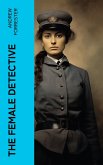
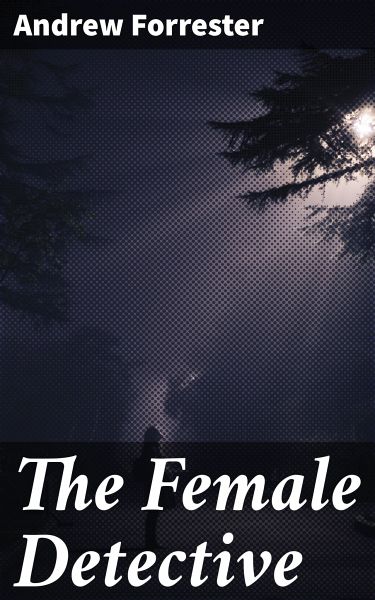
In 'The Female Detective,' Andrew Forrester presents a pioneering examination of gender within the detective fiction genre, notably published in 1864. The book features a collection of stories that spotlight a female detective, challenging the prevailing patriarchal narratives of the time. Forrester's prose is notable for its sharp wit and keen social observation, blending elements of mystery and social commentary. The literary style embodies the Victorian fascination with crime while also addressing the role of women in society, an audacious move for its era that reflects the evolving…mehr

  • Geräte: eReader
  • ohne Kopierschutz
  • eBook Hilfe
  • Größe: 1.3MB
  • FamilySharing(5)
Produktbeschreibung
In 'The Female Detective,' Andrew Forrester presents a pioneering examination of gender within the detective fiction genre, notably published in 1864. The book features a collection of stories that spotlight a female detective, challenging the prevailing patriarchal narratives of the time. Forrester's prose is notable for its sharp wit and keen social observation, blending elements of mystery and social commentary. The literary style embodies the Victorian fascination with crime while also addressing the role of women in society, an audacious move for its era that reflects the evolving complexity of both detective fiction and gender roles. Andrew Forrester, born in 1810, was deeply embedded in the literary and social currents of his time. His background as a lawyer and writer informed his understanding of societal structures, particularly the marginalization of women. Forrester's experiences and observations likely motivated him to craft a female protagonist who not only solves crimes but encapsulates the intellectual and moral fortitude of women, offering a counter-narrative to the traditional male detective archetype. This book is a must-read for enthusiasts of the detective genre and scholars interested in gender studies. 'The Female Detective' not only provides suspense and intrigue but also serves as a historical document that prompts reflection on women's agency within literature. Forrester's work paves the way for future female detectives, making it essential reading for anyone seeking to understand the evolution of this genre. In this enriched edition, we have carefully created added value for your reading experience: - Hand-picked Memorable Quotes shine a spotlight on moments of literary brilliance. - Interactive footnotes clarify unusual references, historical allusions, and archaic phrases for an effortless, more informed read.

Dieser Download kann aus rechtlichen Gründen nur mit Rechnungsadresse in A, B, BG, CY, CZ, D, DK, EW, E, FIN, F, GR, H, IRL, I, LT, L, LR, M, NL, PL, P, R, S, SLO, SK ausgeliefert werden.

Autorenporträt
Andrew Forrester was the pseudonym British writer James Redding Ware (1832-c.1909) His detective works include: The Female Detective (c. 1863/1864), 'edited by A.F.'; Secret Service, or, Recollections of a City Detective (1864?); The Private Detective and Revelations of the Private Detective (both c. 1868). 'Forrester' was for many years known to be a pseudonym, but it was unknown who he actually was. However, one of his stories, 'A Child Found Dead: Murder or No Murder?', was discovered, reprinted as a pamphlet and published under the name of J. Redding Ware, as 'The Road Murder', an analysis of the Constance Kent case. With this as a clue, Forrester/Ware's first stories of the female detective can be found in a journal entitled Grave and Gay in summer 1862. The character predates the 1863/1864 appearance of W.S. Hayward's The Revelations of a Lady Detective although not that of Ruth Trail. In 1860, a novel, The Fortunes of the House of Pennyl, A Romance of England in the Last Century (Blackwood's London Library) was published, with illustrations by Phiz, under the name J. Redding Ware. By 1868, he was a contributor to the Boy's Own Paper, the series of penny-bloods owned by Edwin Brett, although no particular work has been attributed to him. He also contributed to Bow Bells Magazine. Posthumously, he was most famous for Passing English of the Victorian Era. A Dictionary of Heterodox English Slang and Phrase (London, Routledge, 1909), published shortly after his death.