88,95 €
88,95 €
inkl. MwSt.
Sofort per Download lieferbar

44 °P sammeln
88,95 €
Als Download kaufen
88,95 €
inkl. MwSt.
Sofort per Download lieferbar
44 °P sammeln
Jetzt verschenken
Alle Infos zum eBook verschenken
88,95 €
inkl. MwSt.
Sofort per Download lieferbar
Alle Infos zum eBook verschenken
44 °P sammeln

Andere Kunden interessierten sich auch für
") Bees, Science, and Sex in the Literature of the Long Nineteenth Century (eBook, PDF)112,95 €
Bees, Science, and Sex in the Literature of the Long Nineteenth Century (eBook, PDF)112,95 €") Traditional Medicine in the Irish Literary Revival (eBook, PDF)88,95 €
Traditional Medicine in the Irish Literary Revival (eBook, PDF)88,95 €") Literary Animal Studies and the Climate Crisis (eBook, PDF)104,95 €
Literary Animal Studies and the Climate Crisis (eBook, PDF)104,95 €") Narratives of Women's Health and Hysteria in the Nineteenth-Century Novel (eBook, PDF)88,95 €
Narratives of Women's Health and Hysteria in the Nineteenth-Century Novel (eBook, PDF)88,95 €") The Poesy of Scientia in Early Modern England (eBook, PDF)112,95 €
The Poesy of Scientia in Early Modern England (eBook, PDF)112,95 €") Charlotte Brontë and Contagion (eBook, PDF)80,95 €
Charlotte Brontë and Contagion (eBook, PDF)80,95 €") Writing Plague (eBook, PDF)80,95 €
Writing Plague (eBook, PDF)80,95 €

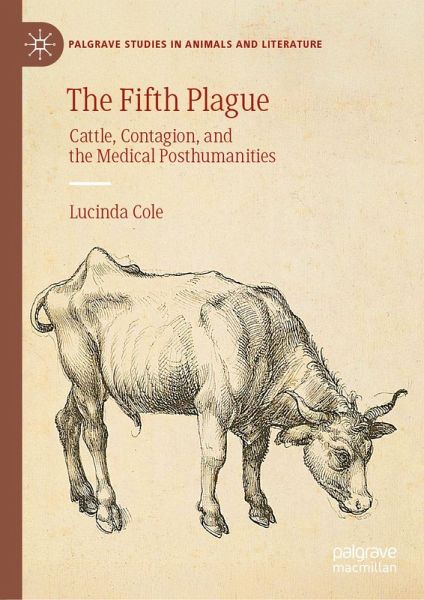
This book examines murrain, or mass mortalities of cattle, in ways that bridge the gap between animal studies and the health humanities. Beginning with early modern European disease ecologies but informed by contemporary epidemiological and ecological concerns, The Fifth Plague offers a new historical approach to literary plague studies, one taking seriously real and imagined relationships between human outbreaks, such as bubonic plague and cholera, and a series of even more mysterious animal diseases that killed in equally great numbers. Chapters include careful readings of literary texts by, among others, William Shakespeare, John Dryden, Daniel Defoe, and Sophie Amelia Prosser.. Uniting these readings is a shared history of murrains recorded in Virgil, but also the powerful legacy of the Ten Plagues of Egypt narrative, in which human and non-human afflictions are materially and theologically bound. "Great mortalities" of cattle, Cole argues, brought with them feelings of individual and collective vulnerability. As scientists and humanists face increasingly politicized information networks, this book calls for an exploration of the past, present, and future of humanity's decidedly interdependent and zoonotic existence.
Dieser Download kann aus rechtlichen Gründen nur mit Rechnungsadresse in A, B, BG, CY, CZ, D, DK, EW, E, FIN, F, GR, HR, H, IRL, I, LT, L, LR, M, NL, PL, P, R, S, SLO, SK ausgeliefert werden.