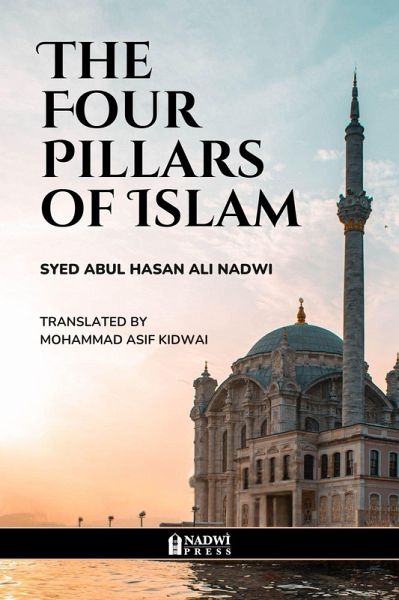
5,99 €
inkl. MwSt.
Sofort per Download lieferbar
3 °P sammeln

Andere Kunden interessierten sich auch für
") The Hajj (eBook, ePUB)2,99 €
The Hajj (eBook, ePUB)2,99 €") Islamic Law in Early Modern Iran (eBook, ePUB)0,00 €
Islamic Law in Early Modern Iran (eBook, ePUB)0,00 €") Adam, The Universally Evolving Human Soul, Male & Female (eBook, ePUB)7,99 €
Adam, The Universally Evolving Human Soul, Male & Female (eBook, ePUB)7,99 €") Jihad: What Everyone Needs to Know (eBook, ePUB)6,99 €
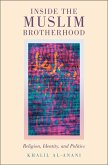
Jihad: What Everyone Needs to Know (eBook, ePUB)6,99 €") Inside the Muslim Brotherhood (eBook, ePUB)8,95 €
Inside the Muslim Brotherhood (eBook, ePUB)8,95 €") Religious Freedom in Islam (eBook, ePUB)13,95 €
Religious Freedom in Islam (eBook, ePUB)13,95 €") Why, as a Muslim, I Defend Liberty (eBook, ePUB)5,99 €
Why, as a Muslim, I Defend Liberty (eBook, ePUB)5,99 €



Section Placement: Religion / Islam / Practice & Rituals Alternative Sections: Religion / Comparative Religion; Religion / Theology; Religion / Islam / General
Shelving Recommendations: Position alongside other foundational Islamic texts such as works on the Five Pillars, Islamic jurisprudence, and spiritual practice. Cross-merchandise with comparative religion titles, Qur'anic studies, and works on world religious practices.
Target Readers:
Comparable Titles:
Distinctive Features:
Marketing Angles:
Seasonal Considerations: Increased interest during Rama?an (for fasting section) and ?ajj season (for pilgrimage section). Year-round relevance for study of Islamic practice.
Display Recommendations: Feature during Islamic holy months, alongside new releases in Islamic studies, and in comparative religion displays. Consider positioning near entrance to Islamic studies section as foundational text.
Shelving Recommendations: Position alongside other foundational Islamic texts such as works on the Five Pillars, Islamic jurisprudence, and spiritual practice. Cross-merchandise with comparative religion titles, Qur'anic studies, and works on world religious practices.
Target Readers:
- Muslim readers seeking deeper understanding of worship obligations
- Students of Islamic studies requiring authoritative scholarly treatment
- Comparative religion scholars examining devotional practices across traditions
- General readers interested in understanding Islam from within the tradition
- Interfaith dialogue participants seeking authentic Islamic perspectives
Comparable Titles:
- Works on Islamic worship and the Five Pillars
- Shah Waliullah's theological writings
- Contemporary Islamic scholarship on devotional practice
- Comparative studies of worship across Abrahamic traditions
Distinctive Features:
- Draws extensively from classical scholarship, particularly Shah Waliullah
- Combines theological depth with accessibility for modern readers
- Includes comparative religious analysis
- Addresses contemporary challenges to traditional understanding
- Authored by one of the twentieth century's most influential Muslim scholars
Marketing Angles:
- Scholarly authority from distinguished Islamic scholar
- Comprehensive treatment of all four foundational worship practices
- Classical sources presented in modern idiom
- Comparative perspective highlighting Islamic distinctiveness
- Enduring relevance for contemporary Muslim practice
Seasonal Considerations: Increased interest during Rama?an (for fasting section) and ?ajj season (for pilgrimage section). Year-round relevance for study of Islamic practice.
Display Recommendations: Feature during Islamic holy months, alongside new releases in Islamic studies, and in comparative religion displays. Consider positioning near entrance to Islamic studies section as foundational text.
Dieser Download kann aus rechtlichen Gründen nur mit Rechnungsadresse in A, D ausgeliefert werden.