31,95 €
inkl. MwSt.
Sofort per Download lieferbar
16 °P sammeln

Andere Kunden interessierten sich auch für
") The Last Gasp of William Schwarzfeller (eBook, ePUB)22,95 €
The Last Gasp of William Schwarzfeller (eBook, ePUB)22,95 €") The Silk Road After Ukraine (eBook, ePUB)68,95 €
The Silk Road After Ukraine (eBook, ePUB)68,95 €") Russia and Eurasia 2024-2025 (eBook, ePUB)15,95 €
Russia and Eurasia 2024-2025 (eBook, ePUB)15,95 €") The Perennial Conspiracy Theory (eBook, ePUB)21,95 €
The Perennial Conspiracy Theory (eBook, ePUB)21,95 €") Stalin, Vol. II (eBook, ePUB)12,99 €
Stalin, Vol. II (eBook, ePUB)12,99 €") Vodka Politics (eBook, ePUB)8,95 €
Vodka Politics (eBook, ePUB)8,95 €") Parliaments in the Late Russian Empire, Revolutionary Russia, and the Soviet Union (eBook, ePUB)0,00 €
Parliaments in the Late Russian Empire, Revolutionary Russia, and the Soviet Union (eBook, ePUB)0,00 €







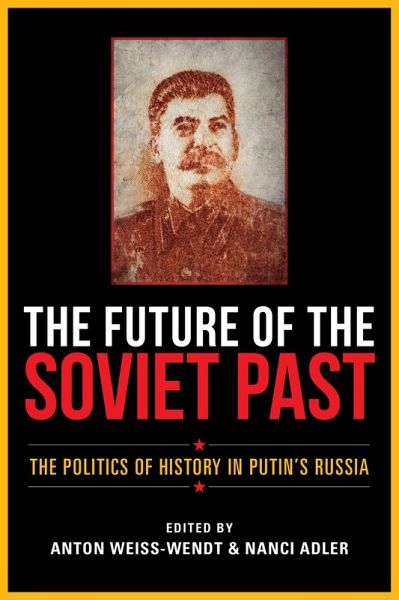
In post-Soviet Russia, there is a persistent trend to repress, control, or even co-opt national history. By reshaping memory to suit a politically convenient narrative, Russia has fashioned a good future out of a "bad past."
While Putin's regime has acquired nearly complete control over interpretations of the past, The Future of the Soviet Past reveals that Russia's inability to fully rewrite its Soviet history plays an essential part in its current political agenda. Diverse contributors consider the many ways in which public narrative shapes Russian culture-from cinema, television, and music to museums, legislature, and education-as well as how patriotism reflected in these forms of culture implies a casual acceptance of the valorization of Stalin and his role in World War II.
The Future of the Soviet Past provides effective and nuanced examples of how Russia has reimagined its Soviet history as well as how that past still influences Russia's policymaking.
While Putin's regime has acquired nearly complete control over interpretations of the past, The Future of the Soviet Past reveals that Russia's inability to fully rewrite its Soviet history plays an essential part in its current political agenda. Diverse contributors consider the many ways in which public narrative shapes Russian culture-from cinema, television, and music to museums, legislature, and education-as well as how patriotism reflected in these forms of culture implies a casual acceptance of the valorization of Stalin and his role in World War II.
The Future of the Soviet Past provides effective and nuanced examples of how Russia has reimagined its Soviet history as well as how that past still influences Russia's policymaking.
Dieser Download kann aus rechtlichen Gründen nur mit Rechnungsadresse in A, D ausgeliefert werden.