
1,90 €
inkl. MwSt.
Sofort per Download lieferbar
0 °P sammeln

Andere Kunden interessierten sich auch für
") The Grand Inquisitor (eBook, ePUB)0,99 €
The Grand Inquisitor (eBook, ePUB)0,99 €") Crime and Punishment (eBook, ePUB)2,99 €
Crime and Punishment (eBook, ePUB)2,99 €") The Grand Inquisitor (eBook, ePUB)1,99 €
The Grand Inquisitor (eBook, ePUB)1,99 €") The Setting Sun - Osamu Dazai (eBook, ePUB)1,90 €
The Setting Sun - Osamu Dazai (eBook, ePUB)1,90 €") The Real Story of Ah-Q and Other Tales of China (eBook, ePUB)10,99 €
The Real Story of Ah-Q and Other Tales of China (eBook, ePUB)10,99 €") The Notebooks of Malte Laurids Brigge (eBook, ePUB)10,99 €
The Notebooks of Malte Laurids Brigge (eBook, ePUB)10,99 €") Poor Folk and Other Stories (eBook, ePUB)9,49 €
Poor Folk and Other Stories (eBook, ePUB)9,49 €
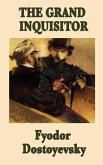






The Grand Inquisitor is a central passage within Dostoyevsky's The Brothers Karamazov, presented as a parable narrated by Ivan Karamazov. The story is set in Seville during the time of the Inquisition, where Christ returns to Earth and is recognized by the people because of His miracles. However, He is soon arrested by order of the Grand Inquisitor, who accuses Him of threatening the established order of the Church. The Inquisitor argues that humanity, weak and fearful of freedom, does not wish to bear the responsibility of choosing between good and evil. According to him, people prefer to submit to an authority that guarantees bread, security, and guidance, rather than live with the uncertainty of spiritual freedom. In his speech, he claims that the Church has corrected Christ's work, assuming the power to govern in the name of obedience and stability, even at the cost of betraying the original message. The narrative exposes fundamental tensions between freedom and authority, faith and power, truth and convenience. Christ, confronted with the Inquisitor's harsh words, remains silent, responding only with a gesture of love: a kiss. This act encapsulates the radical opposition between coercive power and mercy, leaving open the reflection on humanity's fate and the essence of Christianity. Since its publication, The Grand Inquisitor has been interpreted as one of the most profound meditations on the nature of religious power, human frailty, and the dilemma of freedom, establishing itself as one of the most emblematic and debated passages in world literature.
Dieser Download kann aus rechtlichen Gründen nur mit Rechnungsadresse in A, B, BG, CY, CZ, D, DK, EW, E, FIN, F, GR, H, IRL, I, LT, L, LR, M, NL, PL, P, R, S, SLO, SK ausgeliefert werden.