2,99 €
inkl. MwSt.
Sofort per Download lieferbar
1 °P sammeln

Andere Kunden interessierten sich auch für
") The Great Wall Of China (eBook, ePUB)6,99 €
The Great Wall Of China (eBook, ePUB)6,99 €") The Great Wall (eBook, ePUB)9,49 €
The Great Wall (eBook, ePUB)9,49 €") The Great Wall in 50 Objects (eBook, ePUB)6,99 €
The Great Wall in 50 Objects (eBook, ePUB)6,99 €") China's Revolutions in the Modern World (eBook, ePUB)14,95 €
China's Revolutions in the Modern World (eBook, ePUB)14,95 €") The History of Chinese Feudal Society (eBook, ePUB)42,95 €
The History of Chinese Feudal Society (eBook, ePUB)42,95 €") The Southern Song Dynasty: A History of China (eBook, ePUB)6,99 €
The Southern Song Dynasty: A History of China (eBook, ePUB)6,99 €") The Origins of Chinese Civilization (eBook, ePUB)28,95 €
The Origins of Chinese Civilization (eBook, ePUB)28,95 €







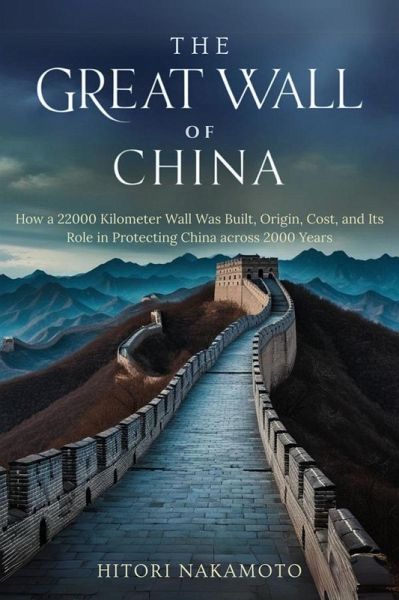
In 221 BCE, a person called Qin Shi Huang announced that he was the First Emperor of all China. Within a few decades, he did what numerous warlords had tried and failed to do for centuries: He brought an end to the chaos of the Warring States period and built an empire that extended from the East China Sea deep into the heart of Asia. But he went on with larger ambitions than conquest. No, the true monument to Qin Shi Huang's vision was not so much the empire as the wall he constructed - or rather, the ideal of it. We like to imagine the Great Wall of China as an unbroken ribbon of stone and earth, winding its way through the deserts, plains and mountains of northern China. And, in fact, the Wall is less a thing than an idea, a moving target in response to a moving series of threats and requirements. It was constructed, reconstructed, extended and left to deteriorate over more than two millennia by emperors who agreed only on the necessity of one thing: China's northern frontier could not be left inattentive.
Dieser Download kann aus rechtlichen Gründen nur mit Rechnungsadresse in A, B, BG, CY, CZ, D, DK, EW, E, FIN, F, GR, HR, H, IRL, I, LT, L, LR, M, NL, PL, P, R, S, SLO, SK ausgeliefert werden.