41,95 €
inkl. MwSt.
Sofort per Download lieferbar
21 °P sammeln

Andere Kunden interessierten sich auch für
") The Growth of Islamic Banking in Indonesia (eBook, ePUB)41,95 €
The Growth of Islamic Banking in Indonesia (eBook, ePUB)41,95 €") The Future of Islamic Banking and Finance in Indonesia (eBook, PDF)39,95 €
The Future of Islamic Banking and Finance in Indonesia (eBook, PDF)39,95 €") Islamic Management Practices in Financial Institutions (eBook, PDF)41,95 €
Islamic Management Practices in Financial Institutions (eBook, PDF)41,95 €") The Islamic Finance Industry (eBook, PDF)39,95 €
The Islamic Finance Industry (eBook, PDF)39,95 €") The Future of Islamic Banking and Finance in Indonesia (eBook, ePUB)39,95 €
The Future of Islamic Banking and Finance in Indonesia (eBook, ePUB)39,95 €") Teaching and Research Methods for Islamic Economics and Finance (eBook, PDF)41,95 €
Teaching and Research Methods for Islamic Economics and Finance (eBook, PDF)41,95 €") Islamic Management Practices in Financial Institutions (eBook, ePUB)41,95 €
Islamic Management Practices in Financial Institutions (eBook, ePUB)41,95 €
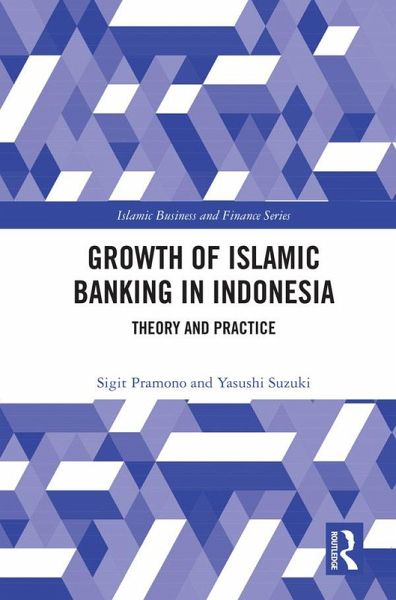
Indonesia is the most populous Muslim country in the world. Taking into account also its endowment and potential economic resources, the Islamic banking industry in Indonesia was expected to take on an important role in facilitating more financial resources and to contribute to the internationalization of the Islamic mode of financing particularly in the Asia-Pacific region. However, the reality is far from the expectation. This book aims to clarify the causes and fundamental constraints leading to the extraordinarily low level of Indonesia's Islamic financial deepening.
The authors draw on the traditions of Institutional Economics which are concerned with the rules or mechanisms of creating the 'incentive' and 'threat' for economic players because the rules (institutions) would matter as the determinant for economic development and economic efficiency. This book offers a fairly new analytical lens by hypothesizing that Islamic banks must earn additional profit- the authors coined as 'Islamic bank rent' - to maintain their franchise value as prudent Shari'ah-compliant lenders when compared to conventional banks. The authors argued that insufficient provision of the Islamic bank rent opportunity may have caused the Indonesia's Islamic banks the opportunity to learn and improve their skill and capacity for the credit risk management. The book also offers evidence in support of implementing economic and affirmative policy necessary for incubating and developing the Islamic banking industry in Indonesia and making Indonesia an international Islamic financial hub in the Asia-Pacific region.
This book will be a useful resource for policy makers and researchers interested in Islamic banking in Indonesia.
The authors draw on the traditions of Institutional Economics which are concerned with the rules or mechanisms of creating the 'incentive' and 'threat' for economic players because the rules (institutions) would matter as the determinant for economic development and economic efficiency. This book offers a fairly new analytical lens by hypothesizing that Islamic banks must earn additional profit- the authors coined as 'Islamic bank rent' - to maintain their franchise value as prudent Shari'ah-compliant lenders when compared to conventional banks. The authors argued that insufficient provision of the Islamic bank rent opportunity may have caused the Indonesia's Islamic banks the opportunity to learn and improve their skill and capacity for the credit risk management. The book also offers evidence in support of implementing economic and affirmative policy necessary for incubating and developing the Islamic banking industry in Indonesia and making Indonesia an international Islamic financial hub in the Asia-Pacific region.
This book will be a useful resource for policy makers and researchers interested in Islamic banking in Indonesia.
Dieser Download kann aus rechtlichen Gründen nur mit Rechnungsadresse in A, B, BG, CY, CZ, D, DK, EW, E, FIN, F, GR, HR, H, IRL, I, LT, L, LR, M, NL, PL, P, R, S, SLO, SK ausgeliefert werden.
"This important book assesses the factors affecting the growth of Indonesia's Islamic banking sector from 2004 to 2018. Even though there is much research published in academic journals addressing this issue, the book incorporates various aspects, such as eco- nomics, finance, society, politics, government, and Sharia (religion). In addition, it compares the development and growth of Indonesia's Islamic banking sector with that of Malaysia, Indonesia's closest neighbor and the most developed in the field. It also investigates Asian banks more widely to gain a broader perspective.
Finally, this book is highly recommended for regulators, market players, customers, suppliers, depositors, and all stakeholders because it delivers very important assessments and results on factors affecting the slower growth of Islamic banking in Indonesia. Despite some limitations in its scope and analysis, the book is quite comprehensive in answering the two puzzles noted earlier, from both economic and noneconomic perspec- tives, and both locally and internationally. International Islamic finance stakeholders can also benefit from the book, especially from its assessment of Malaysian, Bangladeshi, and other Asian banks."
The Developing Economies, Volum 59, Issue 2, June 2020
Finally, this book is highly recommended for regulators, market players, customers, suppliers, depositors, and all stakeholders because it delivers very important assessments and results on factors affecting the slower growth of Islamic banking in Indonesia. Despite some limitations in its scope and analysis, the book is quite comprehensive in answering the two puzzles noted earlier, from both economic and noneconomic perspec- tives, and both locally and internationally. International Islamic finance stakeholders can also benefit from the book, especially from its assessment of Malaysian, Bangladeshi, and other Asian banks."
The Developing Economies, Volum 59, Issue 2, June 2020