Sie sind bereits eingeloggt. Klicken Sie auf 2. tolino select Abo, um fortzufahren.
Bitte loggen Sie sich zunächst in Ihr Kundenkonto ein oder registrieren Sie sich bei bücher.de, um das eBook-Abo tolino select nutzen zu können.
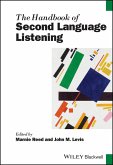
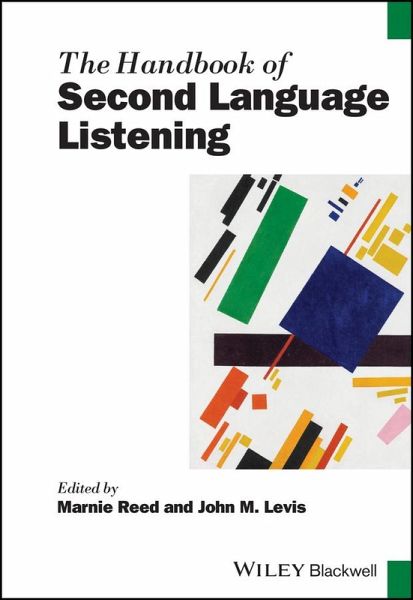
Essential insights and strategies for teaching and researching second language listening comprehension skills The Handbook of Second Language Listening provides comprehensive and authoritative coverage of the processes, challenges, and pedagogy of second language (L2) listening. Designed for researchers, teacher educators, and classroom practitioners, this volume presents a systematic examination of how L2 learners perceive and interpret spoken language across diverse contexts and discusses how instruction can better support the listening process. The Handbook addresses a broad range of…mehr
Essential insights and strategies for teaching and researching second language listening comprehension skills
The Handbook of Second Language Listening provides comprehensive and authoritative coverage of the processes, challenges, and pedagogy of second language (L2) listening. Designed for researchers, teacher educators, and classroom practitioners, this volume presents a systematic examination of how L2 learners perceive and interpret spoken language across diverse contexts and discusses how instruction can better support the listening process.
The Handbook addresses a broad range of topics essential to understanding and teaching L2 listening, including perceptual foundations, the influence of prosody, speech perception, listening assessment, and metacognitive strategy use. Chapters by leading scholars and emerging voices in applied linguistics bridge theory and practice by offering evidence-based insights into listener variability, instructional design, and the interface between listening and pronunciation. This book brings attention to topic areas often overlooked, such as decolonial theory in listening research and the impact of orthography on perception. Equipping educators and scholars with the tools needed to understand L2 listening as both a cognitive process and a teachable skill, the Handbook of Second Language Listening:
Integrates current findings from phonetics, psycholinguistics, and applied linguistics
Connects theoretical models of perception and processing with classroom-based applications
Addresses foundational and emerging topics, from phonetic decoding comprehension of spoken academic discourse
Includes dedicated sections on technology-enhanced assessment and instruction
Covers key pedagogical challenges such as listening in noise, processing of prosody, and strategy instruction
Provides practical frameworks for evaluating and designing L2 listening tasks
The Handbook of Second Language Listening is ideal for graduate-level courses in TESOL and Applied Linguistics, including Second Language Acquisition, Listening Pedagogy, and Language Assessment, which are core to MA TESOL and Linguistics programs. It is also a critical reference for researchers, teacher educators, curriculum designers, and language assessment specialists.
Dieser Download kann aus rechtlichen Gründen nur mit Rechnungsadresse in D ausgeliefert werden.
Die Herstellerinformationen sind derzeit nicht verfügbar.
Autorenporträt
MARNIE REED is Professor Emerita of TESOL and Applied Linguistics at Boston University. She is co-author of Phonetics in Language Teaching and co-editor of Listening in the Classroom. With John M. Levis, she co-edited The Handbook of English Pronunciation for Wiley Blackwell in 2015. JOHN M. LEVIS is Distinguished Professor of Applied Linguistics and Technology at Iowa State University. He is the founding editor of the Journal of Second Language Pronunciation and author of Intelligibility, Oral Communication and the Teaching of Pronunciation. Levis has co-edited several seminal volumes including Second Language Pronunciation: Bridging the Gap Between Research and Teaching (Wiley Blackwell, 2022), and is recognized internationally for his research on second language pronunciation and oral communication.
Inhaltsangabe
Notes on Contributors ix Foreword xxi Part I L1 and L2 Listening 1 1 L2 Listening: How Perception, Strategies, Technology, and Assessment Have Reshaped the Field 3 John Levis 2 Perceptual Foundations of Second Language Phonetic Learning 15 Alexis K. Black, Gayatri Choudhary, and Thalia Hernandez-DePaoli 3 The Challenges of L2 Spoken Word Recognition 29 Mirjam Broersma 4 Historical Trends in Teaching Listening 43 Michael Rost 5 Decolonial Theory and L2 Listening 56 Mark R. Emerick and Dylan Ashton 6 Professional Training for Teaching Listening: Abiding Issues and Guiding Principles in an Era of Evolving Language Pedagogies 70 Marnie Reed Copyrighted Material Part II Perception 85 7 Speech Perception in a Second Language 87 Sadi Phillips and Isabelle Darcy 8 Modeling Second Language Perception 100 Arkadiusz Rojczyk and Yanping li 9 Processing Second/Foreign-Language Prosody 112 Annie Tremblay 10 Prosody and L2 Listening 125 Chie Nakamura and Suzanne Flynn 11 Orthography and L2 Perception 139 Robert Cavaluzzi, Christoforos Souganidis, and Antje Stoehr 12 What Do the Stimuli in High Variability Phonetic Training Tell Us About Second Language Perception? Current Findings, Implications, and the Way Forward 155 Janice Wing Sze WONG Part III Research and Assessment for L2 Listening 169 13 The Assessment of L2 Listening: Models, Constructs, Performance Factors, and Item Types 171 Gary J. Ockey and Erika Latham 14 Technology in Listening Assessment 185 Ruslan Suvorov and Pelin Irgin 15 Listeners' Self-Assessment of Second Language Speech 199 Ingrid Mora-Plaza and Mireia Ortega 16 Methodological Options in Researching L2 Listening 213 Yunhua Shen and Lawrence Jun Zhang Part IV Basic Approaches and Concepts 229 17 Approaches to L2 Listening Instruction 231 Michael Yeldham 18 Bottom-Up and Top-Down Listening 246 Tamara Jones 19 Metacognitive Strategies in L2 Listening 260 Mohammadreza Dalman 20 Strategy Instruction for Teaching L2 Listening Skills in Language Classrooms 274 Phung Dao, Zehui Yang, and Mai Xuan Nhat Chi Nguyen 21 Individual Differences in L2 Perception 290 Solène Inceoglu Part V Technology-Supported L2 Listening 305 22 Out-of-Class Listening: Multiple Channels and Modes for FL Learning and Teaching 307 Art Tsang 23 Computer-Based Second Language Listening 321 Mónica S. Cárdenas-Claros 24 Visual Input and Second Language Listening 334 Daniel R. Isbell and Jieun Kim 25 Toward Listening 4.0: Technology-Based Instruction, Research, and Assessment 348 di Liu Part VI Practical Considerations 363 26 Listening in Task-Based Language Teaching 365 Natsuko Shintani and Aki Tsunemoto 27 A 4-Step Approach for Listening to Authentic Speech 380 Alice Henderson 28 Understanding Academic Talks: Does a Focus on Prosody Help? 396 Veronica G. Sardegna and Anna Jarosz 29 Vocabulary and L2 Listening 415 Takumi Uchihara 30 Second Language Listening and Connected Speech 429 Nathaniel Carney 31 Second Language Listening Processes and Pedagogy: Implications for Teaching Young Learners 444 Kiren Kaur and Christine C. M. Goh Index 459
Es gelten unsere Allgemeinen Geschäftsbedingungen: www.buecher.de/agb
Impressum
www.buecher.de ist ein Internetauftritt der buecher.de internetstores GmbH
Geschäftsführung: Monica Sawhney | Roland Kölbl | Günter Hilger
Sitz der Gesellschaft: Batheyer Straße 115 - 117, 58099 Hagen
Postanschrift: Bürgermeister-Wegele-Str. 12, 86167 Augsburg
Amtsgericht Hagen HRB 13257
Steuernummer: 321/5800/1497
USt-IdNr: DE450055826