19,95 €
19,95 €
inkl. MwSt.
Sofort per Download lieferbar

10 °P sammeln
19,95 €
Als Download kaufen
19,95 €
inkl. MwSt.
Sofort per Download lieferbar
10 °P sammeln
Jetzt verschenken
Alle Infos zum eBook verschenken
19,95 €
inkl. MwSt.
Sofort per Download lieferbar
Alle Infos zum eBook verschenken
10 °P sammeln

Andere Kunden interessierten sich auch für
 (eBook, ePUB)") The Hidden Grand Strategy: How America Engineers Wars To Weaken Russia And China (Geopolitics) (eBook, ePUB)23,49 €
The Hidden Grand Strategy: How America Engineers Wars To Weaken Russia And China (Geopolitics) (eBook, ePUB)23,49 €") Russian Grand Strategy in the era of global power competition (eBook, ePUB)23,95 €
Russian Grand Strategy in the era of global power competition (eBook, ePUB)23,95 €") On Grand Strategy (eBook, ePUB)9,49 €
On Grand Strategy (eBook, ePUB)9,49 €") The Grand Strategy of the Habsburg Empire (eBook, ePUB)19,95 €
The Grand Strategy of the Habsburg Empire (eBook, ePUB)19,95 €") Grand Strategy and the Presidency (eBook, ePUB)55,95 €
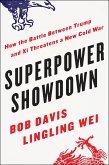
Grand Strategy and the Presidency (eBook, ePUB)55,95 €") Superpower Showdown (eBook, ePUB)19,25 €
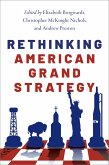
Superpower Showdown (eBook, ePUB)19,25 €") Rethinking American Grand Strategy (eBook, ePUB)9,95 €
Rethinking American Grand Strategy (eBook, ePUB)9,95 €


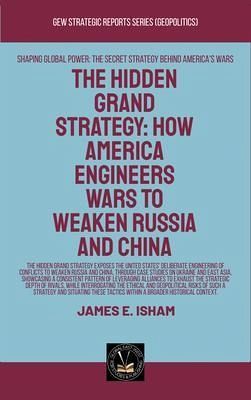
The Hidden Grand Strategy offers a timely, analytically rich examination of US grand strategy from the end of the Cold War to the present era of renewed great-power competition. Positioned at the intersection of theory and practice, the book is designed for academic, policy, and general audiences interested in geopolitics, security studies, and contemporary history.
Isham's central contribution is to connect evolving strategic paradigms with concrete policy outcomes. He shows how seemingly abstract concepts-containment, unipolarity, the "war on terror," and great-power competition-have structured interagency decision-making and the integrated use of diplomatic, military, economic, and information instruments of power.
Key themes include:
For booksellers and librarians, this title will sit comfortably alongside works by John Lewis Gaddis, Hal Brands, and other leading scholars of grand strategy. It is suitable for:
Written in accessible prose yet grounded in serious scholarship, The Hidden Grand Strategy provides a valuable resource for collections on American foreign policy, global security, and twenty-first-century geopolitics.
Isham's central contribution is to connect evolving strategic paradigms with concrete policy outcomes. He shows how seemingly abstract concepts-containment, unipolarity, the "war on terror," and great-power competition-have structured interagency decision-making and the integrated use of diplomatic, military, economic, and information instruments of power.
Key themes include:
- Continuity and change in US strategy: how long-standing strategic traditions adapt to shifting geopolitical contexts and technological change while preserving core interests.
- Strategic narratives: the distinction between official, publicly stated objectives and tacit, often less visible goals that shape US conduct toward Russia and China.
- Institutional memory and foresight: how accumulated experience within the national security bureaucracy influences perceptions of new threats and opportunities.
- The management of rivalry: how post-Cold-War unipolarity gave way to a more contested order, in which Washington blends cooperation, competition, and coercion in dealing with Moscow and Beijing.
For booksellers and librarians, this title will sit comfortably alongside works by John Lewis Gaddis, Hal Brands, and other leading scholars of grand strategy. It is suitable for:
- Upper-level undergraduate and postgraduate courses in international relations, security and strategic studies
- Policy professionals and think-tank researchers
- Journalists and informed general readers seeking a structured understanding of US-Russia-China dynamics
Written in accessible prose yet grounded in serious scholarship, The Hidden Grand Strategy provides a valuable resource for collections on American foreign policy, global security, and twenty-first-century geopolitics.
Dieser Download kann aus rechtlichen Gründen nur mit Rechnungsadresse in A, D ausgeliefert werden.