4,49 €
4,49 €
inkl. MwSt.
Sofort per Download lieferbar

0 °P sammeln
4,49 €
Als Download kaufen
4,49 €
inkl. MwSt.
Sofort per Download lieferbar
0 °P sammeln
Jetzt verschenken
Alle Infos zum eBook verschenken
4,49 €
inkl. MwSt.
Sofort per Download lieferbar
Alle Infos zum eBook verschenken
0 °P sammeln

Andere Kunden interessierten sich auch für
") The Hidden History of Texas 1815-1830 (eBook, ePUB)1,99 €
The Hidden History of Texas 1815-1830 (eBook, ePUB)1,99 €") The Hidden History of Texas 1530 to 1820 (eBook, ePUB)1,99 €
The Hidden History of Texas 1530 to 1820 (eBook, ePUB)1,99 €") 300 Years of San Antonio and Bexar County (eBook, ePUB)12,95 €
300 Years of San Antonio and Bexar County (eBook, ePUB)12,95 €") Six Years With the Texas Rangers (eBook, ePUB)2,13 €
Six Years With the Texas Rangers (eBook, ePUB)2,13 €") Captured By the Apaches, Forty Years with this Savage Band of Indians (eBook, ePUB)3,99 €
Captured By the Apaches, Forty Years with this Savage Band of Indians (eBook, ePUB)3,99 €") 20 Years in the Saddle for Law and Order on the Frontiers of Texas (eBook, ePUB)2,13 €
20 Years in the Saddle for Law and Order on the Frontiers of Texas (eBook, ePUB)2,13 €") Three Years Among the Comanches: The Narrative of Nelson Lee, Texas Ranger (eBook, ePUB)12,85 €
Three Years Among the Comanches: The Narrative of Nelson Lee, Texas Ranger (eBook, ePUB)12,85 €





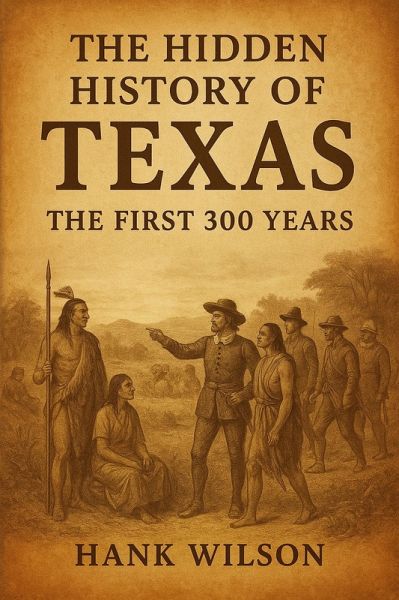
The Hidden History of Texas: The First 300 Years 1530 to 1835 offers a sweeping, immersive journey through the early centuries of Texas history, tracing the land's transformation from the arrival of European explorers to the dramatic demographic and cultural shifts of the early 19th century. Written by historian and storyteller Hank Wilson, these chapters blend scholarship, narrative storytelling, and vivid detail to bring to life the stories of the people. Native nations, Spanish colonists, Mexicans, and incoming Anglo settlers, whose lives and struggles shaped modern Texas.
We start with often-undocumented history of the original inhabitants of Texas, from the Jumano, Apache, Karankawa, Coahuiltecan, Comanche, Kiowa, Tonkawa, Caddo, Wichita, Tigua, and other Indigenous peoples, and their complex interactions with Spanish explorers, missionaries, and colonists. Through their voices (as far as historical records permit) and the broader sweep of colonization, mission-building, presidios, and early European incursions, including French ventures, the narrative reveals how early policies, alliances, conflicts, and cultural encounters laid the foundation for everything that came later.
As Mexico gains independence and Texas becomes part of the Mexican nation, this volume explores how new immigration policies, specially under the 1823 Imperial Colonization Law and the 1824/1825 Mexican land laws, fundamentally changed the demographic, cultural, and political landscape of Texas. The book chronicles the influx of Anglo settlers, the arrival of the first "empresario"-granted colonists, and the establishment of early settlements such as Nacogdoches, San Augustine, San Antonio, and Goliad. It paints a nuanced picture of how these waves of newcomers, their differing religious and cultural practices, and evolving laws set the stage for imminent social upheaval and the eventual fight for independence.
This isn't the mythologized version of Texas you may have heard before. Told by a descendant of one of Steven F. Austin's Original 300 colonists, it's a grounded, honest, and often surprising look at the hidden forces and overlooked moments that shaped the Lone Star State.
We start with often-undocumented history of the original inhabitants of Texas, from the Jumano, Apache, Karankawa, Coahuiltecan, Comanche, Kiowa, Tonkawa, Caddo, Wichita, Tigua, and other Indigenous peoples, and their complex interactions with Spanish explorers, missionaries, and colonists. Through their voices (as far as historical records permit) and the broader sweep of colonization, mission-building, presidios, and early European incursions, including French ventures, the narrative reveals how early policies, alliances, conflicts, and cultural encounters laid the foundation for everything that came later.
As Mexico gains independence and Texas becomes part of the Mexican nation, this volume explores how new immigration policies, specially under the 1823 Imperial Colonization Law and the 1824/1825 Mexican land laws, fundamentally changed the demographic, cultural, and political landscape of Texas. The book chronicles the influx of Anglo settlers, the arrival of the first "empresario"-granted colonists, and the establishment of early settlements such as Nacogdoches, San Augustine, San Antonio, and Goliad. It paints a nuanced picture of how these waves of newcomers, their differing religious and cultural practices, and evolving laws set the stage for imminent social upheaval and the eventual fight for independence.
This isn't the mythologized version of Texas you may have heard before. Told by a descendant of one of Steven F. Austin's Original 300 colonists, it's a grounded, honest, and often surprising look at the hidden forces and overlooked moments that shaped the Lone Star State.
Dieser Download kann aus rechtlichen Gründen nur mit Rechnungsadresse in A, B, CY, CZ, D, DK, EW, E, FIN, F, GR, H, IRL, I, LT, L, LR, M, NL, PL, P, R, S, SLO, SK ausgeliefert werden.