3,20 €
3,20 €
inkl. MwSt.
Sofort per Download lieferbar

0 °P sammeln
3,20 €
Als Download kaufen
3,20 €
inkl. MwSt.
Sofort per Download lieferbar
0 °P sammeln
Jetzt verschenken
Alle Infos zum eBook verschenken
3,20 €
inkl. MwSt.
Sofort per Download lieferbar
Alle Infos zum eBook verschenken
0 °P sammeln

Andere Kunden interessierten sich auch für
") The History of Peloponnesian War (eBook, ePUB)1,99 €
The History of Peloponnesian War (eBook, ePUB)1,99 €") Famous Men of Ancient Times (eBook, ePUB)3,20 €
Famous Men of Ancient Times (eBook, ePUB)3,20 €") The History of the Peloponnesian War (eBook, ePUB)0,49 €
The History of the Peloponnesian War (eBook, ePUB)0,49 € (eBook, ePUB)") History of Ancient Greece (3rd millennium B.C. - 323 B.C.) (eBook, ePUB)2,13 €
History of Ancient Greece (3rd millennium B.C. - 323 B.C.) (eBook, ePUB)2,13 €") The History of Roman Empire (eBook, ePUB)2,13 €
The History of Roman Empire (eBook, ePUB)2,13 €") History of the Peloponnesian War (eBook, ePUB)7,48 €
History of the Peloponnesian War (eBook, ePUB)7,48 €") The Histories + The Annals (eBook, ePUB)2,13 €
The Histories + The Annals (eBook, ePUB)2,13 €







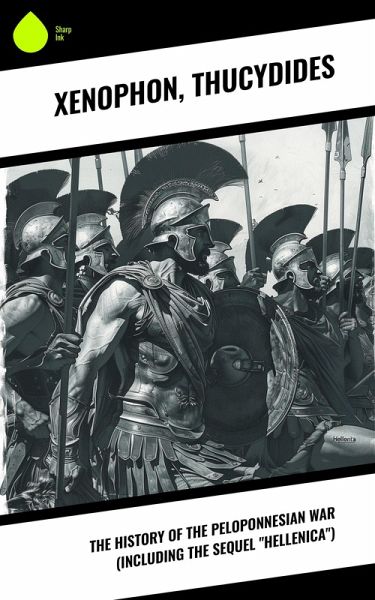
The monumental anthology "The History of the Peloponnesian War (Including the Sequel 'Hellenica')" offers a profound narrative of classical antiquity, encompassing an array of literary styles that range from analytical historical account to dramatic storytelling. This collection combines the esteemed works of Xenophon and Thucydides, spanning the tumultuous era of the Peloponnesian War and its aftermath. As one delves into the vivid descriptions of battles, political strategies, and moral dilemmas, the significance of these historical texts emerges, providing unparalleled insights into the human condition and the complexities of war. The anthology is thematically rich, traversing themes of power, justice, and resilience, making it indispensable for readers seeking to understand the classical foundation of historiography. The contributing historians, Xenophon and Thucydides, stand as titans of ancient scholarly endeavor, each bringing distinct approaches and experiences to the collection. Thucydides, known for his critical and scientific methodology, offers a rigorous account that seeks to impart lessons on power dynamics and human folly. In contrast, Xenophon provides a continuation in "Hellenica," complementing Thucydides' work with his polished narrative and philosophical musing, rooted in firsthand experiences. This collaboration aligns with the classical Greek literary tradition of combining empirical observation and narrative brilliance, enriching the reader's grasp of ancient cultural and historical contexts. Readers are invited to explore this composite volume for its unmatched educational value and breadth of perspective. "The History of the Peloponnesian War," including its sequel "Hellenica," not only narrates historical events but also fosters a dialogue between ancient thinkers that resonates through time. As a scholarly resource, it offers readers an unparalleled opportunity to witness the ancient world's literary richness and diversity within a single tome. Whether for those interested in history, philosophy, or literature, the anthology is an intellectual journey that illuminates the past while engaging with timeless debates on human nature and governance.
Dieser Download kann aus rechtlichen Gründen nur mit Rechnungsadresse in A, B, BG, CY, CZ, D, DK, EW, E, FIN, F, GR, HR, H, IRL, I, LT, L, LR, M, NL, PL, P, R, S, SLO, SK ausgeliefert werden.