42,95 €
42,95 €
inkl. MwSt.
Sofort per Download lieferbar

21 °P sammeln
42,95 €
Als Download kaufen
42,95 €
inkl. MwSt.
Sofort per Download lieferbar
21 °P sammeln
Jetzt verschenken
Alle Infos zum eBook verschenken
42,95 €
inkl. MwSt.
Sofort per Download lieferbar
Alle Infos zum eBook verschenken
21 °P sammeln

Andere Kunden interessierten sich auch für
") The Holodomor in Politics, Memory and History (eBook, ePUB)42,95 €
The Holodomor in Politics, Memory and History (eBook, ePUB)42,95 €") Victims and Memory After Terrorism (eBook, PDF)42,95 €
Victims and Memory After Terrorism (eBook, PDF)42,95 €") Transitional Justice and the 'Disappeared' of Northern Ireland (eBook, PDF)43,95 €
Transitional Justice and the 'Disappeared' of Northern Ireland (eBook, PDF)43,95 €") Culture and Conflict in Palestine/Israel (eBook, PDF)41,95 €
Culture and Conflict in Palestine/Israel (eBook, PDF)41,95 €") The Child Soldiers of Africa's Red Army (eBook, PDF)41,95 €
The Child Soldiers of Africa's Red Army (eBook, PDF)41,95 €") Legal Consciousness and the Rule of Law in Post-Conflict Societies (eBook, PDF)37,95 €
Legal Consciousness and the Rule of Law in Post-Conflict Societies (eBook, PDF)37,95 €") Framing Impunity in the Context of State Crime (eBook, PDF)42,95 €
Framing Impunity in the Context of State Crime (eBook, PDF)42,95 €



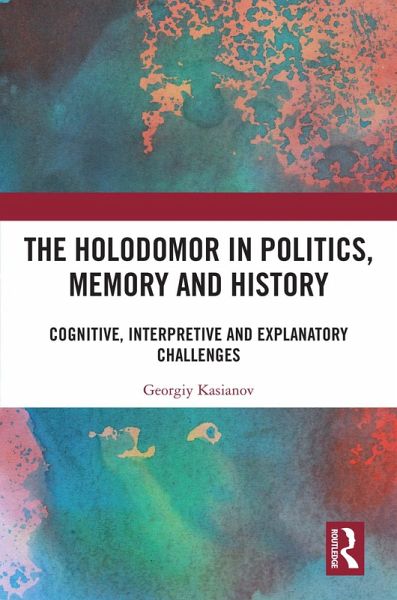
This volume presents the first comprehensive scholarly analysis of the collective memory of the Holodomor-the Ukrainian Great Famine of 1932-1933-examining its construction, evolution, and contestation across nearly a century. Moving beyond historical accounts of the event itself, this book interrogates how memories of this catastrophe have been shaped, mobilized, and interpreted within multiple discursive frameworks.
Drawing on interdisciplinary methodological approaches from memory studies and political science, the author provides a rigorous examination of how the Holodomor has been constructed as social (cultural) memory by actors who challenged Soviet policies of enforced amnesia. This book illuminates the complex interrelationship between memory agents, political institutions, and commemorative practices while critically assessing the securitization of memory and its implications for academic discourse.
This theoretically nuanced contribution to memory studies and Eastern European historiography will be indispensable for researchers and postgraduate students engaged with genocide studies, collective memory, post-Soviet politics, and the intersection of historical narrative and national identity formation.
Drawing on interdisciplinary methodological approaches from memory studies and political science, the author provides a rigorous examination of how the Holodomor has been constructed as social (cultural) memory by actors who challenged Soviet policies of enforced amnesia. This book illuminates the complex interrelationship between memory agents, political institutions, and commemorative practices while critically assessing the securitization of memory and its implications for academic discourse.
This theoretically nuanced contribution to memory studies and Eastern European historiography will be indispensable for researchers and postgraduate students engaged with genocide studies, collective memory, post-Soviet politics, and the intersection of historical narrative and national identity formation.
Dieser Download kann aus rechtlichen Gründen nur mit Rechnungsadresse in A, B, BG, CY, CZ, D, DK, EW, E, FIN, F, GR, HR, H, IRL, I, LT, L, LR, M, NL, PL, P, R, S, SLO, SK ausgeliefert werden.