
3,99 €
3,99 €
inkl. MwSt.
Sofort per Download lieferbar

2 °P sammeln
3,99 €
Als Download kaufen
3,99 €
inkl. MwSt.
Sofort per Download lieferbar
2 °P sammeln
Jetzt verschenken
Alle Infos zum eBook verschenken
3,99 €
inkl. MwSt.
Sofort per Download lieferbar
Alle Infos zum eBook verschenken
2 °P sammeln

Andere Kunden interessierten sich auch für
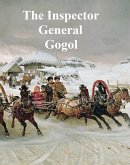
") The Inspector General (eBook, ePUB)0,91 €
The Inspector General (eBook, ePUB)0,91 €") The Government Inspector (eBook, ePUB)6,99 €
The Government Inspector (eBook, ePUB)6,99 €") The Red Poppy (eBook, ePUB)2,73 €
The Red Poppy (eBook, ePUB)2,73 €") The Cherry Orchard (eBook, ePUB)3,99 €
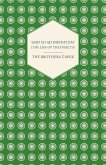
The Cherry Orchard (eBook, ePUB)3,99 € - An Entomological Review, in Three Acts a Prologue and an Epilogue (eBook, ePUB)") 'And So ad Infinitum' (The Life of the Insects) - An Entomological Review, in Three Acts a Prologue and an Epilogue (eBook, ePUB)5,99 €
'And So ad Infinitum' (The Life of the Insects) - An Entomological Review, in Three Acts a Prologue and an Epilogue (eBook, ePUB)5,99 €") Uncle Vanya (eBook, ePUB)3,99 €
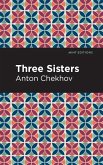
Uncle Vanya (eBook, ePUB)3,99 €") Three Sisters (eBook, ePUB)3,99 €
Three Sisters (eBook, ePUB)3,99 €

Nikolai Vasilievich Gogol was born on 1st April 1809 to a father, descended from Ukrainian Cossacks and a mother with a military background in the Ukrainian town of Sorochyntsi, then part of the Russian Empire and rich in Cossack traditions and folklore.
His father wrote poetry and plays which the young Gogol helped stage at his uncle's home theatre. This helped ignite in him a love of literature and blossomed when he attended, what is now, the Nizhyn Gogol State University at the age of 12. Here he participated in school theatre productions and refined his mastery of his native Ukrainian and also the Russian of his Imperial masters.
In 1828 he went to St Petersburg and unsuccessfully tried to begin a career as an actor after finding that with no money and no connections the civil service was barred to him.
Embezzling money from his mother he embarked on a trip to Germany. When the money ran out, he returned to St Petersburg but the experiences were used in a series of stories he contributed to periodicals. These tales were steeped in his childhood memories of the Ukrainian landscape and peasantry enlivened with the supernatural of its folklore woven with realistic events of the day. He wrote in Russian in a whimsical, colloquial style with a smattering of Ukrainian words and phrases that provided an authenticity. Eight stories were published as 'Evenings on a Farm near Dikanka'. Seemingly all at once fame and fortune arrived. Gogol was hailed by his contemporaries, including Pushkin, as a pre-eminent writer of Russian literature.
His success continued with his brilliant plays 'The Inspector General' and the comedy 'The Marriage for the Theatre', both being highly acclaimed.
In 1834 he became Professor of Medieval History at the University of St. Petersburg but with little academic or teacher training, failed to adequately fulfil many of his duties and soon resigned this post. With no obligations and using his earnings from his writing, which now included the impressionistic and immortal 'Dead Souls', Gogol travelled around Europe, spending the most time in Rome where he studied art, read Italian literature and developed a passion for opera.
In the 1840s Gogol became preoccupied with a need to purify his soul and embarked on a pilgrimage to Jerusalem. In tandem he fell under the influence of a strict and austere spiritual ascetic who persuaded him to observe strict fasts that, allied with his depression and deteriorating health, contributed to his death on 21st April 1852 at the age of only 43.
His father wrote poetry and plays which the young Gogol helped stage at his uncle's home theatre. This helped ignite in him a love of literature and blossomed when he attended, what is now, the Nizhyn Gogol State University at the age of 12. Here he participated in school theatre productions and refined his mastery of his native Ukrainian and also the Russian of his Imperial masters.
In 1828 he went to St Petersburg and unsuccessfully tried to begin a career as an actor after finding that with no money and no connections the civil service was barred to him.
Embezzling money from his mother he embarked on a trip to Germany. When the money ran out, he returned to St Petersburg but the experiences were used in a series of stories he contributed to periodicals. These tales were steeped in his childhood memories of the Ukrainian landscape and peasantry enlivened with the supernatural of its folklore woven with realistic events of the day. He wrote in Russian in a whimsical, colloquial style with a smattering of Ukrainian words and phrases that provided an authenticity. Eight stories were published as 'Evenings on a Farm near Dikanka'. Seemingly all at once fame and fortune arrived. Gogol was hailed by his contemporaries, including Pushkin, as a pre-eminent writer of Russian literature.
His success continued with his brilliant plays 'The Inspector General' and the comedy 'The Marriage for the Theatre', both being highly acclaimed.
In 1834 he became Professor of Medieval History at the University of St. Petersburg but with little academic or teacher training, failed to adequately fulfil many of his duties and soon resigned this post. With no obligations and using his earnings from his writing, which now included the impressionistic and immortal 'Dead Souls', Gogol travelled around Europe, spending the most time in Rome where he studied art, read Italian literature and developed a passion for opera.
In the 1840s Gogol became preoccupied with a need to purify his soul and embarked on a pilgrimage to Jerusalem. In tandem he fell under the influence of a strict and austere spiritual ascetic who persuaded him to observe strict fasts that, allied with his depression and deteriorating health, contributed to his death on 21st April 1852 at the age of only 43.
Dieser Download kann aus rechtlichen Gründen nur mit Rechnungsadresse in D ausgeliefert werden.