Sie sind bereits eingeloggt. Klicken Sie auf 2. tolino select Abo, um fortzufahren.
Bitte loggen Sie sich zunächst in Ihr Kundenkonto ein oder registrieren Sie sich bei bücher.de, um das eBook-Abo tolino select nutzen zu können.
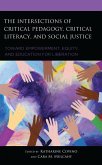
Critical literacy research has highlighted the complexities associated with integrating critical literacy theory with classroom practice, recognizing the intersection between critical literacy and culturally sustaining pedagogies, and the resistance faced by educators as they create spaces for courageous conversations, critical engagement with text, and progressive text creation. Although the complexities of moving from theory to practice are more understood than they previously were, how educators navigate the inherent tensions of fostering and sustaining a critical practice is less clear.…mehr
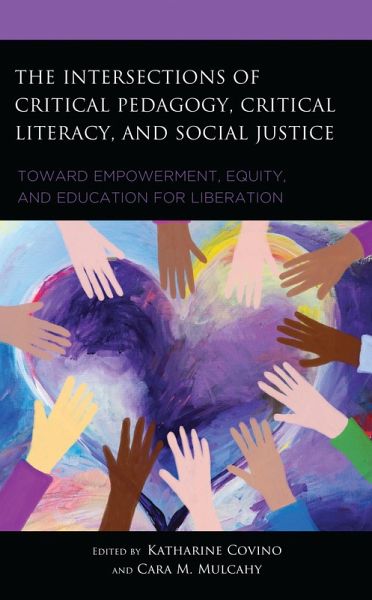
Critical literacy research has highlighted the complexities associated with integrating critical literacy theory with classroom practice, recognizing the intersection between critical literacy and culturally sustaining pedagogies, and the resistance faced by educators as they create spaces for courageous conversations, critical engagement with text, and progressive text creation. Although the complexities of moving from theory to practice are more understood than they previously were, how educators navigate the inherent tensions of fostering and sustaining a critical practice is less clear. This volume defines 'educator' as a PreK-12 classroom teacher, or as a teacher educator whose work is predominantly associated with university-based teacher education. Their roles and responsibilities are diverse. Through an unpacking of the curricula, courses, programs, and professional learning spaces in which educators operate, this edited volume seeks to answer these questions: How do educators develop a critical practice of their own? How do educators navigate areas of resistance? How do educators sustain their practice in the face of resistance? How do educators address concerns of parents, colleagues, administrators, and stakeholders ? How do educators link social justice issues to critical literacy/critical pedagogy?
Die Herstellerinformationen sind derzeit nicht verfügbar.
Autorenporträt
Katharine Covino is associate professor of english studiesat Fitchburg State University. Cara M. Mulcahy is professor of literacy at Central Connecticut State University.
Inhaltsangabe
Contents Foreword by Cornelius Minor Acknowledgments Section 1 Critical Pedagogy Social Justice, and Transformative Change Chapter 1: Social Justice in the Classroom: How Critical Literacy Can Help Teachers and Students Move Toward Empowerment, Equity, and Transformative Change by Katharine Covino and Cara Mulcahy Chapter 2: Centering Critical Engagement, Multimodal Learning, and Compassion through Language and Literacy by Cara Mulcahy and Louise Shaw Chapter 3: Defining and Developing Justice-Centered Educators by Nadia Behizadeh, PJ Miller, Rhina Fernandes Williams, Rosalynne Duff, Maya Jenkins, Kofi Kinney, Megan McKnight, Camea Davis, Jacob Hackett, Stephanie Behm Cross, and Elizabeth Hearn Section 2 Voices of Teacher Educators: Navigating Critical Pedagogies Chapter 4: (Up)Lifting as We Climb: Reflections of Black Faculty by Christina Wright Fields and Addrain Conyers Chapter 5: Classroom Curriculum, Critical Texts and Cries for Censorship: The Impact on Educators in One West Michigan Community by Sara Hoeve Chapter 6: Critique, Hope, Action: Analyzing Teacher-Selected Literature for Critical Pedagogy in the Elementary Classroom by Jessica Edwards Section 3 Stories from the Classroom: Critical Pedagogies as a Tool of Empowerment Chapter 7: Advocating for a More Just World through a Critical Literacy Unit: One Student's Expression of Critical Consciousness by Kierstin Giunco, Christine M. Leighton, and Grace Tumushabe Chapter 8: Leading Through Our Own Learning: Elevating Student Voice for Social Action by Sawsan Jaber Chapter 9: They're Not Too Young: Centering Young Children of Color's Racialized Knowledge and Disrupting White Supremacy Through Critical Race Pedagogy by Wintre Foxworth Johnson and Samiha Rahman About the Contributors
Es gelten unsere Allgemeinen Geschäftsbedingungen: www.buecher.de/agb
Impressum
www.buecher.de ist ein Internetauftritt der buecher.de internetstores GmbH
Geschäftsführung: Monica Sawhney | Roland Kölbl | Günter Hilger
Sitz der Gesellschaft: Batheyer Straße 115 - 117, 58099 Hagen
Postanschrift: Bürgermeister-Wegele-Str. 12, 86167 Augsburg
Amtsgericht Hagen HRB 13257
Steuernummer: 321/5800/1497
USt-IdNr: DE450055826