40,95 €
40,95 €
inkl. MwSt.
Sofort per Download lieferbar

20 °P sammeln
40,95 €
Als Download kaufen
40,95 €
inkl. MwSt.
Sofort per Download lieferbar
20 °P sammeln
Jetzt verschenken
Alle Infos zum eBook verschenken
40,95 €
inkl. MwSt.
Sofort per Download lieferbar
Alle Infos zum eBook verschenken
20 °P sammeln

Andere Kunden interessierten sich auch für
") The Neoplatonic Socrates (eBook, ePUB)70,95 €
The Neoplatonic Socrates (eBook, ePUB)70,95 €") The Metaphysics of the Pythagorean Theorem (eBook, ePUB)27,95 €
The Metaphysics of the Pythagorean Theorem (eBook, ePUB)27,95 €") The Tragedy of Political Theory (eBook, ePUB)34,95 €
The Tragedy of Political Theory (eBook, ePUB)34,95 €") Sun-Tzu: The Art of Warfare (eBook, ePUB)8,95 €
Sun-Tzu: The Art of Warfare (eBook, ePUB)8,95 €") The Meditations of Marcus Aurelius (eBook, ePUB)10,95 €
The Meditations of Marcus Aurelius (eBook, ePUB)10,95 €") Plato and the Body (eBook, ePUB)25,95 €
Plato and the Body (eBook, ePUB)25,95 €") Aristotle on the Continuum in Presocratic Thought (eBook, ePUB)39,95 €
Aristotle on the Continuum in Presocratic Thought (eBook, ePUB)39,95 €





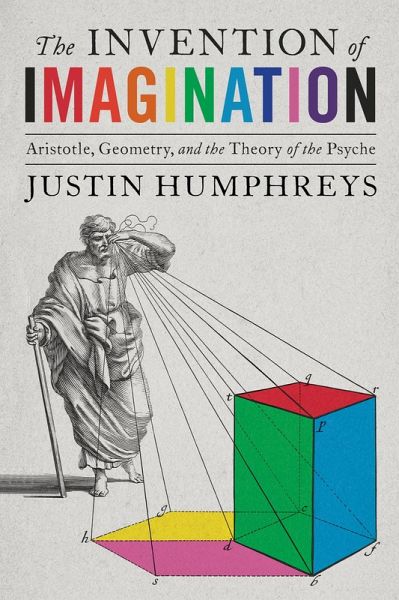
Aristotle was the first philosopher to divide the imaginationwhat he called phantasiafrom other parts of the psyche, placing it between perception and intellect. A mathematician and philosopher of mathematical sciences, Aristotle was puzzled by the problem of geometrical cognitionwhich depends on the ability to "produce" and "see" a multitude of immaterial objectsand so he introduced the category of internal appearances produced by a new part of the psyche, the imagination. As Justin Humphreys argues, Aristotle developed his theory of imagination in part to explain certain functions of reason with a psychological rather than metaphysical framework. Investigating the background of this conceptual development, The Invention of Imagination reveals how imagery was introduced into systematic psychology in fifth-century Athens and ultimately made mathematical science possible. It offers new insights about major philosophers in the Greek tradition and significant events in the emergence of ancient mathematics while offering space for a critical reflection on how we understand ourselves as thinking beings.
Dieser Download kann aus rechtlichen Gründen nur mit Rechnungsadresse in A, D ausgeliefert werden.