5,99 €
5,99 €
inkl. MwSt.
Erscheint vor. 02.06.26

3 °P sammeln
5,99 €
Als Download kaufen
5,99 €
inkl. MwSt.
Erscheint vor. 02.06.26
3 °P sammeln
Jetzt verschenken
Alle Infos zum eBook verschenken
5,99 €
inkl. MwSt.
Erscheint vor. 02.06.26
Alle Infos zum eBook verschenken
3 °P sammeln

Andere Kunden interessierten sich auch für
") The Society of the Spectacle (eBook, ePUB)5,99 €
The Society of the Spectacle (eBook, ePUB)5,99 €") Revolution of Everyday Life (eBook, ePUB)5,99 €
Revolution of Everyday Life (eBook, ePUB)5,99 €") Situationist International Anthology (eBook, ePUB)5,99 €
Situationist International Anthology (eBook, ePUB)5,99 €") Nature of Human Brain Work (eBook, ePUB)5,99 €
Nature of Human Brain Work (eBook, ePUB)5,99 €") After the Future (eBook, ePUB)9,95 €
After the Future (eBook, ePUB)9,95 €") The Return of the Political (eBook, ePUB)9,95 €
The Return of the Political (eBook, ePUB)9,95 €") The Hidden God (eBook, ePUB)16,95 €
The Hidden God (eBook, ePUB)16,95 €




"It may seem absurd to talk about revolution. But all the alternatives assume the continuation of the present system, which is even more absurd."
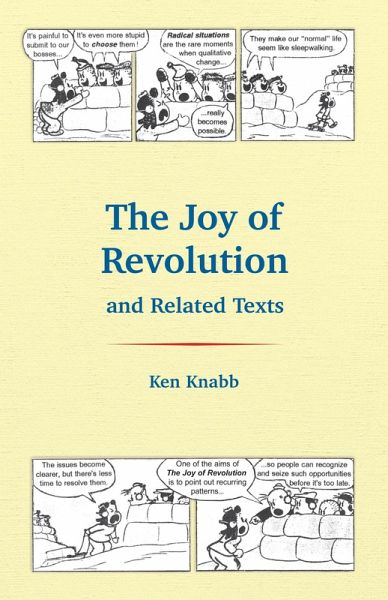
Best known for his meticulous translations of numerous works by Guy Debord and the Situationist International, Ken Knabb is also the author of numerous radical texts. The Joy of Revolution is widely considered his masterpiece. While there have been numerous histories of past revolutions and countless debates about the merits and drawbacks of different radical tactics, it would be difficult to name a single book that more clearly and concisely explores the problems and possibilities of a modern, situationist-type revolution.
Beginning with a brief overview of the absurdity of the present society and the failures of various efforts to change it, it examines the pros and cons of a wide range of radical tactics, first in the context of "normal" or "ordinary" conditions, then in the very different context of radical situations--those rare breakthroughs where numbers of people start to call everything into question and real change becomes possible. The book then concludes with some speculations on how a global liberated society might work, and what it might be like to live in.
For this new edition, Knabb has updated his book (originally published in 1997) and appended several of his more recent texts, including a series of articles on the Occupy movement, in which he was an enthusiastic participant.
Best known for his meticulous translations of numerous works by Guy Debord and the Situationist International, Ken Knabb is also the author of numerous radical texts. The Joy of Revolution is widely considered his masterpiece. While there have been numerous histories of past revolutions and countless debates about the merits and drawbacks of different radical tactics, it would be difficult to name a single book that more clearly and concisely explores the problems and possibilities of a modern, situationist-type revolution.
Beginning with a brief overview of the absurdity of the present society and the failures of various efforts to change it, it examines the pros and cons of a wide range of radical tactics, first in the context of "normal" or "ordinary" conditions, then in the very different context of radical situations--those rare breakthroughs where numbers of people start to call everything into question and real change becomes possible. The book then concludes with some speculations on how a global liberated society might work, and what it might be like to live in.
For this new edition, Knabb has updated his book (originally published in 1997) and appended several of his more recent texts, including a series of articles on the Occupy movement, in which he was an enthusiastic participant.
Dieser Download kann aus rechtlichen Gründen nur mit Rechnungsadresse in A, D ausgeliefert werden.