0,99 €
inkl. MwSt.
Sofort per Download lieferbar
0 °P sammeln

Andere Kunden interessierten sich auch für
") The Romantic Revolution in America: 1800-1860 (eBook, ePUB)52,95 €
The Romantic Revolution in America: 1800-1860 (eBook, ePUB)52,95 €") Portrait of the Manager as a Young Author (eBook, ePUB)8,95 €
Portrait of the Manager as a Young Author (eBook, ePUB)8,95 €") The Lily's Tongue (eBook, ePUB)25,95 €
The Lily's Tongue (eBook, ePUB)25,95 €") The Vision of Richard Weaver (eBook, ePUB)45,95 €
The Vision of Richard Weaver (eBook, ePUB)45,95 €") La Scienza della 1A Persona (eBook, ePUB)10,95 €
La Scienza della 1A Persona (eBook, ePUB)10,95 €") An Analysis of Gilbert Ryle's The Concept of Mind (eBook, ePUB)7,99 €
An Analysis of Gilbert Ryle's The Concept of Mind (eBook, ePUB)7,99 €") The Rushdie Affair (eBook, ePUB)48,95 €
The Rushdie Affair (eBook, ePUB)48,95 €


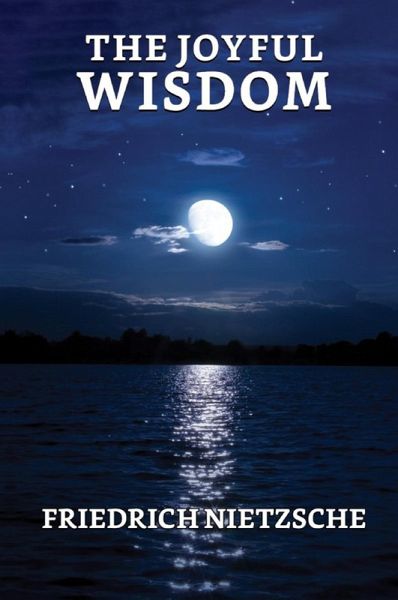
The Joyful Wisdom is typically seen as belonging to Nietzsche's middle period, during which his writings focused on the benefits of science, scepticism, and intellectual discipline as routes to mental emancipation. The book's title, which affirms the Provençal tradition, is also a joyful "yea-saying" to existence. This book includes a revised and updated translation of the second edition, which was translated by the Scottish critic and translator Thomas Common in 1910 and first published in German in 1887.
Dieser Download kann aus rechtlichen Gründen nur mit Rechnungsadresse in A, D ausgeliefert werden.
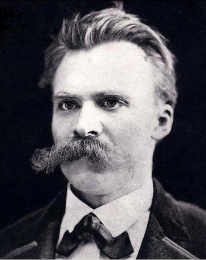
Friedrich Wilhelm Nietzsche was a German philosopher, classical scholar, and cultural critic, known for his profound influence on modern thought. Born on October 15, 1844, in R cken, Germany, Nietzsche initially pursued a career as a classical philologist before transitioning to philosophy. His works challenged traditional beliefs, and his critiques of culture, religion, and morality made him one of the most influential philosophers of the 19th century. Nietzsche's writings explored complex concepts such as the "will to power," the " bermensch," and the idea of the eternal recurrence. His works, including "Thus Spoke Zarathustra" and "Beyond Good and Evil," questioned the foundations of Western philosophy and introduced ideas that would later shape existentialism and postmodernism. Nietzsche s intellectual journey was influenced by figures like Arthur Schopenhauer and Fyodor Dostoevsky. He faced personal struggles throughout his life, including mental illness, which led to his decline in health. He passed away on August 25, 1900, in Weimar, Germany, at the age of 55. Nietzsche s parents were Carl Ludwig Nietzsche and Franziska Oehler, and he had a brother, Ludwig Joseph Nietzsche, and a sister, Elisabeth F rster-Nietzsche. His groundbreaking ideas continue to resonate in contemporary philosophy and culture.