22,95 €
22,95 €
inkl. MwSt.
Sofort per Download lieferbar

11 °P sammeln
22,95 €
Als Download kaufen
22,95 €
inkl. MwSt.
Sofort per Download lieferbar
11 °P sammeln
Jetzt verschenken
Alle Infos zum eBook verschenken
22,95 €
inkl. MwSt.
Sofort per Download lieferbar
Alle Infos zum eBook verschenken
11 °P sammeln

Andere Kunden interessierten sich auch für
") Killing the Competition (eBook, ePUB)46,95 €
Killing the Competition (eBook, ePUB)46,95 €") Culture and the Individual (eBook, ePUB)39,95 €
Culture and the Individual (eBook, ePUB)39,95 €") Why We Kill (eBook, ePUB)42,95 €
Why We Kill (eBook, ePUB)42,95 €") Mafia Wars in the History (eBook, ePUB)2,99 €
Mafia Wars in the History (eBook, ePUB)2,99 €") Corporatism and the Myth of Consensus (eBook, ePUB)39,95 €
Corporatism and the Myth of Consensus (eBook, ePUB)39,95 €") The End of Consensus (eBook, ePUB)15,95 €
The End of Consensus (eBook, ePUB)15,95 €") Killing Radicalism (eBook, ePUB)22,95 €
Killing Radicalism (eBook, ePUB)22,95 €




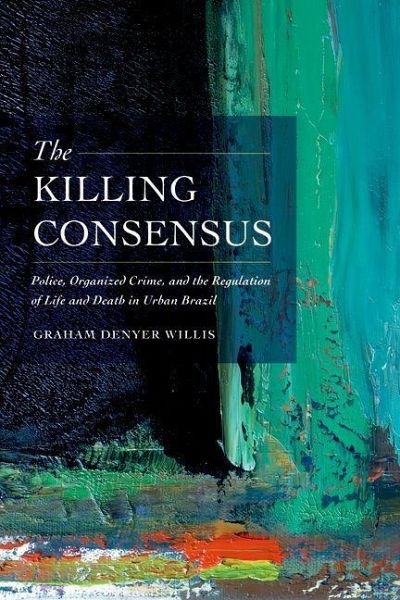
We hold many assumptions about police work-that it is the responsibility of the state, or that police officers are given the right to kill in the name of public safety or self-defense. But in The Killing Consensus, Graham Denyer Willis shows how in São Paulo, Brazil, killing and the arbitration of "normal" killing in the name of social order are actually conducted by two groups-the police and organized crime-both operating according to parallel logics of murder. Based on three years of ethnographic fieldwork, Willis's book traces how homicide detectives categorize two types of killing: the first resulting from "resistance" to police arrest (which is often broadly defined) and the second at the hands of a crime "family' known as the Primeiro Comando da Capital (PCC). Death at the hands of police happens regularly, while the PCC's centralized control and strict moral code among criminals has also routinized killing, ironically making the city feel safer for most residents. In a fractured urban security environment, where killing mirrors patterns of inequitable urbanization and historical exclusion along class, gender, and racial lines, Denyer Willis's research finds that the city's cyclical periods of peace and violence can best be understood through an unspoken but mutually observed consensus on the right to kill. This consensus hinges on common notions and street-level practices of who can die, where, how, and by whom, revealing an empirically distinct configuration of authority that Denyer Willis calls sovereignty by consensus.
Dieser Download kann aus rechtlichen Gründen nur mit Rechnungsadresse in A, D ausgeliefert werden.