Sie sind bereits eingeloggt. Klicken Sie auf 2. tolino select Abo, um fortzufahren.
Bitte loggen Sie sich zunächst in Ihr Kundenkonto ein oder registrieren Sie sich bei bücher.de, um das eBook-Abo tolino select nutzen zu können.
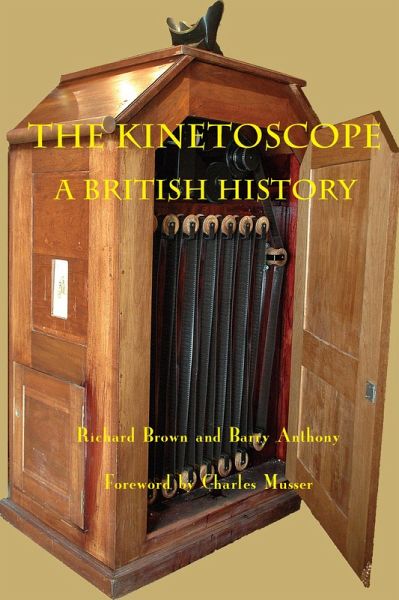
The story of how the motion-picture device was developed, and its role in Victorian society and early cinema. The position of the kinetoscope in film history is central and undisputed; indicative of its importance is the detailed attention American scholars have given to examining its history. However, the Kinetoscope's development in Britain has not been well documented and much current information about it is incomplete and out of date. This book, for the first time, presents a comprehensive account of the unauthorized and often colorful development of British kinetoscopes, using many…mehr
The story of how the motion-picture device was developed, and its role in Victorian society and early cinema. The position of the kinetoscope in film history is central and undisputed; indicative of its importance is the detailed attention American scholars have given to examining its history. However, the Kinetoscope's development in Britain has not been well documented and much current information about it is incomplete and out of date. This book, for the first time, presents a comprehensive account of the unauthorized and often colorful development of British kinetoscopes, using many previously unpublished sources. The commercial and technical backgrounds of the kinetoscope are looked at in detail; the style and content of the earliest British films analyzed; and the device's place in the wider world of Victorian popular entertainment examined. In addition, a unique legal case is revealed and a number of previously unrecorded film pioneers are identified and discussed.
Die Herstellerinformationen sind derzeit nicht verfügbar.
Autorenporträt
Richard Brown is author of The History of the British Mutoscope and Biograph Company and editor of the facsimile edition of W. K-L. Dickson's The Biograph in Battle: Its Story in the South African War.
Barry Anthony is author of Murder, Mayhem and Music Hall and contributor to Who's Who of Victorian Cinema; the Encyclopaedia of Early Cinema; and Directors in British and Irish Cinema: A Reference Companion.
Inhaltsangabe
Introduction: An International Perspective and Timeline Part One [Richard Brown] Chapter 1. Early Developments Pre-October 1894 notices in Britain about the Kinetoscope. Exhibition of the 'Electrical Wonder' a forerunner. Original exploitation plans by Colonel Gouraud. The formation of the Continental Commerce Company and their agreement with Edison for the sale of Kinetoscopes in the UK. Chapter 2. The Arrival of the Kinetoscope in Britain Initial reaction. Press notices on the opening of the Oxford Street shop. The phonograph business and its background of illegality. Both the Kinetoscope and the phonograph promoted under the 'umbrella' of Edison's name. Leading phonograph personalities, such as J. L. Young and James Hough become interested in the Kinetoscope business. Hough and his connection with the Greeks and Chinnock. Plans to market 'bogus' machines. Arrival on the scene of Robert Paul and Birt Acres. Chapter 3. The Legal and Historical Context to the Kinetoscope in Britain The importance of correctly understanding English intellectual property law in interpreting the history of the Kinetoscope. Photographic copyright and how it correctly defines the commercial relationship between Paul and Acres. Claims made by both examined and assessed. The English patent system and Edison's attitude to patents. English patent applications for Kinetoscopes and Kineto-Phonographs. The Merchandise Marks Act and the law relating to 'Passing Off'. The Kinetoscope Court Case. What it did and what it did not do. The incomplete and inaccurate transmission of historical information and the difficulties this has caused to film history before April 1896. The problem of 'manipulation' in the statements of both Acres and Paul. Chapter 4. Marketing the Kinetoscope ritain The commercial and operational aspects of Kinetoscope exhibition. The economic base defined. Price behaviour. Profit and capital return periods defined. The importance of West Yorkshire in Kinetoscope history. Cecil Wray, and John Henry Rigg and the design innovation of his 'Baby' Kinetoscope. Other showmen such as James Walker, J. H. Quain, Alfred Lomax and Fred Duval. Advertising methods used. Chapter 5. Commercial Decline and the Arrival of Projected Film The decline in both purchase and sale price of machines quantified. Reduction of prices by the Continental Commerce Company. The downgrading 'role' of the Kinetoscope - from 'star' attraction to peripheral attraction at Church bazaars, etc. Paul sells up his Earl's Court machines. The 'Time Machine' entertainment re-examined. Acres and projected film. Early Acres and Paul demonstrations. January to end of March 1896. Later notices. Ran in parallel with film projection, as it had with the phonograph. Conclusions. Part Two [Barry Anthony] Chapter 6. The films of Paul and Acres Looks at Paul's and Acres' environments in Hatton Garden and Barnet. Study of British Kinetoscope films and their cultural background. Chapter 7. A Premiere at the Nag's Head Paul's exploitation of his Kinetoscope and relationship with the notorious Lord Hinton. Break up of Paul/Acres partnership. Chapter 8. Magic, Magnates and Galvanic Forces Looks at the careers of Frederick William Trautner/Duval; Samuel Stott/Herr Samuels; 'Professor'Alfred Jones and Alfred Henry Vidler. Also music hall's two main business figures Hugh Moss and Oswald Stoll and their exploitation of Kinetoscope. Discussion of changing face of entertainment. Becoming more family orientated. Creation of large scale entertainment venues. Chapter 9. The Kaiser's Kinetoscope Acres filming of the Opening of Kaiser Wilhelm Canal and Sedan Day celebrations. Potential of film as a propaganda medium. Chapter 10. First Transatlantic Filming Edison's cameraman Theodore Heise and his short sojourn in Europe. Harry Short's possible filming trip to US in March 1896. Chapter 11. The Charters Towers Kinetophone Mystery Compares mysterious Australian Kinetophone films with known phonograph recordings. Looks at Andrew Holland's possible connection. Also examines the importance of celebrities/celebrity in Kinetoscope and film forever after. Chapter 12. A New World of Entertainment Looks at social backgrounds of Alfred Lomax, Frederick Dalton and the Simpson brothers and how they fitted into the wider entertainment system. Examines holiday resorts and the Kinetoscope fitting into a world of new technology. Appendixes I. The Legal Case; II. List of Kinetoscope Exhibitions in UK; III. List of UK Kinetoscope films (including Acres' German films); IV. Newspaper Review of the play Outcasts of London, July 1895
Introduction: An International Perspective and Timeline Part One [Richard Brown] Chapter 1. Early Developments Pre-October 1894 notices in Britain about the Kinetoscope. Exhibition of the 'Electrical Wonder' a forerunner. Original exploitation plans by Colonel Gouraud. The formation of the Continental Commerce Company and their agreement with Edison for the sale of Kinetoscopes in the UK. Chapter 2. The Arrival of the Kinetoscope in Britain Initial reaction. Press notices on the opening of the Oxford Street shop. The phonograph business and its background of illegality. Both the Kinetoscope and the phonograph promoted under the 'umbrella' of Edison's name. Leading phonograph personalities, such as J. L. Young and James Hough become interested in the Kinetoscope business. Hough and his connection with the Greeks and Chinnock. Plans to market 'bogus' machines. Arrival on the scene of Robert Paul and Birt Acres. Chapter 3. The Legal and Historical Context to the Kinetoscope in Britain The importance of correctly understanding English intellectual property law in interpreting the history of the Kinetoscope. Photographic copyright and how it correctly defines the commercial relationship between Paul and Acres. Claims made by both examined and assessed. The English patent system and Edison's attitude to patents. English patent applications for Kinetoscopes and Kineto-Phonographs. The Merchandise Marks Act and the law relating to 'Passing Off'. The Kinetoscope Court Case. What it did and what it did not do. The incomplete and inaccurate transmission of historical information and the difficulties this has caused to film history before April 1896. The problem of 'manipulation' in the statements of both Acres and Paul. Chapter 4. Marketing the Kinetoscope ritain The commercial and operational aspects of Kinetoscope exhibition. The economic base defined. Price behaviour. Profit and capital return periods defined. The importance of West Yorkshire in Kinetoscope history. Cecil Wray, and John Henry Rigg and the design innovation of his 'Baby' Kinetoscope. Other showmen such as James Walker, J. H. Quain, Alfred Lomax and Fred Duval. Advertising methods used. Chapter 5. Commercial Decline and the Arrival of Projected Film The decline in both purchase and sale price of machines quantified. Reduction of prices by the Continental Commerce Company. The downgrading 'role' of the Kinetoscope - from 'star' attraction to peripheral attraction at Church bazaars, etc. Paul sells up his Earl's Court machines. The 'Time Machine' entertainment re-examined. Acres and projected film. Early Acres and Paul demonstrations. January to end of March 1896. Later notices. Ran in parallel with film projection, as it had with the phonograph. Conclusions. Part Two [Barry Anthony] Chapter 6. The films of Paul and Acres Looks at Paul's and Acres' environments in Hatton Garden and Barnet. Study of British Kinetoscope films and their cultural background. Chapter 7. A Premiere at the Nag's Head Paul's exploitation of his Kinetoscope and relationship with the notorious Lord Hinton. Break up of Paul/Acres partnership. Chapter 8. Magic, Magnates and Galvanic Forces Looks at the careers of Frederick William Trautner/Duval; Samuel Stott/Herr Samuels; 'Professor'Alfred Jones and Alfred Henry Vidler. Also music hall's two main business figures Hugh Moss and Oswald Stoll and their exploitation of Kinetoscope. Discussion of changing face of entertainment. Becoming more family orientated. Creation of large scale entertainment venues. Chapter 9. The Kaiser's Kinetoscope Acres filming of the Opening of Kaiser Wilhelm Canal and Sedan Day celebrations. Potential of film as a propaganda medium. Chapter 10. First Transatlantic Filming Edison's cameraman Theodore Heise and his short sojourn in Europe. Harry Short's possible filming trip to US in March 1896. Chapter 11. The Charters Towers Kinetophone Mystery Compares mysterious Australian Kinetophone films with known phonograph recordings. Looks at Andrew Holland's possible connection. Also examines the importance of celebrities/celebrity in Kinetoscope and film forever after. Chapter 12. A New World of Entertainment Looks at social backgrounds of Alfred Lomax, Frederick Dalton and the Simpson brothers and how they fitted into the wider entertainment system. Examines holiday resorts and the Kinetoscope fitting into a world of new technology. Appendixes I. The Legal Case; II. List of Kinetoscope Exhibitions in UK; III. List of UK Kinetoscope films (including Acres' German films); IV. Newspaper Review of the play Outcasts of London, July 1895
Es gelten unsere Allgemeinen Geschäftsbedingungen: www.buecher.de/agb
Impressum
www.buecher.de ist ein Internetauftritt der buecher.de internetstores GmbH
Geschäftsführung: Monica Sawhney | Roland Kölbl | Günter Hilger
Sitz der Gesellschaft: Batheyer Straße 115 - 117, 58099 Hagen
Postanschrift: Bürgermeister-Wegele-Str. 12, 86167 Augsburg
Amtsgericht Hagen HRB 13257
Steuernummer: 321/5800/1497
USt-IdNr: DE450055826