22,95 €
22,95 €
inkl. MwSt.
Sofort per Download lieferbar

11 °P sammeln
22,95 €
Als Download kaufen
22,95 €
inkl. MwSt.
Sofort per Download lieferbar
11 °P sammeln
Jetzt verschenken
Alle Infos zum eBook verschenken
22,95 €
inkl. MwSt.
Sofort per Download lieferbar
Alle Infos zum eBook verschenken
11 °P sammeln

Andere Kunden interessierten sich auch für
") Korea's Future and the Great Powers (eBook, PDF)20,95 €
Korea's Future and the Great Powers (eBook, PDF)20,95 €") Law and Politics in China's Foreign Trade (eBook, PDF)66,95 €
Law and Politics in China's Foreign Trade (eBook, PDF)66,95 €") Ethnic Identity and the State in Iran (eBook, PDF)40,95 €
Ethnic Identity and the State in Iran (eBook, PDF)40,95 €") Shaikhdoms of Eastern Arabia (eBook, PDF)72,95 €
Shaikhdoms of Eastern Arabia (eBook, PDF)72,95 €") State Formation and Identity in the Middle East and North Africa (eBook, PDF)40,95 €
State Formation and Identity in the Middle East and North Africa (eBook, PDF)40,95 €") Culture and Conflict in Palestine/Israel (eBook, PDF)41,95 €
Culture and Conflict in Palestine/Israel (eBook, PDF)41,95 €") Peaceful Islamist Mobilization in the Muslim World (eBook, PDF)40,95 €
Peaceful Islamist Mobilization in the Muslim World (eBook, PDF)40,95 €







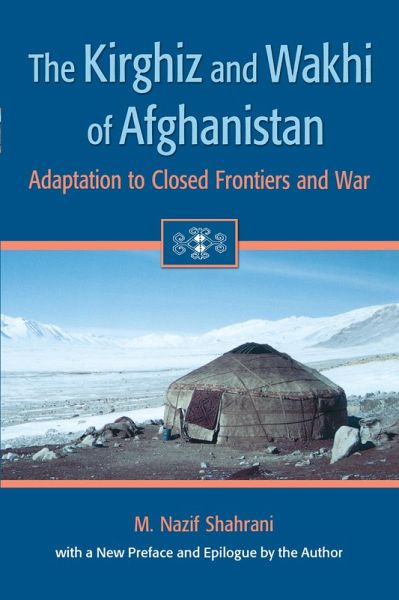
An extended new Preface and a new Epilogue written after the fall of the Taliban in 2001, place The Kirghiz and Wakhi of Afghanistan, originally published in 1979, in the context of a vastly changed world. The original book describes the cultural and ecological adaptation of the nomadic Kirghiz and their agriculturalist neighbors, the Wakhi, to high altitudes and a frigid climate in the Wakhan Corridor, a panhandle of Afghanistan that borders Pakistan, the former Soviet Union, and the People's Republic of China.
The new Preface challenges the assumption that the root cause of terrorism is religious. Shahrani asserts that the problem of terrorism is fundamentally political and is historically linked to the inappropriate model of the centralized nation-state introduced to Afghanistan by colonial regimes.
The differing responses of the Kirghiz and Wakhi to the Marxist coup are discussed in the new Epilogue. Shahrani has closely followed the flight of the Kirghiz to Pakistan in 1978 and their eventual resettlement among resentful Kurdish villagers in eastern Turkey in 1982. The ethnographic documentation and analysis of the transformation of Kirghiz society, politics, economics, and demography since their exodus from the Pamirs offers valuable lessons to our understanding of the dynamics and true resilience of small pastoral nomadic communities.
The new Preface challenges the assumption that the root cause of terrorism is religious. Shahrani asserts that the problem of terrorism is fundamentally political and is historically linked to the inappropriate model of the centralized nation-state introduced to Afghanistan by colonial regimes.
The differing responses of the Kirghiz and Wakhi to the Marxist coup are discussed in the new Epilogue. Shahrani has closely followed the flight of the Kirghiz to Pakistan in 1978 and their eventual resettlement among resentful Kurdish villagers in eastern Turkey in 1982. The ethnographic documentation and analysis of the transformation of Kirghiz society, politics, economics, and demography since their exodus from the Pamirs offers valuable lessons to our understanding of the dynamics and true resilience of small pastoral nomadic communities.
Dieser Download kann aus rechtlichen Gründen nur mit Rechnungsadresse in A, D ausgeliefert werden.