13,95 €
inkl. MwSt.
Sofort per Download lieferbar
7 °P sammeln

Andere Kunden interessierten sich auch für
") Our Latest Longest War (eBook, ePUB)17,95 €
Our Latest Longest War (eBook, ePUB)17,95 €") The Deal That Broke America, True Stories of Corruption, Collusion, and Catastrophe Inside Big Pharma (eBook, ePUB)6,99 €
The Deal That Broke America, True Stories of Corruption, Collusion, and Catastrophe Inside Big Pharma (eBook, ePUB)6,99 €") Catastrophe (eBook, ePUB)5,35 €
Catastrophe (eBook, ePUB)5,35 €") The Gaza Catastrophe (eBook, ePUB)14,39 €
The Gaza Catastrophe (eBook, ePUB)14,39 €") Natural Disasters in a Global Environment (eBook, ePUB)40,99 €
Natural Disasters in a Global Environment (eBook, ePUB)40,99 €") Three Women (eBook, ePUB)13,84 €
Three Women (eBook, ePUB)13,84 €") Catastrophe (eBook, ePUB)4,99 €
Catastrophe (eBook, ePUB)4,99 €


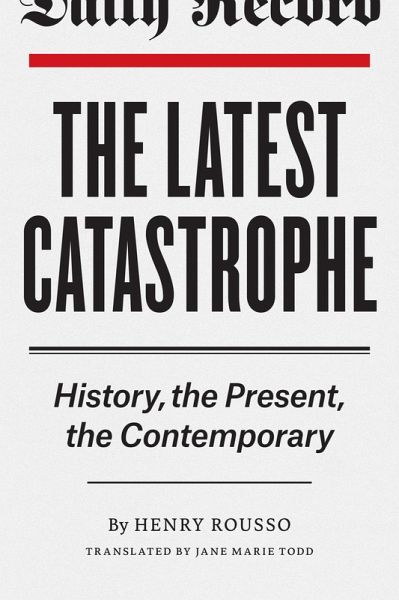
The writing of recent history tends to be deeply marked by conflict, by personal and collective struggles rooted in horrific traumas and bitter controversies. Frequently, today's historians can find themselves researching the same events that they themselves lived through. This book reflects on the concept and practices of what is called "contemporary history," a history of the present time, and identifies special tensions in the field between knowledge and experience, distance and proximity, and objectivity and subjectivity. Henry Rousso addresses the rise of contemporary history and the relations of present-day societies to their past, especially their legacies of political violence. Focusing on France, Germany, the United Kingdom, and the United States, he shows that for contemporary historians, the recent past has become a problem to be solved. No longer unfolding as a series of traditions to be respected or a set of knowledge to be transmitted and built upon, history today is treated as a constant act of mourning or memory, an attempt to atone. Historians must also negotiate with strife within this field, as older scholars who may have lived through events clash with younger historians who also claim to understand the experiences. Ultimately, The Latest Catastrophe shows how historians, at times against their will, have themselves become actors in a history still being made.