39,95 €
39,95 €
inkl. MwSt.
Sofort per Download lieferbar

20 °P sammeln
39,95 €
Als Download kaufen
39,95 €
inkl. MwSt.
Sofort per Download lieferbar
20 °P sammeln
Jetzt verschenken
Alle Infos zum eBook verschenken
39,95 €
inkl. MwSt.
Sofort per Download lieferbar
Alle Infos zum eBook verschenken
20 °P sammeln

Andere Kunden interessierten sich auch für
") Spatialized Injustice in the Contemporary City (eBook, PDF)41,95 €
Spatialized Injustice in the Contemporary City (eBook, PDF)41,95 €") The Human Rights City (eBook, PDF)43,95 €
The Human Rights City (eBook, PDF)43,95 €") The Economies Of Central City Neighborhoods (eBook, PDF)45,95 €
The Economies Of Central City Neighborhoods (eBook, PDF)45,95 €") The City After The Automobile (eBook, PDF)45,95 €
The City After The Automobile (eBook, PDF)45,95 €") Migration, Work and Home-Making in the City (eBook, PDF)43,95 €
Migration, Work and Home-Making in the City (eBook, PDF)43,95 €") The Routledge International Handbook of Ethnographic Film and Video (eBook, PDF)45,95 €
The Routledge International Handbook of Ethnographic Film and Video (eBook, PDF)45,95 €") The AIDS Epidemic (eBook, PDF)51,95 €
The AIDS Epidemic (eBook, PDF)51,95 €


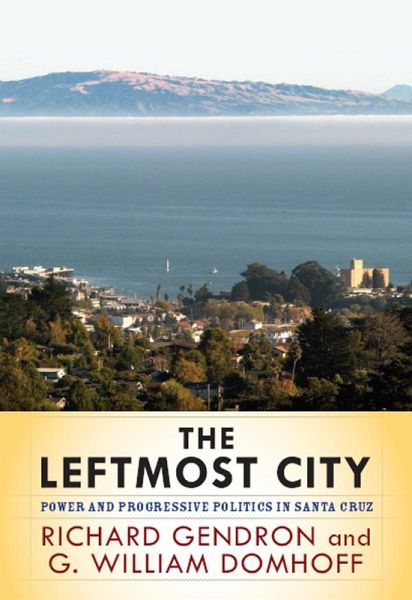
Almost all US cities are controlled by real estate and development interests, but Santa Cruz, California, is a deviant case. An unusual coalition of socialist-feminists, environmentalists, social-welfare liberals, and neighborhood activists has stopped every growth project proposed by landowners and developers since 1969, and controlled the city council since 1981. Even after a 1989 earthquake forced the city to rebuild its entire downtown, the progressive elected officials prevailed over developers and landowners. Drawing on hundreds of primary documents, as well as original, previously unpublished interviews, The Leftmost City utilizes an extended case study of Santa Cruz to critique three major theories of urban power: Marxism, public-choice theory, and regime theory. Santa Cruz is presented within the context of other progressive attempts to shape city government, and the authors' findings support growth-coalition theory, which stresses the conflict between real estate interests and neighborhoods as the fundamental axis of urban politics. The authors conclude their analysis by applying insights gleaned from Santa Cruz to progressive movements nationwide, offering a template for progressive coalitions to effectively organize to achieve political power.
Dieser Download kann aus rechtlichen Gründen nur mit Rechnungsadresse in A, B, BG, CY, CZ, D, DK, EW, E, FIN, F, GR, HR, H, IRL, I, LT, L, LR, M, NL, PL, P, R, S, SLO, SK ausgeliefert werden.