30,95 €
inkl. MwSt.
Sofort per Download lieferbar
15 °P sammeln

Andere Kunden interessierten sich auch für
") The People's Congresses and Governance in China (eBook, PDF)45,95 €
The People's Congresses and Governance in China (eBook, PDF)45,95 €") Inside The Legislative Process (eBook, PDF)41,95 €
Inside The Legislative Process (eBook, PDF)41,95 €") Campaign Contributions and Legislative Voting (eBook, PDF)43,95 €
Campaign Contributions and Legislative Voting (eBook, PDF)43,95 €") Legislative Decline in the 21st Century (eBook, PDF)39,95 €
Legislative Decline in the 21st Century (eBook, PDF)39,95 €") Legislative Learning (eBook, PDF)47,95 €
Legislative Learning (eBook, PDF)47,95 €") The Role of Governments in Legislative Agenda Setting (eBook, PDF)45,95 €
The Role of Governments in Legislative Agenda Setting (eBook, PDF)45,95 €") Governance and the Depoliticisation of Development (eBook, PDF)45,95 €
Governance and the Depoliticisation of Development (eBook, PDF)45,95 €

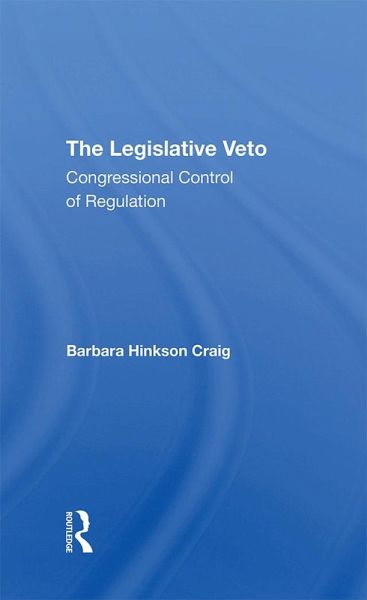
On June 23, 1983, the U.S. Supreme Court declared a legislative veto unconstitutional in the
case, a ruling that seems to invalidate the legislative vetoes in more than two hundred laws. Two weeks later the court reaffirmed the principles of
to invalidate the legislative veto in other acts. These epic cases, which are already being called the most important separation-of-powers rulings since the White House tapes cases, have generated debate over the implications of the loss of the legislative veto and the wisdom of the court's actions. In this book the author argues that the legislative veto fell far short of its promise in actual operation over the regulatory process. Instead of promoting democratic congressional control over the actions of bureaucrats, legislative veto politics more often devolved to the politics of special interest protection, heavily influenced by unelected congressional staff. Moreover, the legislative veto. allowed Congress to sidestep conflicts by issuing vague mandates that left agencies without the necessary congressional support to implement them. Dr. Craig combines a historical perspective on the legislative veto with analyses of original case studies involving some of the most important policy issues of the 1980s--housing, education, energy, and consumer protection. Assessing all the cases available for research, she points to discrepancies between the legislative veto's intended effects and its actual results. In a final chapter she considers the impact of the
case and discusses possible alternatives to the legislative veto for congressional control of regulation.
- Immigration and Naturalization Service v. Chadha
case, a ruling that seems to invalidate the legislative vetoes in more than two hundred laws. Two weeks later the court reaffirmed the principles of
- Chadha
to invalidate the legislative veto in other acts. These epic cases, which are already being called the most important separation-of-powers rulings since the White House tapes cases, have generated debate over the implications of the loss of the legislative veto and the wisdom of the court's actions. In this book the author argues that the legislative veto fell far short of its promise in actual operation over the regulatory process. Instead of promoting democratic congressional control over the actions of bureaucrats, legislative veto politics more often devolved to the politics of special interest protection, heavily influenced by unelected congressional staff. Moreover, the legislative veto. allowed Congress to sidestep conflicts by issuing vague mandates that left agencies without the necessary congressional support to implement them. Dr. Craig combines a historical perspective on the legislative veto with analyses of original case studies involving some of the most important policy issues of the 1980s--housing, education, energy, and consumer protection. Assessing all the cases available for research, she points to discrepancies between the legislative veto's intended effects and its actual results. In a final chapter she considers the impact of the
- Chadha
case and discusses possible alternatives to the legislative veto for congressional control of regulation.
Dieser Download kann aus rechtlichen Gründen nur mit Rechnungsadresse in A, B, BG, CY, CZ, D, DK, EW, E, FIN, F, GR, HR, H, IRL, I, LT, L, LR, M, NL, PL, P, R, S, SLO, SK ausgeliefert werden.