19,25 €
inkl. MwSt.
Sofort per Download lieferbar
0 °P sammeln

Andere Kunden interessierten sich auch für
") British Railways in the 1960s (eBook, ePUB)10,69 €
British Railways in the 1960s (eBook, ePUB)10,69 €") The Voyager Family (eBook, ePUB)19,25 €
The Voyager Family (eBook, ePUB)19,25 €") Rails in the Road (eBook, ePUB)13,95 €
Rails in the Road (eBook, ePUB)13,95 €") The National Rifle Association Its Tramways and the London & South Western Railway (eBook, ePUB)10,69 €
The National Rifle Association Its Tramways and the London & South Western Railway (eBook, ePUB)10,69 €") Heritage Traction on the Main Line (eBook, ePUB)19,25 €
Heritage Traction on the Main Line (eBook, ePUB)19,25 €") Railways and Industry in the Western Valley (eBook, ePUB)18,18 €
Railways and Industry in the Western Valley (eBook, ePUB)18,18 €") The Railway Haters (eBook, ePUB)10,69 €
The Railway Haters (eBook, ePUB)10,69 €






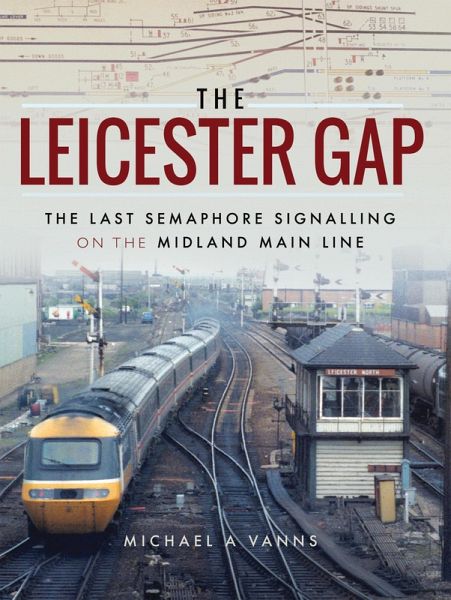
An analysis of the history and legacy of Victorian operating practices and how their replacement ended an era in British railway history. Until 1987, there was still a busy stretch of British main line railway where traditional Victorian operating practices were used to control the movements of both express passenger and a variety of freight trains. At the heart of the former Midland Railway main line from St. Pancras to Sheffield, the 45-mile section between Irchester in Northamptonshire and Loughborough in Nottinghamshire was equipped with semaphore signals worked from twenty-three mechanical signalboxes. It was the last main line in the country where this once-standard arrangement remained virtually unchanged since the days of steam. This pocket of mechanical signalling was christened The Leicester Gap, because Leicester was to be the site of a new power signalbox, the last in a chain of just five that would control the whole of the Midland Main Line into the twenty-first century. From 1984 when resignalling work started, to 1987 when it was completed, the author photographed as many trains passing through the Leicester Gap as he could. This book is the result of those efforts. "This is a high-class work, well produced and with copious good illustration. It will be of particular interest to students of signalling, but will also appeal to the general railway enthusiast." -Wessex Transport Society