27,95 €
inkl. MwSt.
Sofort per Download lieferbar
14 °P sammeln

Andere Kunden interessierten sich auch für
") Pacifying the Homeland (eBook, ePUB)22,95 €
Pacifying the Homeland (eBook, ePUB)22,95 €") Spy Plane (eBook, ePUB)20,95 €
Spy Plane (eBook, ePUB)20,95 €") Afterlives of Data (eBook, ePUB)22,95 €
Afterlives of Data (eBook, ePUB)22,95 €") Bargaining with the Machine (eBook, ePUB)22,95 €
Bargaining with the Machine (eBook, ePUB)22,95 €") Worn Out (eBook, ePUB)16,95 €
Worn Out (eBook, ePUB)16,95 €") Borderland Circuitry (eBook, ePUB)22,95 €
Borderland Circuitry (eBook, ePUB)22,95 €") 25 Teorías De La Conspiración Explicadas De Forma Sencilla Y Crítica (eBook, ePUB)2,99 €
25 Teorías De La Conspiración Explicadas De Forma Sencilla Y Crítica (eBook, ePUB)2,99 €






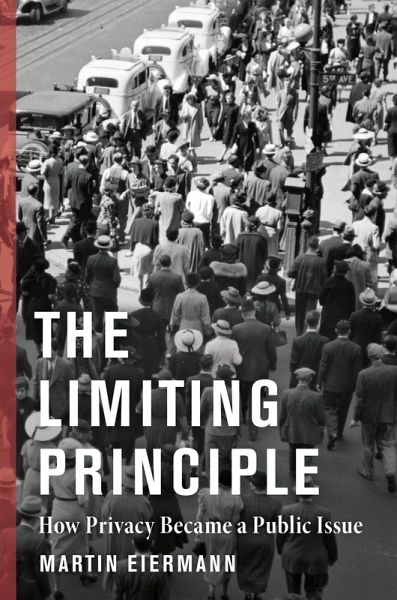
The concept of privacy is central to public life in the United States. It is the fulcrum of countless conflicts over reproductive rights and consumer protection, the power of tech companies and the reach of state surveillance. How did privacy come to take on such import, and what have the consequences been for American institutions and society?
Martin Eiermann traces the transformation of privacy from a set of informal cultural norms into a potent political issue. Around the turn of the twentieth century, in a nation that was searching for order amid rapid change and frequent moral panics about the ills of modern life, privacy spoke to emerging social problems and new technological realities. During this tumultuous period, political mobilization and judicial contestation shaped a legal, institutional, and administrative privacy architecture that has partly endured into the twenty-first century. Eiermann rebuts the claim that technological change renders privacy obsolete, demonstrating that the concept became increasingly capacious when it was applied to the social problems and political disputes of the information age. And he shows that it is often the selectivity-not the ubiquity-of governmental and corporate data collection that should elicit our concerns.
Drawing on rich archival materials and computational research methods, The Limiting Principle provides a deeply original sociological account of the history, social significance, and limitations of privacy in the modern United States.
Martin Eiermann traces the transformation of privacy from a set of informal cultural norms into a potent political issue. Around the turn of the twentieth century, in a nation that was searching for order amid rapid change and frequent moral panics about the ills of modern life, privacy spoke to emerging social problems and new technological realities. During this tumultuous period, political mobilization and judicial contestation shaped a legal, institutional, and administrative privacy architecture that has partly endured into the twenty-first century. Eiermann rebuts the claim that technological change renders privacy obsolete, demonstrating that the concept became increasingly capacious when it was applied to the social problems and political disputes of the information age. And he shows that it is often the selectivity-not the ubiquity-of governmental and corporate data collection that should elicit our concerns.
Drawing on rich archival materials and computational research methods, The Limiting Principle provides a deeply original sociological account of the history, social significance, and limitations of privacy in the modern United States.
Dieser Download kann aus rechtlichen Gründen nur mit Rechnungsadresse in A, D ausgeliefert werden.