
22,95 €
inkl. MwSt.
Sofort per Download lieferbar
11 °P sammeln

Andere Kunden interessierten sich auch für
") Narratives of Exile and Return (eBook, PDF)48,95 €
Narratives of Exile and Return (eBook, PDF)48,95 €") Cultures of Exile (eBook, PDF)18,95 €
Cultures of Exile (eBook, PDF)18,95 €") Africana Womanism (eBook, PDF)39,95 €
Africana Womanism (eBook, PDF)39,95 €") Chileans in Exile (eBook, PDF)40,95 €
Chileans in Exile (eBook, PDF)40,95 €") The Social Organization of Exile (eBook, PDF)42,95 €
The Social Organization of Exile (eBook, PDF)42,95 €") From Exile To Diaspora (eBook, PDF)41,95 €
From Exile To Diaspora (eBook, PDF)41,95 €") The Sacred in Exile (eBook, PDF)48,95 €
The Sacred in Exile (eBook, PDF)48,95 €





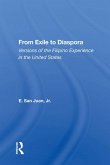

Building on many years of inquiry into the sociology of intellectuals, notably through a series of books on the sociologist, Karl Mannheim, this book brings together the results of ten years of work on the special problems of intellectuals in exile. The historical materials all relate to the emigration from Nazi Germany, not only because this event has generated the richest literature in exile studies, but also because of the author's personal connections to the situation and to a number of outstanding representatives of that exile. Case studies are devoted to the following figures: Johannes Becher, Ernst Fraenkel, Hans Gerth, Oskar Maria Graf, Kurt Hiller, Erich Kahler, Alfred Kantoriowics, Hermann Kesten, Siegfried Kracauer, Karl Mannheim, Hans Mayer, Franz Neumann, Nina Rubinstein, Oskar Seidlin and Carl Zuckmayer.
The book opens with a systematic proposal for the study of intellectual exile, entailing a critique of approaches that neglect concrete political dimensions in favor of a metaphorical cultural approach. In the distinctive approach elaborated through a series of problem-centered case studies, the focus is on the multiple, complex and changing negotiating processes and bargaining structures constitutive of exile, especially as the question of return interplays with the politics of memory.
The first three chapters deal with émigré intellectuals whose writings contain theoretically important reflections on exile and related conditions. The interplay and conflicts between the priorities of ambitious American university scholarship and the self-understanding of the exile cohort identified with the Humanities is the theme of the next detailed study. In the following long chapter, the focus is on the outcome of exile, documented by the first letters written by intellectual and literary exiles to individuals who had remained in Germany and with whom they had unfinished business. These diverse reopenings of negotiations are uniquely revealing about different ways of settling with the experiences of exclusion and the prospects of return.
The final section of the book reverts to its very beginnings in two senses: it offers a self-reflection by the author about his own relations to the exile under study as a member of the second wave generation that arrived from Germany as children, with special attention to the elective affinities between himself and members of the actual primary cohort.
The book opens with a systematic proposal for the study of intellectual exile, entailing a critique of approaches that neglect concrete political dimensions in favor of a metaphorical cultural approach. In the distinctive approach elaborated through a series of problem-centered case studies, the focus is on the multiple, complex and changing negotiating processes and bargaining structures constitutive of exile, especially as the question of return interplays with the politics of memory.
The first three chapters deal with émigré intellectuals whose writings contain theoretically important reflections on exile and related conditions. The interplay and conflicts between the priorities of ambitious American university scholarship and the self-understanding of the exile cohort identified with the Humanities is the theme of the next detailed study. In the following long chapter, the focus is on the outcome of exile, documented by the first letters written by intellectual and literary exiles to individuals who had remained in Germany and with whom they had unfinished business. These diverse reopenings of negotiations are uniquely revealing about different ways of settling with the experiences of exclusion and the prospects of return.
The final section of the book reverts to its very beginnings in two senses: it offers a self-reflection by the author about his own relations to the exile under study as a member of the second wave generation that arrived from Germany as children, with special attention to the elective affinities between himself and members of the actual primary cohort.
Dieser Download kann aus rechtlichen Gründen nur mit Rechnungsadresse in A, D ausgeliefert werden.