0,49 €
inkl. MwSt.
Sofort per Download lieferbar
0 °P sammeln

Andere Kunden interessierten sich auch für
") The Lost Parchment (eBook, ePUB)0,49 €
The Lost Parchment (eBook, ePUB)0,49 €") Secret Service; or, Recollections of a City Detective (eBook, ePUB)0,49 €
Secret Service; or, Recollections of a City Detective (eBook, ePUB)0,49 €") Bernard Treves's Boots (eBook, ePUB)1,99 €
Bernard Treves's Boots (eBook, ePUB)1,99 €") The Red Window (eBook, ePUB)0,49 €
The Red Window (eBook, ePUB)0,49 €") The Lock and Key Library: Classic Mystery and Detective Stories: Modern English (eBook, ePUB)2,49 €
The Lock and Key Library: Classic Mystery and Detective Stories: Modern English (eBook, ePUB)2,49 €") The Three Impostors; or, The Transmutations (eBook, ePUB)1,99 €
The Three Impostors; or, The Transmutations (eBook, ePUB)1,99 €") A Courier of Fortune (eBook, ePUB)1,99 €
A Courier of Fortune (eBook, ePUB)1,99 €



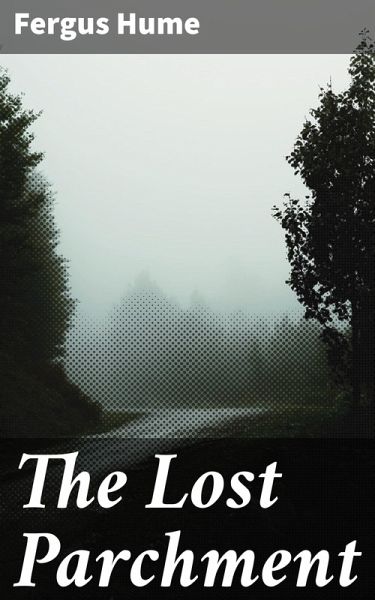
In "The Lost Parchment," Fergus Hume intricately weaves a captivating narrative that intertwines mystery with the exploration of themes such as ambition, greed, and the complexities of human relationships. Set against the backdrop of Victorian England, the novel employs vivid imagery and a suspenseful pacing that keeps readers engrossed from start to finish. Hume's deft use of dialogue serves to delineate character motivations, enhancing the book's overarching exploration of truth versus deception amidst a treasure hunt for an enigmatic scroll that holds the key to unfathomable wealth. Fergus Hume, a prolific writer and one of the early masters of detective fiction, drew upon his background in law and his keen observations of societal intricacies to craft this thrilling tale. His experiences as a playwright also inform the novel's dramatic structure, enriching character development and plot progression. Influenced by contemporary literary figures, Hume'Äôs work showcases his commitment to developing engaging narratives that not only entertain but also probe deeper ethical questions. Readers seeking a gripping blend of mystery and historical intrigue will find "The Lost Parchment" utterly satisfying. Hume'Äôs thoughtful prose and well-crafted plot make it a commendable addition to any literary collection, as it invites readers to not only solve a mystery but to reflect on the moral dilemmas that accompany the pursuit of wealth.
Dieser Download kann aus rechtlichen Gründen nur mit Rechnungsadresse in A, B, BG, CY, CZ, D, DK, EW, E, FIN, F, GR, H, IRL, I, LT, L, LR, M, NL, PL, P, R, S, SLO, SK ausgeliefert werden.