26,95 €
26,95 €
inkl. MwSt.
Sofort per Download lieferbar

13 °P sammeln
26,95 €
Als Download kaufen
26,95 €
inkl. MwSt.
Sofort per Download lieferbar
13 °P sammeln
Jetzt verschenken
Alle Infos zum eBook verschenken
26,95 €
inkl. MwSt.
Sofort per Download lieferbar
Alle Infos zum eBook verschenken
13 °P sammeln

Andere Kunden interessierten sich auch für
") The Marginalized in Death (eBook, PDF)26,95 €
The Marginalized in Death (eBook, PDF)26,95 €") Anthropological Research in India (eBook, ePUB)67,95 €
Anthropological Research in India (eBook, ePUB)67,95 €") Reshaping True Crime Stories from the Global Margins (eBook, ePUB)64,95 €
Reshaping True Crime Stories from the Global Margins (eBook, ePUB)64,95 €") MBA Handbook, The (eBook, ePUB)30,95 €
MBA Handbook, The (eBook, ePUB)30,95 €") Death and the City in Premodern Europe (eBook, ePUB)52,95 €
Death and the City in Premodern Europe (eBook, ePUB)52,95 €") Routledge International Handbook of Queer Death Studies (eBook, ePUB)47,95 €
Routledge International Handbook of Queer Death Studies (eBook, ePUB)47,95 €") The Natural History of Primates (eBook, ePUB)55,95 €
The Natural History of Primates (eBook, ePUB)55,95 €





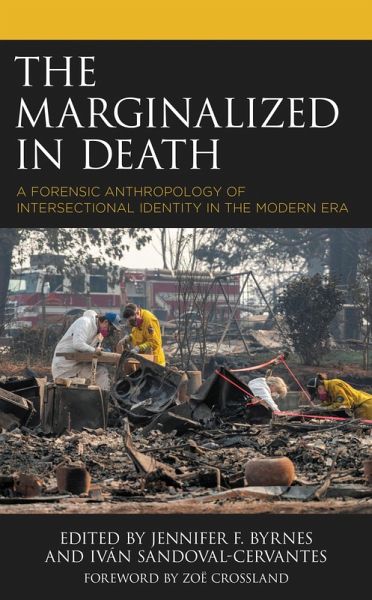
This volume bridges the gap between forensic and cultural anthropology in how both disciplines describe and theorize the dead, highlighting the potential for interdisciplinary scholarship. As applied disciplines dealing with some of the most marginalized people in our society, forensic anthropologists have the potential to shed light on important and persistent social issues that we face today. Forensic anthropologists have successfully pursued research agendas primarily focused on the development of individual biological profiles, time since death, recovery, and identification. Few, however, have taken a step back from their lab bench to consider how and why people become forensic cases or place their work in a larger theoretical context. Thus, this volume challenges forensic anthropologists to reflect how we can use our toolkit and databases to address larger social issues and quandaries that we face in a world where some are spared from becoming forensic anthropology cases and others are not. As witnesses to violence, crimes against humanity, and the embodied consequences of structural violence, we have the opportunity-and arguably, the responsibility-to transcend the traditional medico-legal confines of our small sub-discipline, by synthesizing forensic anthropology casework into theoretically grounded social science with potentially transformative impacts at a global scale.