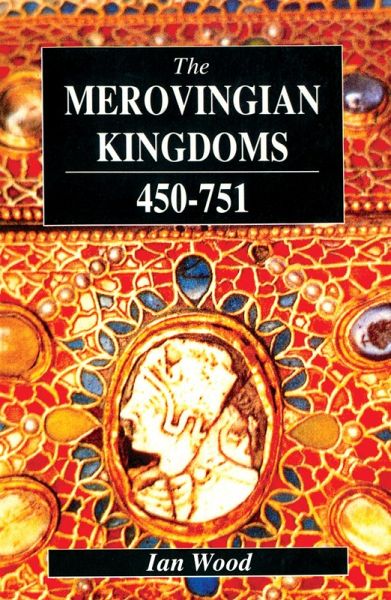
Ian Wood
The Merovingian Kingdoms 450 - 751 (eBook, ePUB)
49,95 €
49,95 €
inkl. MwSt.
Sofort per Download lieferbar

25 °P sammeln
49,95 €
Als Download kaufen
49,95 €
inkl. MwSt.
Sofort per Download lieferbar
25 °P sammeln
Jetzt verschenken
Alle Infos zum eBook verschenken
49,95 €
inkl. MwSt.
Sofort per Download lieferbar
Alle Infos zum eBook verschenken
25 °P sammeln

Ian Wood
The Merovingian Kingdoms 450 - 751 (eBook, ePUB)
- Format: ePub
- Merkliste
- Auf die Merkliste
- Bewerten Bewerten
- Teilen
- Produkt teilen
- Produkterinnerung
- Produkterinnerung

Bitte loggen Sie sich zunächst in Ihr Kundenkonto ein oder registrieren Sie sich bei
bücher.de, um das eBook-Abo tolino select nutzen zu können.
Hier können Sie sich einloggen
Sie sind bereits eingeloggt. Klicken Sie auf 2. tolino select Abo, um fortzufahren.

Bitte loggen Sie sich zunächst in Ihr Kundenkonto ein oder registrieren Sie sich bei bücher.de, um das eBook-Abo tolino select nutzen zu können.
A comprehensive survey which begins with the rise of the Franks, then examines the Merovingians.
- Geräte: eReader
- mit Kopierschutz
- eBook Hilfe
- Größe: 8.75MB
Andere Kunden interessierten sich auch für
Ian WoodThe Merovingian Kingdoms 450 - 751 (eBook, PDF)49,95 €
Alexander MurrayThe Merovingians (eBook, ePUB)39,95 €
Guy HalsallWarfare and Society in the Barbarian West 450-900 (eBook, ePUB)39,95 €
Carolinne WhiteEarly Christian Latin Poets (eBook, ePUB)39,95 €
Daniel MellenoFranks and Northmen (eBook, ePUB)38,95 €
The Viking World (eBook, ePUB)58,95 €
Rosamond MckitterickThe Frankish Kingdoms Under the Carolingians 751-987 (eBook, ePUB)91,95 €-
-
-
A comprehensive survey which begins with the rise of the Franks, then examines the Merovingians.
Dieser Download kann aus rechtlichen Gründen nur mit Rechnungsadresse in A, B, BG, CY, CZ, D, DK, EW, E, FIN, F, GR, HR, H, IRL, I, LT, L, LR, M, NL, PL, P, R, S, SLO, SK ausgeliefert werden.
Produktdetails
- Produktdetails
- Verlag: Taylor & Francis eBooks
- Seitenzahl: 408
- Erscheinungstermin: 23. Juni 2014
- Englisch
- ISBN-13: 9781317871156
- Artikelnr.: 47511472
- Verlag: Taylor & Francis eBooks
- Seitenzahl: 408
- Erscheinungstermin: 23. Juni 2014
- Englisch
- ISBN-13: 9781317871156
- Artikelnr.: 47511472
- Herstellerkennzeichnung Die Herstellerinformationen sind derzeit nicht verfügbar.
Ian Wood
List of abbreviations. Preface. Introduction: Constructing Merovingian
History. 1. The Barbarians in Gaul. 2. Literary continuity
anddiscontinuity: Late-fifth-and-sixth-century culture. 3. The
establishment of Merovingian power: the Franks before 537. 4. Kings and
kingdoms: the structure of the realm in the 6th century. 5. The limites of
ecclesiastical power: Episocopal jurisdiction and politics. 6. Stability
in disunity: the civil wars of the 6th century. 7. Laws and law-codes:
Merovingian legislation. 8. Royal women: Fredegund, ~Brunhilda and
Radegund. 9. Redefining the Kingdom: Chlothar II, Dagobert I, Sigibert III
and Clovis II. 10. The Merovingians and their neighbours. 11. The place
of the monasteries: politics and the religious life, 613-64. 12. Land,
wealth and the economy. 13. The failure of consensus: Merovingian politics
from 656-80. 14. The culture of churchmen: education, theology and
book-production in the later 7th century. 15. The check on ambition:
Merovingian politics, 680-721. 16. Towards reunification: wars and
politics, 721-751. 17. The Northern Emporia: Quentovic, Dorestad and the
`Sceatta' economy. 18. Mission aaccomplished: the Merovingian church east
of the Rhine. Conclusion: The Merovingian achievement.
History. 1. The Barbarians in Gaul. 2. Literary continuity
anddiscontinuity: Late-fifth-and-sixth-century culture. 3. The
establishment of Merovingian power: the Franks before 537. 4. Kings and
kingdoms: the structure of the realm in the 6th century. 5. The limites of
ecclesiastical power: Episocopal jurisdiction and politics. 6. Stability
in disunity: the civil wars of the 6th century. 7. Laws and law-codes:
Merovingian legislation. 8. Royal women: Fredegund, ~Brunhilda and
Radegund. 9. Redefining the Kingdom: Chlothar II, Dagobert I, Sigibert III
and Clovis II. 10. The Merovingians and their neighbours. 11. The place
of the monasteries: politics and the religious life, 613-64. 12. Land,
wealth and the economy. 13. The failure of consensus: Merovingian politics
from 656-80. 14. The culture of churchmen: education, theology and
book-production in the later 7th century. 15. The check on ambition:
Merovingian politics, 680-721. 16. Towards reunification: wars and
politics, 721-751. 17. The Northern Emporia: Quentovic, Dorestad and the
`Sceatta' economy. 18. Mission aaccomplished: the Merovingian church east
of the Rhine. Conclusion: The Merovingian achievement.
List of abbreviations. Preface. Introduction: Constructing Merovingian
History. 1. The Barbarians in Gaul. 2. Literary continuity
anddiscontinuity: Late-fifth-and-sixth-century culture. 3. The
establishment of Merovingian power: the Franks before 537. 4. Kings and
kingdoms: the structure of the realm in the 6th century. 5. The limites of
ecclesiastical power: Episocopal jurisdiction and politics. 6. Stability
in disunity: the civil wars of the 6th century. 7. Laws and law-codes:
Merovingian legislation. 8. Royal women: Fredegund, ~Brunhilda and
Radegund. 9. Redefining the Kingdom: Chlothar II, Dagobert I, Sigibert III
and Clovis II. 10. The Merovingians and their neighbours. 11. The place
of the monasteries: politics and the religious life, 613-64. 12. Land,
wealth and the economy. 13. The failure of consensus: Merovingian politics
from 656-80. 14. The culture of churchmen: education, theology and
book-production in the later 7th century. 15. The check on ambition:
Merovingian politics, 680-721. 16. Towards reunification: wars and
politics, 721-751. 17. The Northern Emporia: Quentovic, Dorestad and the
`Sceatta' economy. 18. Mission aaccomplished: the Merovingian church east
of the Rhine. Conclusion: The Merovingian achievement.
History. 1. The Barbarians in Gaul. 2. Literary continuity
anddiscontinuity: Late-fifth-and-sixth-century culture. 3. The
establishment of Merovingian power: the Franks before 537. 4. Kings and
kingdoms: the structure of the realm in the 6th century. 5. The limites of
ecclesiastical power: Episocopal jurisdiction and politics. 6. Stability
in disunity: the civil wars of the 6th century. 7. Laws and law-codes:
Merovingian legislation. 8. Royal women: Fredegund, ~Brunhilda and
Radegund. 9. Redefining the Kingdom: Chlothar II, Dagobert I, Sigibert III
and Clovis II. 10. The Merovingians and their neighbours. 11. The place
of the monasteries: politics and the religious life, 613-64. 12. Land,
wealth and the economy. 13. The failure of consensus: Merovingian politics
from 656-80. 14. The culture of churchmen: education, theology and
book-production in the later 7th century. 15. The check on ambition:
Merovingian politics, 680-721. 16. Towards reunification: wars and
politics, 721-751. 17. The Northern Emporia: Quentovic, Dorestad and the
`Sceatta' economy. 18. Mission aaccomplished: the Merovingian church east
of the Rhine. Conclusion: The Merovingian achievement.