Sie sind bereits eingeloggt. Klicken Sie auf 2. tolino select Abo, um fortzufahren.
Bitte loggen Sie sich zunächst in Ihr Kundenkonto ein oder registrieren Sie sich bei bücher.de, um das eBook-Abo tolino select nutzen zu können.
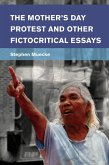
As a genre that confounds the distinction between fiction and non-fiction, fictocriticism continues to gain currency. It solves a problem for researchers and writers who do not wish to be held to that somewhat artificial division, and who consider their research methods necessarily to include the stylistic experiments that show their research and thought processes. Research, knowledge of the world, that continues to be 'written up', 'after the fact' in the usual academic genres, has a tendency to re-inscribe the status quo. The world stays the way it is; change, surprise and experiment elude…mehr
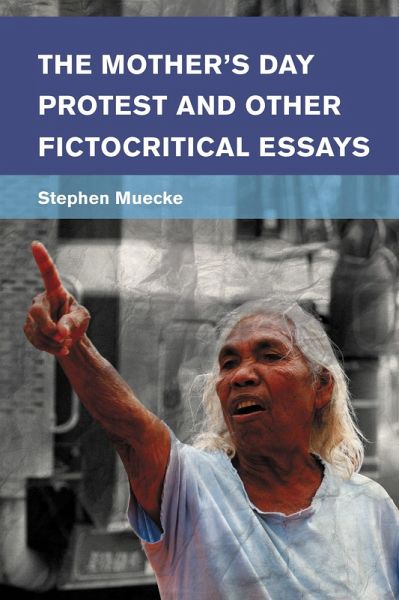
As a genre that confounds the distinction between fiction and non-fiction, fictocriticism continues to gain currency. It solves a problem for researchers and writers who do not wish to be held to that somewhat artificial division, and who consider their research methods necessarily to include the stylistic experiments that show their research and thought processes. Research, knowledge of the world, that continues to be 'written up', 'after the fact' in the usual academic genres, has a tendency to re-inscribe the status quo. The world stays the way it is; change, surprise and experiment elude the writer. Stephen Muecke, one of the originators of fictocritical writing, presents a selection of his best essays in this innovative genre. In doing so he offers a rare and important theorization of the potential of speculative methods across disciplines including Literary Studies, Philosophy, Anthropology, Geography, and Science and Technology Studies.
Die Herstellerinformationen sind derzeit nicht verfügbar.
Autorenporträt
Stephen Muecke is professor of creative writing at Flinders University, and is a fellow of the Australian Academy of the Humanities. Recent books are Bruno Latour and the Humanities, edited with Rita Felski, Johns Hopkins University Press, 2020 and The Mother's Day Protest and other Fictocritical Essays, Rowman and Littlefield International, 2016.
Inhaltsangabe
Introduction: What is Fictocritical Writing? Part I: Indigenous Australia 1. Don McLeod's Law: The Genesis of the Aboriginal Concept of the Strike 2. The Mother's Day Protest 3. The Great Tradition: Translating Durrudiya's Songs 4. Can you Argue with the Honeysuckle? Part II: After Critique 5. Motorcycles, Snails, Latour: Criticism without Judgement 6. Reproductive Aesthetics: Multiple Realities in a Seamus Heaney Poem 7. An experiment with truth and beauty in cultural studies Part III: Speculative Histories 8. A Diplomat for the History Wars 9. Speculating with History: The Wreck of the Sydney Cove 10. A Touching and Contagious Captain Cook: Thinking History through Things Part IV: Ecologies of Place 11. The composition and decomposition of commodities: the colonial careers of coal and ivory 12. Picture that Cyclone 13. Berlin Babylon 14. I Had a Dream in Tropical Islands Resort in Berlin. Was it Real? Conclusion Bibliography
Es gelten unsere Allgemeinen Geschäftsbedingungen: www.buecher.de/agb
Impressum
www.buecher.de ist ein Internetauftritt der buecher.de internetstores GmbH
Geschäftsführung: Monica Sawhney | Roland Kölbl | Günter Hilger
Sitz der Gesellschaft: Batheyer Straße 115 - 117, 58099 Hagen
Postanschrift: Bürgermeister-Wegele-Str. 12, 86167 Augsburg
Amtsgericht Hagen HRB 13257
Steuernummer: 321/5800/1497
USt-IdNr: DE450055826