Sie sind bereits eingeloggt. Klicken Sie auf 2. tolino select Abo, um fortzufahren.
Bitte loggen Sie sich zunächst in Ihr Kundenkonto ein oder registrieren Sie sich bei bücher.de, um das eBook-Abo tolino select nutzen zu können.
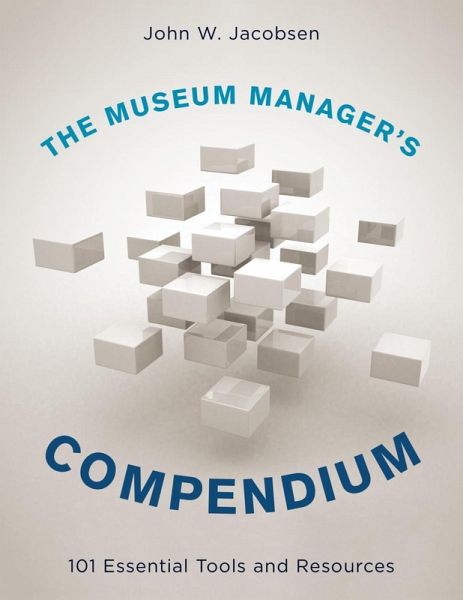
The Museum Manager's Compendium: 101 Essential Tools and Resources helps you make and implement your decisions as a museum manager and strategic planner. This book's 101 sections present a treasure trove of definitions, diagrams, processes, choices, and worksheets, in major areas of museum management. Collectively, they reflect the literature and contributions of some of the field's best thinkers. The resources distill half a century of museum experience over hundreds of projects done by scores of talents and experts internationally for all types of museums. The Museum Manager's Compendium can…mehr
The Museum Manager's Compendium: 101 Essential Tools and Resources helps you make and implement your decisions as a museum manager and strategic planner. This book's 101 sections present a treasure trove of definitions, diagrams, processes, choices, and worksheets, in major areas of museum management. Collectively, they reflect the literature and contributions of some of the field's best thinkers. The resources distill half a century of museum experience over hundreds of projects done by scores of talents and experts internationally for all types of museums. The Museum Manager's Compendium can be used as: A frequent reference book to consult when facing decisions or planning for the futureA source of examples and templates of common museum reportsA source of answers and options for strategic planning questions A crib book to extract text when drafting internal proposals and plansA primer when welcoming new partners and Board membersA quick study and refresher of key aspects of museum practiceAn orientation to new staffA glossary for building shared definition among team members The Museum Manager's Compendium is for museum professionals-leaders, managers, coordinators, professional counsel, contractors, evaluators, supporters, and policy makers- to use often. It is a must-own reference book for every museum professional responsible for decisions and implementation.
Die Herstellerinformationen sind derzeit nicht verfügbar.
Autorenporträt
John W. Jacobsen led museum analysis and planning for White Oak Associates, Inc. for over forty years and over a hundred museums through hundreds of commissions. Projects include eighteen museums representing over a billion dollars of actual and anticipated investment in new and expanding museums internationally. In the Eighties, he was associate director of the Museum of Science in Boston. In 1988, the Museum served 2.2 million visitors, an unsurpassed record. White Oak integrated operating economics with creative concepts in its plans. Mr. Jacobsen's BA and MFA are from Yale University. Long committed to the museum field, Jacobsen is the founder of the Museum Film Network ('85), the Planetarium Show Network ('88), the Ocean Film Network ('92), AAM's Professional Committee on Green Museums (PIC Green '08) and of the Digital Immersive Giant Screen Specifications (DIGSS 1.0 '11). With Ms. Jeanie Stahl, Mr. Jacobsen formed the White Oak Institute in 2007, a non-profit dedicated to research-based museum innovation, with completed awards and contracts with the NSF, the IMLS, the AAM and the ACM to develop field-wide standards and data collection fields. Mr. Jacobsen's extensive writings and presentations on museum topics have appeared in Curator, Museum Management and Curatorship, Informal Learning Review and at AAM, ASTC, ACM and other conferences. He is the author of Measuring Museum Impact and Performance (2016) and editor and co-author of The Museum Manager's Compendium (2017), both published by Rowman & Littlefield.
Inhaltsangabe
Acknowledgements Preface Introduction Tools and Resources (alphabetical) 1.Architect Search Process 2.Architectural Considerations 3.Architectural Design Phases 4.Architectural Functional Adjacencies 5.Architectural Planning 6.Architectural Room Book 7.Architectural Standards and Green Resources 8.Attendance Potential Estimates 9.Audience Research and Evaluation Methodologies 10.Audience: Non-users 11.Audience: Program Participants 12.Audience: Visitors: Categories (Visitors by Category) 13.Audience: Visitors: Segments (Key Visitor Segments) 14.Best Practices Research 15.Bibliography for Museums 16.Branding: Naming Process 17.Building: Design Criteria and Operational Characteristics 18.Building: Sample Program 19.Capital and Long-term Assets 20.Capital Project: Budgets 21.Capital Project: First Steps 22.Capital Project: Planning Principles 23.CEO Profile and Budget 24.Collections: Categories and Uses 25.Collections: Environmental Specifications 26.Collections: Policies 27.Community Needs: Process 28.Community Needs: Rationale 29.Concept and Strategic Master Plans 30.Conceptual Framework 31.Content Development 32.Education: K-12 Strategy 33.Education: Learning Theory 34.Education: Social Learning Concepts 35.Education: Strategies 36.Exhibit Evaluation Filters 37.Facility and Security 38.Governance 39.Guiding Principles: Core Values 40.Guiding Principles: Credos and Beliefs 41.Human Resources 42.Impact and Performance: Definitions 43.Impacts & Benefits: Category Summary 44.Impacts & Benefits: Descriptions 45.Implementation Phases, Schedules and Milestones 46.Institutional Evaluation Concepts 47.Insurance Menu 48.Key Performance Indicators (KPIs) 49.Market Demographic and Population Analysis 50.Marketing 51.Membership 52.Multi-Mode Operations 53.Multiple Mission Museums 54.Museum Categories (Types) 55.Museum Definitions 56.Museum Engagements: Definitions 57.Museum Field Counts 58.Museum Planning: Conceptual Diagrams 59.Museum Planning: Frameworks 60.Museum Planning: Process and Scope 61.Museum Servant of Four Masters 62.Museum Theory of Action 63.Museum Theory of Action: Definitions 64.Operating Budgets 65.Operating Data Standards 66.Peer Performance Assessments 67.Policy Choices 68.Programming: Categories 69.Programming: Changing 70.Programming: Delta Approaches 71.Programming: Feature Theater 72.Programming: Menu of Options 73.Public Spaces: Categories 74.Public Spaces: Entry and Galleries 75.Public Spaces: Program Center 76.Public Spaces: Retail and Functions 77.Public Spaces: Theater Options 78.Purposes and Impacts: Definitions 79.Purposes: Samples and Options 80.Revenues: Categories 81.Revenues: Earned Business Lines 82.Revenues: Overview 83.Site Selection 84.Space Use Analysis 85.Stakeholders: Categories 86.Stakeholders: Definitions 87.Support Facilities 88.Support Systems 89.Support Technology and Networks 90.Supporters: Collectors 91.Supporters: Funders 92.Supporters: Partners 93.Supporters: Partners: Advice from IMLS 94.Supporters: Volunteers 95.Ticket Prices 96.Value Exchanges: Definitions 97.Venue Capture Rates 98.Visitor Experience: Concepts 99.Visitor Experience: Factors 100.Visitor Services: Capacity Calculations 101.Visitor Services: Seasonality & Utilization About the Authors