Sie sind bereits eingeloggt. Klicken Sie auf 2. tolino select Abo, um fortzufahren.
Bitte loggen Sie sich zunächst in Ihr Kundenkonto ein oder registrieren Sie sich bei bücher.de, um das eBook-Abo tolino select nutzen zu können.
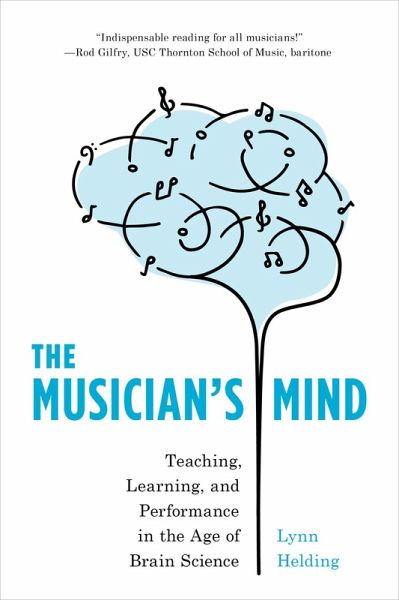
Where does learning begin and how is it sustained and stored in the brain? For musicians, these questions are at the very core of their creative lives. Cognitive and neuroscience have flung wide the doors of our understanding, but bridging the gap between research data and music-making requires a unique immersion in both worlds. Lynn Helding presents a symphony of discoveries that illuminate how musicians can optimize their mental wellbeing and cognitive abilities. She addresses common brain myths, motor learning research and the concept of deliberate practice, the values of instructional…mehr
Where does learning begin and how is it sustained and stored in the brain? For musicians, these questions are at the very core of their creative lives. Cognitive and neuroscience have flung wide the doors of our understanding, but bridging the gap between research data and music-making requires a unique immersion in both worlds. Lynn Helding presents a symphony of discoveries that illuminate how musicians can optimize their mental wellbeing and cognitive abilities. She addresses common brain myths, motor learning research and the concept of deliberate practice, the values of instructional feedback, technology's role in attention disorders, the challenges of parenting young musicians, performance anxiety and its solutions, and the emerging importance of music as a social justice issue. More than an exploration of the brain, The Musician's Mind is an inspiring call for artists to promote the cultivation of emotion and empathy as cornerstones of a civilized society. No matter your instrument or level of musical ability, this book will reveal to you a new dynamic appreciation for the mind's creative power.
Die Herstellerinformationen sind derzeit nicht verfügbar.
Autorenporträt
Lynn Helding is the author of The Musician's Mind: Teaching, Learning and Performance in the Age of Brain Science (Rowman & Littlefield, 2020) and serves as Professor of Practice in Voice and Vocal Pedagogy at the University of Southern California Thornton School of Music, USA. She is the author of over fifty academic articles on voice pedagogy, including the chapter "Brain" in Scott McCoy's best-selling voice pedagogy text, Your Voice: An Inside View 3, and served two years as the Editor-in-chief of the Journal of Singing. Her academic honors include the 2005 Van Lawrence Voice Fellowship, membership in the prestigious American Academy of Teachers of Singing, and the 2020 Lifetime Achievement Awardas "a legendary figure in the field of voice pedagogy" from Shenandoah University's Contemporary Commercial Music Vocal Pedagogy Institute. Her stage credits include leading roles in opera, oratorio and musical theatre, and multiple recital tours throughout the United States, Australia, England, France, Germany, Italy, Spain, and Iceland where her performances were broadcast on Icelandic National Radio.
Inhaltsangabe
Introduction: A New Enchantment A New Enchantment The Brain on Music The "Mozart Effect" Music and the Mind Chapter 1: Science, Art and The Missing Mind What Revolution? Mindless Behaviorism The New Science of Mind Music as a Weapon Science and Art C.P. Snow's "Two Cultures" The "Third Culture" The Theory of Multiple Intelligences The Rescue of Emotion The Other Half of the Truth The Mind-Body Problem Neuroaesthetics Cautious Enchantment Chapter 2: Groundwork: at the Foothills Neuromyths and Brainscams In the Shadow of the "Mozart Effect" Tracking a Scientific Legend Exposure Is Not Learning The Left Brain Right Brain Dichotomy Brain Personalities and Learning Styles Real Brain Gains What is the Use of Music? The Big One Know-That and Know-How How the Thing Works Chapter 3: How Learning Works Two Basic Modes of Information Processing Learning Defined The Triumvirate of Learning Step One: Attention Attention Aides: Emotion and Desire Attention Aides: Motivation and Rewards Attention Aide: Goal-Setting Attention Aide: Sleep Step Two: Learning Chunking Constructed Memories Step Three: Memory Neurogenesis and Neural Plasticity The Plastic Paradox Back to the Body Chapter 4: Learned Movement: Motor Learning The Question is How, Not What Motor Learning and Performance Differences Between Learning and Performance Performance Shifts: Upsides and Downsides Negative Performance Shifts and 'Unlearning' The Path to Carnegie Hall Three Rule of Practice Motor Imagery: Thinking About Doing Controlled versus Automatic Processes: Learning/Have Learned Feedback Inherent Feedback Vision Singers' Alternative Facts: Cognitive Dissonance Proprioception Augmented Feedback Concurrent Augmented Feedback Terminal Feedback Feedback Frequency Knowledge of Performance and Knowledge of Results Too Much Information? Hands Off The Theory of Attentional Focus Attentional Focus in Music Novice Learners and Internal Focus Challenges to "The Maxim" and "Just-do-it" Flexible Attention Planning for Disruptions: Training How to Think Training Embodied Cognition Chapter 5: Performance Studies Deliberate Practice Cognitive Demands of Deliberate Practice Emotional Demands of Deliberate Practice Grit Beyond Deliberate Practice Early Starts and Caring Mentors Tiger Moms and Helicopter Parents The Inverse Power of Praise Building Motivation Self-Esteem Theory Nature/Nurture The Talent Account: So What? Toxic Talent and Social Justice The Good Enough Musician Chapter 6: Mind Games Break A Leg! - and Other Mind Games Music Performance Anxiety (MPA) Causes of MPA The Physiological Basis of Performance Anxiety Beyond MPA Choking Under Pressure Causes of Choking: The Theory of Explicit Monitoring Causes of Choking: The Theory of Distraction The White Bear Problem and the Ironic Effect The Upside of Anxiety Researched Treatments for MPA Standard Psychotherapies for MPA Alternative Therapies for MPA Alexander Technique Yoga Experimental Strategies for MPA Exposure Therapy and Stress Conditioning Resilience Training Power Posing Meditation Holistic Word Cues "Avoid Avoiding" Stories of MPA Importance of Venue and Evaluative Threat An Antidote to Perfectionism Embody the Fear Deliberate Practice Redux Routines and Rituals "Deliberate Calm" The Upside of Quitting Good Luck - and Break a Leg! Chapter 7: the Digital Brain Digital Heaven Trouble in Paradise: The "Screen Invasion" Multitasking: "Dumbing Down the World" Interruption Science and Acquired ADD Zebras Don't Multitask, Either Internet Addiction Who is Minding the Store? The Plastic Paradox and Digital Technology Who Cares if You Listen? The Problem of Audience Attention Dialing Down Empathy Chapter 8: Emotion, Empathy and the Unification of Art and Science Emotion Understanding Empathy Paying Attention To Empathy Empathy And Goodness Empathy And Bias Leveraging Homophily Instilling Empathy Through Art Coda: The Fourth Culture And The Unification Of Art And Science
Introduction: A New Enchantment A New Enchantment The Brain on Music The "Mozart Effect" Music and the Mind Chapter 1: Science, Art and The Missing Mind What Revolution? Mindless Behaviorism The New Science of Mind Music as a Weapon Science and Art C.P. Snow's "Two Cultures" The "Third Culture" The Theory of Multiple Intelligences The Rescue of Emotion The Other Half of the Truth The Mind-Body Problem Neuroaesthetics Cautious Enchantment Chapter 2: Groundwork: at the Foothills Neuromyths and Brainscams In the Shadow of the "Mozart Effect" Tracking a Scientific Legend Exposure Is Not Learning The Left Brain Right Brain Dichotomy Brain Personalities and Learning Styles Real Brain Gains What is the Use of Music? The Big One Know-That and Know-How How the Thing Works Chapter 3: How Learning Works Two Basic Modes of Information Processing Learning Defined The Triumvirate of Learning Step One: Attention Attention Aides: Emotion and Desire Attention Aides: Motivation and Rewards Attention Aide: Goal-Setting Attention Aide: Sleep Step Two: Learning Chunking Constructed Memories Step Three: Memory Neurogenesis and Neural Plasticity The Plastic Paradox Back to the Body Chapter 4: Learned Movement: Motor Learning The Question is How, Not What Motor Learning and Performance Differences Between Learning and Performance Performance Shifts: Upsides and Downsides Negative Performance Shifts and 'Unlearning' The Path to Carnegie Hall Three Rule of Practice Motor Imagery: Thinking About Doing Controlled versus Automatic Processes: Learning/Have Learned Feedback Inherent Feedback Vision Singers' Alternative Facts: Cognitive Dissonance Proprioception Augmented Feedback Concurrent Augmented Feedback Terminal Feedback Feedback Frequency Knowledge of Performance and Knowledge of Results Too Much Information? Hands Off The Theory of Attentional Focus Attentional Focus in Music Novice Learners and Internal Focus Challenges to "The Maxim" and "Just-do-it" Flexible Attention Planning for Disruptions: Training How to Think Training Embodied Cognition Chapter 5: Performance Studies Deliberate Practice Cognitive Demands of Deliberate Practice Emotional Demands of Deliberate Practice Grit Beyond Deliberate Practice Early Starts and Caring Mentors Tiger Moms and Helicopter Parents The Inverse Power of Praise Building Motivation Self-Esteem Theory Nature/Nurture The Talent Account: So What? Toxic Talent and Social Justice The Good Enough Musician Chapter 6: Mind Games Break A Leg! - and Other Mind Games Music Performance Anxiety (MPA) Causes of MPA The Physiological Basis of Performance Anxiety Beyond MPA Choking Under Pressure Causes of Choking: The Theory of Explicit Monitoring Causes of Choking: The Theory of Distraction The White Bear Problem and the Ironic Effect The Upside of Anxiety Researched Treatments for MPA Standard Psychotherapies for MPA Alternative Therapies for MPA Alexander Technique Yoga Experimental Strategies for MPA Exposure Therapy and Stress Conditioning Resilience Training Power Posing Meditation Holistic Word Cues "Avoid Avoiding" Stories of MPA Importance of Venue and Evaluative Threat An Antidote to Perfectionism Embody the Fear Deliberate Practice Redux Routines and Rituals "Deliberate Calm" The Upside of Quitting Good Luck - and Break a Leg! Chapter 7: the Digital Brain Digital Heaven Trouble in Paradise: The "Screen Invasion" Multitasking: "Dumbing Down the World" Interruption Science and Acquired ADD Zebras Don't Multitask, Either Internet Addiction Who is Minding the Store? The Plastic Paradox and Digital Technology Who Cares if You Listen? The Problem of Audience Attention Dialing Down Empathy Chapter 8: Emotion, Empathy and the Unification of Art and Science Emotion Understanding Empathy Paying Attention To Empathy Empathy And Goodness Empathy And Bias Leveraging Homophily Instilling Empathy Through Art Coda: The Fourth Culture And The Unification Of Art And Science
Es gelten unsere Allgemeinen Geschäftsbedingungen: www.buecher.de/agb
Impressum
www.buecher.de ist ein Internetauftritt der buecher.de internetstores GmbH
Geschäftsführung: Monica Sawhney | Roland Kölbl | Günter Hilger
Sitz der Gesellschaft: Batheyer Straße 115 - 117, 58099 Hagen
Postanschrift: Bürgermeister-Wegele-Str. 12, 86167 Augsburg
Amtsgericht Hagen HRB 13257
Steuernummer: 321/5800/1497
USt-IdNr: DE450055826