20,95 €
20,95 €
inkl. MwSt.
Erscheint vor. 25.08.26

10 °P sammeln
20,95 €
Als Download kaufen
20,95 €
inkl. MwSt.
Erscheint vor. 25.08.26
10 °P sammeln
Jetzt verschenken
Alle Infos zum eBook verschenken
20,95 €
inkl. MwSt.
Erscheint vor. 25.08.26
Alle Infos zum eBook verschenken
10 °P sammeln

Andere Kunden interessierten sich auch für
") The New Urban Crisis (eBook, ePUB)9,99 €
The New Urban Crisis (eBook, ePUB)9,99 €") Managing the Sustainable City (eBook, ePUB)64,95 €
Managing the Sustainable City (eBook, ePUB)64,95 €") Inside High-Rise Housing (eBook, ePUB)0,00 €
Inside High-Rise Housing (eBook, ePUB)0,00 €") Urban Governance and Local Democracy in South India (eBook, ePUB)41,95 €
Urban Governance and Local Democracy in South India (eBook, ePUB)41,95 €") Public Housing Myths (eBook, ePUB)16,95 €
Public Housing Myths (eBook, ePUB)16,95 €") The Dynamics of Local Housing Policy (eBook, ePUB)33,95 €
The Dynamics of Local Housing Policy (eBook, ePUB)33,95 €") Broke (eBook, ePUB)5,99 €
Broke (eBook, ePUB)5,99 €


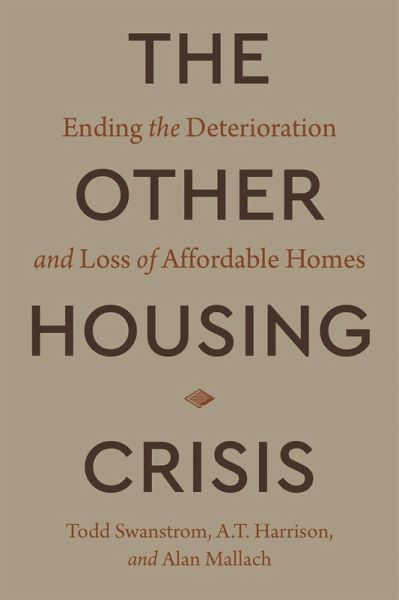
Why fixing America's housing crisis requires repairing older homes and not just building new ones The United States is in the throes a housing crisis, framed by the media as a crisis of affordability. People pay too much for housing. And the solution, it seems, is to increase the supply of housing to drive down the cost. The national conversation on housing affordability, however, ignores the issue of housing quality. Most people find affordable housing not through public subsidies but by purchasing or renting older housing in the private market. For older housing to be affordable, it is almost always in disrepair and/or is located in a disinvested neighborhood with low market values. Little noticed by the media, millions of American homeowners and renters live in unsafe and unhealthy housing. The Other Housing Crisis brings attention to the neglected issue of housing deterioration and makes the case for more investment in home repairs. Contributions by expert researchers and experienced practitioners examine the damage housing deterioration imposes on the physical, mental, and financial health of residents, as well as the related damage to the environment. Chapters highlight innovative home repair programs in cities across the country-from Austin, Texas, to Memphis, Tennessee, to Philadelphia, Pennsylvania. Many housing units in the United States are deteriorating to the point that they must be demolished. Since 2000, as the supply of affordable housing has been shrinking, the United States has lost an average of about 400,000 older housing units each year. Every repair that saves a home from demolition-deliberate or by neglect-adds to the supply of decent quality affordable housing. The analysis and recommendations in The Other Housing Crisis will help policymakers and practitioners to curb the loss of affordable housing and place housing deterioration and home repair squarely on the national policy agenda. Addressing America's housing crisis is not a matter of either increasing the supply of housing or preserving existing housing. We need to do both-now.
Dieser Download kann aus rechtlichen Gründen nur mit Rechnungsadresse in A, D ausgeliefert werden.