22,95 €
inkl. MwSt.
Sofort per Download lieferbar
11 °P sammeln

Andere Kunden interessierten sich auch für
") The Overweight Mind and Body (eBook, ePUB)22,95 €
The Overweight Mind and Body (eBook, ePUB)22,95 €") The Career Coaching Handbook (eBook, PDF)32,95 €
The Career Coaching Handbook (eBook, PDF)32,95 €") Transactional Analysis Coaching (eBook, PDF)18,95 €
Transactional Analysis Coaching (eBook, PDF)18,95 €") Sandtray Therapy (eBook, PDF)32,95 €
Sandtray Therapy (eBook, PDF)32,95 €") The Career Coaching Handbook (eBook, ePUB)32,95 €
The Career Coaching Handbook (eBook, ePUB)32,95 €") The Transpersonal (eBook, PDF)44,95 €
The Transpersonal (eBook, PDF)44,95 €") Using Social Emotional Learning to Prevent School Violence (eBook, PDF)32,95 €
Using Social Emotional Learning to Prevent School Violence (eBook, PDF)32,95 €
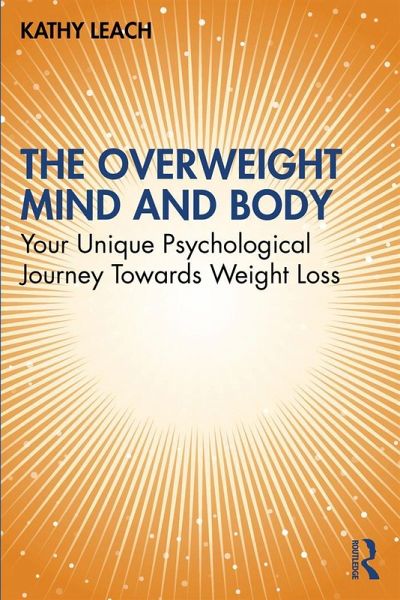
The Overweight Mind and Body is a self-help guide to understanding the psychological issues that lead to overeating and weight gain.
The book enables the reader to discover the psychological drives that lead to unwanted weight and to find ways of meeting those drives other than with food. It introduces a simple, user-friendly theory of Transactional Analysis to promote weight-related self-awareness. The author includes exercises that empower readers to uncover their own stories. She understands that, for many, carrying extra weight is emotionally and physically painful and so gently encourages readers to explore at their own level. She uses case studies to demonstrate the many unconscious influences on one's eating and how, when people discover and resolve these influences, they no longer need extra food. Reading them shows that "you are not alone".
This book will also be of interest to, and a useful guide for, practitioners in the caring professions who work with clients struggling with eating and overweight.
The book enables the reader to discover the psychological drives that lead to unwanted weight and to find ways of meeting those drives other than with food. It introduces a simple, user-friendly theory of Transactional Analysis to promote weight-related self-awareness. The author includes exercises that empower readers to uncover their own stories. She understands that, for many, carrying extra weight is emotionally and physically painful and so gently encourages readers to explore at their own level. She uses case studies to demonstrate the many unconscious influences on one's eating and how, when people discover and resolve these influences, they no longer need extra food. Reading them shows that "you are not alone".
This book will also be of interest to, and a useful guide for, practitioners in the caring professions who work with clients struggling with eating and overweight.
Dieser Download kann aus rechtlichen Gründen nur mit Rechnungsadresse in A, B, BG, CY, CZ, D, DK, EW, E, FIN, F, GR, HR, H, IRL, I, LT, L, LR, M, NL, PL, P, R, S, SLO, SK ausgeliefert werden.
As a surgeon who has worked with patients suffering from overeating and with an interest in the neurology and mental processing of emotion, I was very pleased to read this book. It is well researched and academically rigorous yet accessible to the public. It is equally valuable to the student and practitioner. What distinguishes this work from numerous others is the empathetic treatment given to this difficult subject, only possible by an experienced and sensitive therapist. The author is clearly completely in command of her subject and she reflects a deep knowledge of all the psychological swerves that lead to loss of nutritional control. The solutions are sympathetically and persuasively explained and aimed at permanence. I recommend this book as a valuable addition to the literature of disordered eating.
J E G Walker MB; BS: BDS; FDSRCS; MA (Ethics)
In her first book, Kathy Leach wrote for psychotherapists with overweight patients. Now in her second book, with its accompanying app and supports, Kathy brings her vast breadth of knowledge, experience and compassion directly to the person for whom being overweight is the problem. It contains a combination of clear explanations, inspirational exercises and powerful psychological concepts from transactional analysis. If you are interested in really looking the demon in the eye and embarking on a deep journey of self-exploration and healing, this is the book that could transform not just your body, but your life and the way you think about yourself.
Charlotte Sills MSc is a psychotherapist, supervisor and trainer in London, UK. She is also Professor of Coaching at Ashridge Business School.
If you want to understand your relationship with food this book will guide you. Kathy Leach has developed a program that respectfully leads the reader to make the journey back through their experience to discover the reason they eat as they do. Kathy gently leads the reader to understand their process with self-respect and compassion, using a program she has devised based on Transactional Analysis. As a therapist Kathy has much experience of this client group and understands the complexities of this subject and in her enlightening book, she confirms that the dilemma is understood and is changeable if you so decide.
Jenny Holmes MBACP, Therapist and supervisor in private practice.
J E G Walker MB; BS: BDS; FDSRCS; MA (Ethics)
In her first book, Kathy Leach wrote for psychotherapists with overweight patients. Now in her second book, with its accompanying app and supports, Kathy brings her vast breadth of knowledge, experience and compassion directly to the person for whom being overweight is the problem. It contains a combination of clear explanations, inspirational exercises and powerful psychological concepts from transactional analysis. If you are interested in really looking the demon in the eye and embarking on a deep journey of self-exploration and healing, this is the book that could transform not just your body, but your life and the way you think about yourself.
Charlotte Sills MSc is a psychotherapist, supervisor and trainer in London, UK. She is also Professor of Coaching at Ashridge Business School.
If you want to understand your relationship with food this book will guide you. Kathy Leach has developed a program that respectfully leads the reader to make the journey back through their experience to discover the reason they eat as they do. Kathy gently leads the reader to understand their process with self-respect and compassion, using a program she has devised based on Transactional Analysis. As a therapist Kathy has much experience of this client group and understands the complexities of this subject and in her enlightening book, she confirms that the dilemma is understood and is changeable if you so decide.
Jenny Holmes MBACP, Therapist and supervisor in private practice.