Sie sind bereits eingeloggt. Klicken Sie auf 2. tolino select Abo, um fortzufahren.
Bitte loggen Sie sich zunächst in Ihr Kundenkonto ein oder registrieren Sie sich bei bücher.de, um das eBook-Abo tolino select nutzen zu können.
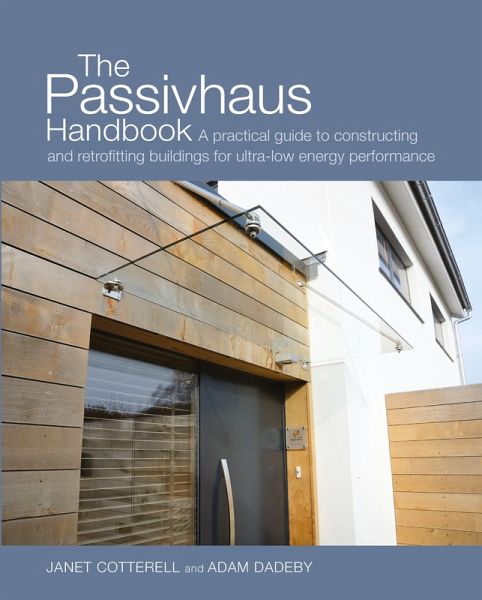
As we move towards the 2016 zero carbon target in house building, Passivhaus construction looks like becoming not just popular in the UK, but commonplace. This is a no-nonsense and engaging introduction on how to do it.' Kevin McCloud The Passivhaus Handbook is an essential guide for anyone wanting to realise a supremely comfortable, healthy and durable home with exceptionally low energy costs. Passivhaus design focuses on getting the building fabric right, to achieve ultra-low energy consumption in the most cost-effective manner. The approach is relevant to a wide range of building types and…mehr
As we move towards the 2016 zero carbon target in house building, Passivhaus construction looks like becoming not just popular in the UK, but commonplace. This is a no-nonsense and engaging introduction on how to do it.' Kevin McCloud The Passivhaus Handbook is an essential guide for anyone wanting to realise a supremely comfortable, healthy and durable home with exceptionally low energy costs. Passivhaus design focuses on getting the building fabric right, to achieve ultra-low energy consumption in the most cost-effective manner. The approach is relevant to a wide range of building types and climates. Passivhaus methodology can be combined with elements of other building standards, such as the Code for Sustainable Homes (CSH), or with other sustainable building goals, such as a commitment to using low-impact or natural building materials. Whether you are building an extension, retrofitting your house or starting from scratch, and whether you are new to low-energy design or already have some experience, this book will help you navigate around the potential pitfalls and misconceptions. It brings together current thinking and best practice. the book includes: A clear explanation of the underlying building physics and terminology. Detailed information on key elements of Passivhaus: avoiding air leakage, designing out thermal (cold) bridges, moisture management and ventilation strategy. Practical advice on setting up a project, including developing a motivated project team. A discussion of economic considerations and the policy context in the UK. As pressure on global resources increases and energy prices continue to rise, the Passivhaus approach, proven over 20 years, meets the challenge of ultra-low-energy building for the future.
Die Herstellerinformationen sind derzeit nicht verfügbar.
Autorenporträt
Janet Cotterell is a chartered architect with more than 20 years' experience working in sensitive settings (conservation areas, listed buildings, historic parks), so is familiar with the use of traditional and natural materials. Her focus is on the importance of sustainable building practices and low-energy design principles. She is also a Certified Passivhaus Designer and holds an MSc in Architecture: Advanced Environmental & Energy Studies.
Inhaltsangabe
Foreword by Wolfgang Feist Introduction How to use this book Part One: The how and why of Passivhaus Chapter 1: What is a Passivhaus? The Passivhaus energy standard the Passivhaus concept common misconceptions retrofitting and the EnerPHit energy standard Chapter 2: The economics of a Passivhaus Economic culture energy costs and supplies factors affecting property prices factors affecting Passivhaus costs methods of determining cost-effectiveness Chapter 3: Passivhaus Certification Certification of buildings building components designers and contractors; the process and information required for building certification Chapter 4: Challenges of meeting the Passivhaus standard UK building culture education and employment in construction professional expertise risk-aversity the planning system vernacular styles the team approach the disadvantages of a Passivhaus Passivhaus and other low-energy standards Chapter 5: Natural materials zero carbon and resilience Natural and low-embodied-energy building materials zero carbon and the Code for Sustainable Homes (CSH) on-site low- or zero-carbon energy post-peak energy energy returned on energy invested (EROEI) Chapter 6: Setting up a Passivhaus project Choosing a plot planning considerations retrofit considerations phased retrofitting and extensions selecting an architect and builder the role of the client Part Two: Passivhaus projects: a practical guide Chapter 7: Using the Passivhaus Planning Package (PHPP) History of the PHPP PHPP worksheets: Verification U-Values Ground WinType Windows Shading Ventilation Annual Heating Demand Summer Shading-S DHW + Distribution SolarDHW Climate Chapter 8: Thermal bridges Constructional and geometrical thermal bridges linear and point thermal bridges thermal bypass internal and external psi-values dealing with thermal bridges thermal bridge calculation Chapter 9: Airtightness and sequencing Air leakage and Passivhaus internal air quality (IAQ) airtightness standards wind-tightness breathable materials airtight materials air leakage at the design stage and construction stage sequencing on-site communication and training airtightness testing typical airtight construction details Chapter 10: Moisture Liquid moisture and water vapour relative humidity (RH) and indoor air quality (IAQ) capillarity hygroscopicity vapour permeability moisture management in construction breathability example constructions (new build and retrofit) Chapter 11: Windows High-performance windows U-values (frame pane spacer and installation factors) solar gain window installation window sills doors roof lights avoiding summer overheating the construction phase future developments and costs Chapter 12: Ventilation Ventilation in UK housing and in Passivhaus indoor air quality (IAQ) humidity mechanical ventilation with heat recovery (MVHR) (components heating efficiency noise levels possible objections to MVHR installation skills) Chapter 13: Living in a Passivhaus Noise energy bills kitchen and bathrooom drying clothes the MVHR entering and leaving the house case studies (Totnes Passivhaus Denby Dale Grove Cottage Passivhaus apartment buildings) Chapter 14: Policy change in the UK Planning a building-fabric-based energy standard floor measurement conventions VAT Energy Performance Certificates property tax change in the construction sector self-build home-grown Passivhaus products culture and policy-making Appendix A: Space heating and hot water Appendix B: Thermal conductivity values Appendix C: US units - metric conversions Appendix D: Certified Passivhaus projects in the UK Glossary of terms Glossary of units Notes Resources Index
Es gelten unsere Allgemeinen Geschäftsbedingungen: www.buecher.de/agb
Impressum
www.buecher.de ist ein Internetauftritt der buecher.de internetstores GmbH
Geschäftsführung: Monica Sawhney | Roland Kölbl | Günter Hilger
Sitz der Gesellschaft: Batheyer Straße 115 - 117, 58099 Hagen
Postanschrift: Bürgermeister-Wegele-Str. 12, 86167 Augsburg
Amtsgericht Hagen HRB 13257
Steuernummer: 321/5800/1497
USt-IdNr: DE450055826