
50,99 €
inkl. MwSt.
Sofort per Download lieferbar
0 °P sammeln

Andere Kunden interessierten sich auch für
") The Periglacial Environment (eBook, PDF)71,99 €
The Periglacial Environment (eBook, PDF)71,99 €") The Periglacial Environment (eBook, ePUB)71,99 €
The Periglacial Environment (eBook, ePUB)71,99 €") Coastal Geomorphology (eBook, PDF)60,99 €
Coastal Geomorphology (eBook, PDF)60,99 €") Arid Zone Geomorphology (eBook, PDF)63,99 €
Arid Zone Geomorphology (eBook, PDF)63,99 €") Glacier-Permafrost Interactions (eBook, PDF)50,99 €
Glacier-Permafrost Interactions (eBook, PDF)50,99 €") Geological Field Techniques (eBook, PDF)38,99 €
Geological Field Techniques (eBook, PDF)38,99 €") Sedimentary Rocks in the Field (eBook, PDF)35,99 €
Sedimentary Rocks in the Field (eBook, PDF)35,99 €
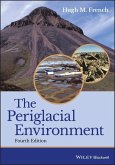
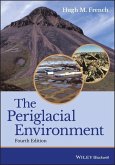

The Periglacial Environment, Third Edition, providesan authoritative overview of the worldâ??s cold, non-glacialenvironments. Emphasis is placed upon the North American andEurasian polar lowlands, but examples are also drawn fromAntarctica, the Qinghai-Xizang (Tibet) Plateau, and the northernmid-latitudes. First published in 1976 and subsequently revised in1996, the text has been the international standardfor over 30 years. The Third Edition continues to be a personal interpretation ofthe frost-induced conditions, geomorphic processes, and landformsthat typify periglacial environments. The text is divided into fourparts. Part One discusses the periglacial concept and itsinteractions with geomorphology, geocryology and Quaternaryscience. It also outlines the range and variability of periglacialclimates and the degree to which landscapes are ingeomorphic equilibrium with prevailing periglacial conditions. PartTwo describes present-day terrain that is either underlain bypermafrost or experiencing intense frost action. The roles playedby cryogenic weathering, ground ice, mass wasting, running water,wind action, snow and ice, and coastal processes are systematicallyanalysed. Part Three summarizes evidence for the existence ofperiglacial conditions during the cold periods of the Pleistocene,with special reference to the mid-latitudes of Europe and NorthAmerica. Part Four illustrates the geotechnical problems associatedwith human activity and resource development in periglacialenvironments, and discusses the potential impact of global climatechange in the northern high latitudes. This excellent textbook is an invaluable resource for second andthird year undergraduate students of Physical Geography, Geology,Environmental Science and Earth Science. The PeriglacialEnvironment, Third Edition is also an informativereading for professionals, researchers and lecturers working andteaching in the field.
Dieser Download kann aus rechtlichen Gründen nur mit Rechnungsadresse in D ausgeliefert werden.