37,95 €
37,95 €
inkl. MwSt.
Sofort per Download lieferbar

19 °P sammeln
37,95 €
Als Download kaufen
37,95 €
inkl. MwSt.
Sofort per Download lieferbar
19 °P sammeln
Jetzt verschenken
Alle Infos zum eBook verschenken
37,95 €
inkl. MwSt.
Sofort per Download lieferbar
Alle Infos zum eBook verschenken
19 °P sammeln

Andere Kunden interessierten sich auch für
") The Philosophy of Hope (eBook, ePUB)37,95 €
The Philosophy of Hope (eBook, ePUB)37,95 €") The Ecological Self (eBook, PDF)18,95 €
The Ecological Self (eBook, PDF)18,95 €") Core Questions in Philosophy (eBook, PDF)64,95 €
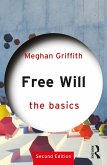
Core Questions in Philosophy (eBook, PDF)64,95 €") Free Will: The Basics (eBook, PDF)19,95 €
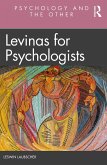
Free Will: The Basics (eBook, PDF)19,95 €") Levinas for Psychologists (eBook, PDF)28,95 €
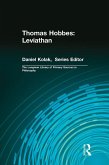
Levinas for Psychologists (eBook, PDF)28,95 € (eBook, PDF)") Thomas Hobbes: Leviathan (Longman Library of Primary Sources in Philosophy) (eBook, PDF)37,95 €
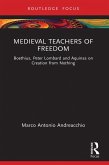
Thomas Hobbes: Leviathan (Longman Library of Primary Sources in Philosophy) (eBook, PDF)37,95 €") Medieval Teachers of Freedom (eBook, PDF)19,95 €
Medieval Teachers of Freedom (eBook, PDF)19,95 €
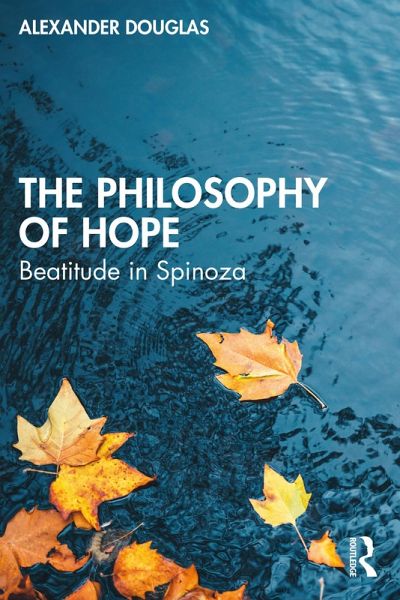
Can philosophy be a source of hope? Today it is common to believe that the answer is no - that providing hope, if it is possible at all, belongs either to the predictive sciences or to religion.
In this exciting and stimulating book, however, Alexander Douglas argues that the philosophy of Spinoza can offer something akin to religious hope. Douglas shows how Spinoza is able, without appealing to belief in any traditional afterlife or supernatural grace, to develop a profound and original theory of how humans can escape from the conditions of death and sin.
Douglas argues that this theory of escape, which Spinoza calls beatitude, is the centrepiece of his entire philosophy, though scholars have often downplayed or ignored it.
One reason for this scholarly neglect might be the difficulty of understanding Spinoza's theory, which departs from the standard doctrines and methods of Western philosophy. Douglas's interpretation therefore seeks inspiration beyond the Western tradition, drawing especially on the classical Daoist text Zhuangzi and its commentaries. Here, Douglas argues, surprising resonances with Spinoza's core ideas can be found, leading to a new way of understanding his strange yet compelling theory of beatitude.
In this exciting and stimulating book, however, Alexander Douglas argues that the philosophy of Spinoza can offer something akin to religious hope. Douglas shows how Spinoza is able, without appealing to belief in any traditional afterlife or supernatural grace, to develop a profound and original theory of how humans can escape from the conditions of death and sin.
Douglas argues that this theory of escape, which Spinoza calls beatitude, is the centrepiece of his entire philosophy, though scholars have often downplayed or ignored it.
One reason for this scholarly neglect might be the difficulty of understanding Spinoza's theory, which departs from the standard doctrines and methods of Western philosophy. Douglas's interpretation therefore seeks inspiration beyond the Western tradition, drawing especially on the classical Daoist text Zhuangzi and its commentaries. Here, Douglas argues, surprising resonances with Spinoza's core ideas can be found, leading to a new way of understanding his strange yet compelling theory of beatitude.
Dieser Download kann aus rechtlichen Gründen nur mit Rechnungsadresse in A, B, BG, CY, CZ, D, DK, EW, E, FIN, F, GR, HR, H, IRL, I, LT, L, LR, M, NL, PL, P, R, S, SLO, SK ausgeliefert werden.
'... significantly advances current scholarship particularly regarding Spinoza's religious-existential themes...an exceptionally intimate encounter with Spinoza's philosophy that asks us to reflect on the relation of experience and philosophy, and even to revise our conception of philosophy itself. - Johannes Wagner, British Journal for the History of Philosophy