0,49 €
0,49 €
inkl. MwSt.
Sofort per Download lieferbar

0 °P sammeln
0,49 €
Als Download kaufen
0,49 €
inkl. MwSt.
Sofort per Download lieferbar
0 °P sammeln
Jetzt verschenken
Alle Infos zum eBook verschenken
0,49 €
inkl. MwSt.
Sofort per Download lieferbar
Alle Infos zum eBook verschenken
0 °P sammeln

Andere Kunden interessierten sich auch für
") Vanishing Roads and Other Essays (eBook, ePUB)0,49 €
Vanishing Roads and Other Essays (eBook, ePUB)0,49 €") The Recreations of a Country Parson (eBook, ePUB)0,49 €
The Recreations of a Country Parson (eBook, ePUB)0,49 €") Pleasures of the Telescope (eBook, ePUB)1,99 €
Pleasures of the Telescope (eBook, ePUB)1,99 €") The Pleasures of Reading in an Age of Distraction (eBook, ePUB)5,99 €
The Pleasures of Reading in an Age of Distraction (eBook, ePUB)5,99 €") Bird Houses Boys Can Build (eBook, ePUB)1,99 €
Bird Houses Boys Can Build (eBook, ePUB)1,99 €") Idle Hours in a Library (eBook, ePUB)0,49 €
Idle Hours in a Library (eBook, ePUB)0,49 €") Saunterings (eBook, ePUB)0,49 €
Saunterings (eBook, ePUB)0,49 €



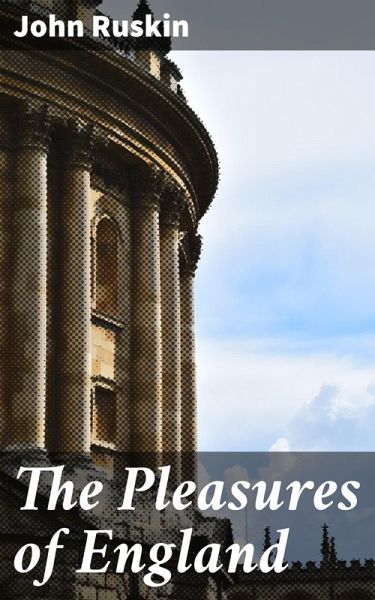
In "The Pleasures of England," John Ruskin embarks on an eloquent exploration of the English landscape, art, and culture, weaving together personal reflections and critical observations. This seminal work, rich in descriptive imagery and imbued with Ruskin'Äôs passion for nature and aesthetics, presents a compelling argument for the intrinsic value of England'Äôs beauty in understanding moral and social truths. As a precursor to the social criticism of the Victorian age, Ruskin's prose emerges as both poetic and didactic, inviting readers to appreciate the aesthetic dimensions of everyday life while utilizing his distinctive approach characterized by intricate detail and steadfast moral conviction. John Ruskin (1819-1900) was a prominent art critic, social thinker, and advocate for the Gothic Revival movement in architecture who believed that art has the power to shape a society's moral compass. His experiences growing up amidst the picturesque English countryside, combined with his deep engagement in art and architecture, profoundly influenced his thoughts on beauty and its relationship to ethical living. His beliefs about the deteriorating state of society due to industrialization prompted him to write this book to rekindle appreciation for England's cultural heritage. For readers seeking a profound understanding of the interplay between art, nature, and society, "The Pleasures of England" is an indispensable text. It is not only an exploration of aesthetic pleasures but also a clarion call to recognize the importance of nurturing a collective awareness of beauty to elevate human existence. Whether one is a lover of literature, art, or social philosophy, Ruskin'Äôs insights offer timeless reflections that continue to resonate today.
Dieser Download kann aus rechtlichen Gründen nur mit Rechnungsadresse in A, B, BG, CY, CZ, D, DK, EW, E, FIN, F, GR, H, IRL, I, LT, L, LR, M, NL, PL, P, R, S, SLO, SK ausgeliefert werden.