2,99 €
2,99 €
inkl. MwSt.
Sofort per Download lieferbar

0 °P sammeln
2,99 €
Als Download kaufen
2,99 €
inkl. MwSt.
Sofort per Download lieferbar
0 °P sammeln
Jetzt verschenken
Alle Infos zum eBook verschenken
2,99 €
inkl. MwSt.
Sofort per Download lieferbar
Alle Infos zum eBook verschenken
0 °P sammeln

Andere Kunden interessierten sich auch für
") The Roman Family and Daily Life: Household, Education, and Socialization (eBook, ePUB)2,99 €
The Roman Family and Daily Life: Household, Education, and Socialization (eBook, ePUB)2,99 €") The Rise of Imperial Rome: A Social History of the Early Empire (eBook, ePUB)2,99 €
The Rise of Imperial Rome: A Social History of the Early Empire (eBook, ePUB)2,99 €") The Legions' Role in Imperial Power Struggles (eBook, ePUB)2,99 €
The Legions' Role in Imperial Power Struggles (eBook, ePUB)2,99 €") The Role of Slavery in Roman Social Structures (eBook, ePUB)2,99 €
The Role of Slavery in Roman Social Structures (eBook, ePUB)2,99 €") Roman Law and Society: How Laws Shaped Social Relations (eBook, ePUB)2,99 €
Roman Law and Society: How Laws Shaped Social Relations (eBook, ePUB)2,99 €") Socialization and Moral Formation of the Roman People (eBook, ePUB)2,99 €
Socialization and Moral Formation of the Roman People (eBook, ePUB)2,99 €") Patronage and Clientela: Networks of Power and Dependency in the Roman Republic (eBook, ePUB)2,99 €
Patronage and Clientela: Networks of Power and Dependency in the Roman Republic (eBook, ePUB)2,99 €






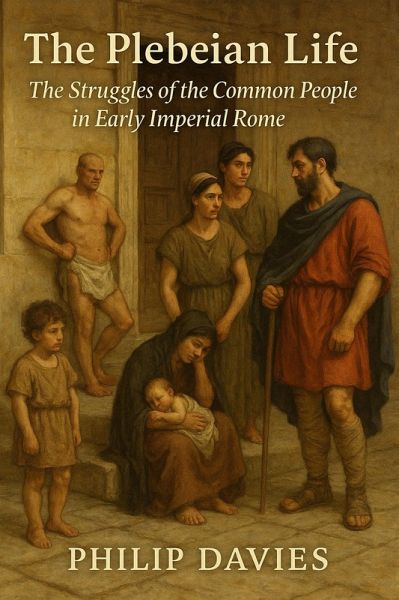
"The Plebeian Life: The Struggles of the Common People in Early Imperial Rome" delves into the lived experiences of the plebeians-the common folk who formed the backbone of Roman society but often found themselves at the margins of political and social power. Through the lens of Roman history, the book explores the daily challenges and battles faced by the plebeians as they navigated a world of vast inequality, from the Conflict of the Orders to their evolving roles in the Roman military, economy, and culture.
The narrative paints a vivid picture of the plebeians' lives, focusing on their efforts for political representation, their engagement in religious rituals, and their participation in public festivals. The book examines how the plebeians, despite their struggles, influenced the social and cultural life of Rome, contributing to the formation of Rome's identity and the development of its empire. From their participation in political movements, such as the rise of populist leaders like the Gracchi, to their crucial involvement in Roman religion and entertainment, the plebeians were not passive participants but active contributors to the empire's fabric.
In addition to political and religious struggles, the book reveals the economic hardships of the plebeians, who endured poverty and the risks of exploitation by the wealthy elite. Yet, through systems like patronage, military service, and trade, they found ways to survive and, in some cases, rise above their circumstances.
By examining primary sources, such as the works of Livy, Tacitus, Juvenal, and others, Philip Davies offers an in-depth exploration of how the plebeians' fight for equality, dignity, and recognition shaped the trajectory of Roman history. This is a compelling and nuanced account of the underrepresented voices in one of history's most powerful civilizations.
The narrative paints a vivid picture of the plebeians' lives, focusing on their efforts for political representation, their engagement in religious rituals, and their participation in public festivals. The book examines how the plebeians, despite their struggles, influenced the social and cultural life of Rome, contributing to the formation of Rome's identity and the development of its empire. From their participation in political movements, such as the rise of populist leaders like the Gracchi, to their crucial involvement in Roman religion and entertainment, the plebeians were not passive participants but active contributors to the empire's fabric.
In addition to political and religious struggles, the book reveals the economic hardships of the plebeians, who endured poverty and the risks of exploitation by the wealthy elite. Yet, through systems like patronage, military service, and trade, they found ways to survive and, in some cases, rise above their circumstances.
By examining primary sources, such as the works of Livy, Tacitus, Juvenal, and others, Philip Davies offers an in-depth exploration of how the plebeians' fight for equality, dignity, and recognition shaped the trajectory of Roman history. This is a compelling and nuanced account of the underrepresented voices in one of history's most powerful civilizations.
Dieser Download kann aus rechtlichen Gründen nur mit Rechnungsadresse in A, B, CY, CZ, D, DK, EW, E, FIN, F, GR, H, IRL, I, LT, L, LR, M, NL, PL, P, R, S, SLO, SK ausgeliefert werden.