Sie sind bereits eingeloggt. Klicken Sie auf 2. tolino select Abo, um fortzufahren.
Bitte loggen Sie sich zunächst in Ihr Kundenkonto ein oder registrieren Sie sich bei bücher.de, um das eBook-Abo tolino select nutzen zu können.
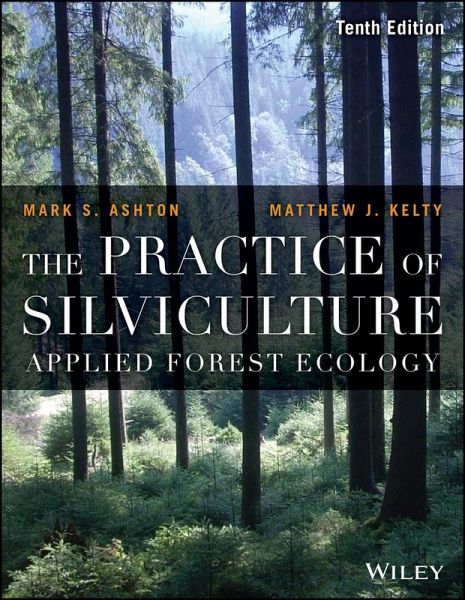
The most up-to-date, comprehensive resource on silviculture that covers the range of topics and issues facing today's foresters and resource professionals The tenth edition of the classic work, The Practice of Silviculture: Applied Forest Ecology, includes the most current information and the results of research on the many issues that are relevant to forests and forestry. The text covers such timely topics as biofuels and intensive timber production, ecosystem and landscape scale management of public lands, ecosystem services, surface drinking water supplies, urban and community greenspace,…mehr
The most up-to-date, comprehensive resource on silviculture that covers the range of topics and issues facing today's foresters and resource professionals The tenth edition of the classic work, The Practice of Silviculture: Applied Forest Ecology, includes the most current information and the results of research on the many issues that are relevant to forests and forestry. The text covers such timely topics as biofuels and intensive timber production, ecosystem and landscape scale management of public lands, ecosystem services, surface drinking water supplies, urban and community greenspace, forest carbon, fire and climate, and much more. In recent years, silvicultural systems have become more sophisticated and complex in application, particularly with a focus on multi-aged silviculture. There have been paradigm shifts toward managing for more complex structures and age-classes for integrated and complementary values including wildlife, water and open space recreation. Extensively revised and updated, this new edition covers a wide range of topics and challenges relevant to the forester or resource professional today. This full-color text offers the most expansive book on silviculture and: * Includes a revised and expanded text with clear language and explanations * Covers the many cutting-edge resource issues that are relevant to forests and forestry * Contains boxes within each chapter to provide greater detail on particular silvicultural treatments and examples of their use * Features a completely updated bibliography plus new photographs, tables and figures The Practice of Silviculture: Applied Forest Ecology, Tenth Edition is an invaluable resource for students and professionals in forestry and natural resource management.
Dieser Download kann aus rechtlichen Gründen nur mit Rechnungsadresse in D ausgeliefert werden.
Die Herstellerinformationen sind derzeit nicht verfügbar.
Autorenporträt
Mark S. Ashton, Morris K. Jesup Professor of Silviculture and Forest Ecology and Director of School Forests, Yale School of Forestry & Environmental Studies, New Haven, CT, USA.
Matthew J. Kelty, Professor Emeritus, University of Massachusetts, Amherst, MA, USA.
Inhaltsangabe
Preface xvi
Acknowledgements xvii
Part 1 Introduction to Silviculture 1
1 The History and Philosophy of Silviculture 3
Introduction 3
Silviculture, its Origin and Development as an Applied Ecology 3
The Philosophies of Silviculture as a Practice 12
Silviculture as a Body of Knowledge 17
References 19
2 Silviculture and its Place in Managing Current Forests and Woodlands 22
Introduction 22
The Purpose of Silviculture Today 22
Definition of Silviculture 22
Scope and Terminology of Silvicultural Practice 25
The Silviculture Framework for Managing a Forest 29
References 31
Part 2 Ecological Foundations of Silviculture 33
3 Ecological Site Classification, Stands as Management Units, and Landscape-Scale Planning 35
Introduction 35
Ecological Methods of Identifying and Classifying Sites 36
Stands as Management Units 48
New Developments in Landscape-Level Ecological Planning 56
References 59
4 Stand Dynamics: The Ecology of Forest Succession 63
Introduction 63
Initiating Disturbances and Sources of Regeneration 63
Stages of Stand Development 63
Defining Cohorts and Age Classes 68
Defining Canopy Stratification by Age Class 68
Relationship of Stand Dynamics to Other Interpretations of Vegetational Development 75
Choice of Developmental Patterns 77
References 78
5 Ecology of Regeneration 80
Introduction 80
Ecological Role of Natural Disturbance 80
The Regeneration Process 92
Disturbance, Climate, and Regional Patterns in Floristics of Forest Regeneration 104
Regeneration Methods as Analogs to Natural Disturbance 111
References 112
Part 3 Methods of Regeneration 117
6 Development of Silvicultural Systems and Methods of Regeneration 119
Introduction 119
Conceptual Formation of Silvicultural Systems: The Science of Place 119
Classification of Natural Regeneration Methods 124
Classification of Plantations and Artificial Seeding 129
Naming Silvicultural Systems: The Taxonomy 131
Summary Remarks 135
References 136
7 Site Treatments 137
Introduction 137
Disposal of Logging Slash 137
Treatment of the Forest Floor and Competing Vegetation 145
References 162
Part 3A Natural Regeneration Methods 169
8 Natural Regeneration: The Clearcutting Method 171
Introduction 171
The Protocol 171
Regeneration of Pure Stands from Natural Seeding 173
Applications of True Clearcutting: Case Studies from North America 177
References 183
9 Natural Regeneration: The Seed-Tree Method 185
Introduction 185
The Protocol 187
Variations in Spatial Patterns of Stand Structure 192
Application of Seed-Tree Methods 193
References 201
10 Natural Regeneration: The Shelterwood Method 204