3,49 €
3,49 €
inkl. MwSt.
Sofort per Download lieferbar

0 °P sammeln
3,49 €
Als Download kaufen
3,49 €
inkl. MwSt.
Sofort per Download lieferbar
0 °P sammeln
Jetzt verschenken
Alle Infos zum eBook verschenken
3,49 €
inkl. MwSt.
Sofort per Download lieferbar
Alle Infos zum eBook verschenken
0 °P sammeln

Andere Kunden interessierten sich auch für
") The Murder of Annie Le (eBook, ePUB)4,99 €
The Murder of Annie Le (eBook, ePUB)4,99 €") Joan Shannon and the Sex Swinger Murders (eBook, ePUB)4,99 €
Joan Shannon and the Sex Swinger Murders (eBook, ePUB)4,99 €") The Disappearance of Susan Powell (eBook, ePUB)4,99 €
The Disappearance of Susan Powell (eBook, ePUB)4,99 €") The Disappearance of Evelyn Hartley (eBook, ePUB)4,99 €
The Disappearance of Evelyn Hartley (eBook, ePUB)4,99 €") Killer Con Woman : The True Story of Dee Dee Moore (eBook, ePUB)2,99 €
Killer Con Woman : The True Story of Dee Dee Moore (eBook, ePUB)2,99 €") Shadows on Austin Street (eBook, ePUB)1,49 €
Shadows on Austin Street (eBook, ePUB)1,49 €") Inquisition for Blood (eBook, ePUB)15,95 €
Inquisition for Blood (eBook, ePUB)15,95 €






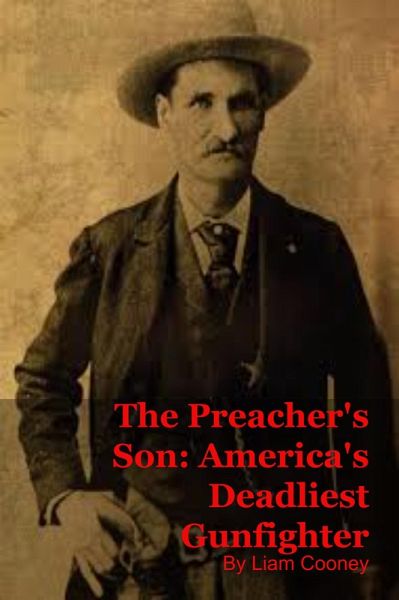
The Preacher's Son: America's Deadliest Gunfighter
John Wesley Hardin embodied America's fundamental contradictions-a Methodist preacher's son who became the deadliest documented gunfighter of the frontier era. His extraordinary journey from religious youth to notorious killer, prison scholar, practicing attorney, and victim of assassination reveals enduring patterns in American identity and mythology.
With approximately twenty-one confirmed killings, Hardin operated during Reconstruction Texas, where personal violence functioned as political expression against perceived illegitimate authority. His autobiography established a comprehensive justification framework that continues to influence American violence narratives.
Hardin's cultural significance transcends his historical existence. Through literature, film, music, and folklore, he evolved from controversial historical figure into cultural icon representing America's complex relationship with individualism, violence, resistance, and redemption.
The persistent fascination with this violent figure reveals America's remarkable capacity for moral compartmentalization-simultaneously condemning and celebrating, rejecting and admiring. This ability to maintain contradictory ethical positions without mutual nullification characterizes broader American mythology.
As both historical figure and cultural symbol, Hardin ultimately represents the frontier paradox-the tension between civilization and violence, law and resistance, moral certainty and ethical ambiguity that continues to define the American experience.
John Wesley Hardin embodied America's fundamental contradictions-a Methodist preacher's son who became the deadliest documented gunfighter of the frontier era. His extraordinary journey from religious youth to notorious killer, prison scholar, practicing attorney, and victim of assassination reveals enduring patterns in American identity and mythology.
With approximately twenty-one confirmed killings, Hardin operated during Reconstruction Texas, where personal violence functioned as political expression against perceived illegitimate authority. His autobiography established a comprehensive justification framework that continues to influence American violence narratives.
Hardin's cultural significance transcends his historical existence. Through literature, film, music, and folklore, he evolved from controversial historical figure into cultural icon representing America's complex relationship with individualism, violence, resistance, and redemption.
The persistent fascination with this violent figure reveals America's remarkable capacity for moral compartmentalization-simultaneously condemning and celebrating, rejecting and admiring. This ability to maintain contradictory ethical positions without mutual nullification characterizes broader American mythology.
As both historical figure and cultural symbol, Hardin ultimately represents the frontier paradox-the tension between civilization and violence, law and resistance, moral certainty and ethical ambiguity that continues to define the American experience.
Dieser Download kann aus rechtlichen Gründen nur mit Rechnungsadresse in A, B, CY, CZ, D, DK, EW, E, FIN, F, GR, H, IRL, I, LT, L, LR, M, NL, PL, P, R, S, SLO, SK ausgeliefert werden.