2,99 €
inkl. MwSt.
Sofort per Download lieferbar
1 °P sammeln

Andere Kunden interessierten sich auch für
") THE PRISONER (eBook, ePUB)1,99 €
THE PRISONER (eBook, ePUB)1,99 €") The Prisoner (eBook, ePUB)1,99 €
The Prisoner (eBook, ePUB)1,99 €") The Prisoner (eBook, ePUB)0,99 €
The Prisoner (eBook, ePUB)0,99 €") The Prisoner of Ankara (eBook, ePUB)6,99 €
The Prisoner of Ankara (eBook, ePUB)6,99 €") All The King's Men (eBook, ePUB)9,99 €
All The King's Men (eBook, ePUB)9,99 €") The Guermantes Way (eBook, ePUB)2,13 €
The Guermantes Way (eBook, ePUB)2,13 €") A Country Doctor (eBook, ePUB)1,06 €
A Country Doctor (eBook, ePUB)1,06 €





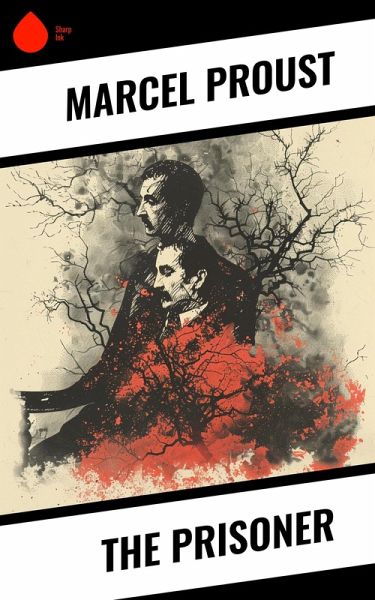
In "The Prisoner," the fifth volume of Marcel Proust's monumental work, "In Search of Lost Time," readers are drawn into the complex interplay of memory, desire, and identity. Proust's narrative weaves an intricate tapestry of subjective experiences, employing a stream-of-consciousness style that immerses the reader in the protagonist's introspective journey. The novel delves into themes of obsession, as the protagonist grapples with love, jealousy, and the elusive nature of time, all set against the backdrop of early 20th-century French society. Proust's rich, lyrical prose invites readers to contemplate the profound connections between self and other in a world fraught with emotional and social entrapment. Marcel Proust, a French novelist and essayist, is celebrated for his deep explorations of memory and the inner workings of human consciousness. Born into an aristocratic family, Proust's personal experiences-particularly his struggles with love and societal expectations-inform the emotional landscapes of his characters. "The Prisoner" reflects Proust's own battles with confinement, both physical and psychological, as he deftly illustrates how desire can lead to a feeling of imprisonment within oneself. This exquisite novel is essential for anyone seeking to understand the intricacies of human emotion. Proust's unparalleled ability to articulate the nuances of love and obsession ensures that "The Prisoner" resonates with readers long after the final page is turned. Its exploration of the boundaries of personal freedom invites contemplation on the nature of desire and the self, making it a compelling read for scholars and literary enthusiasts alike.
Dieser Download kann aus rechtlichen Gründen nur mit Rechnungsadresse in A, B, BG, CY, CZ, D, DK, EW, FIN, F, GR, HR, H, IRL, I, LT, L, LR, M, NL, PL, P, R, S, SLO, SK ausgeliefert werden.
Valentin Louis Georges Eugène Marcel Proust, known as Marcel Proust (1871-1922), is esteemed as one of France's most influential novelists of the twentieth century. His magnum opus, 'À la recherche du temps perdu' ('In Search of Lost Time'), is a monumental seven-part novel, with 'The Prisoner' being its fifth volume. Born in Auteuil, the southwestern sector of Paris's then-rustic 16th arrondissement, Proust grew up in a wealthy and cultured atmosphere, which later influenced his writing. Critically acclaimed for his introspective prose, rich detail, and explorative psychological narrative, Proust pioneered the style of involuntary memory-best captured by the famed 'madeleine episode' where the taste of a madeleine cake dipped in tea evokes an intense involuntary memory. 'The Prisoner', specifically, explores themes of obsessive love and the possessive nature of human relationships, while continuing the broader novel's musings on time, memory, and identity. This exploration unfolds through the lens of the narrator's relationship with Albertine, the titular 'prisoner'. Proust's work remains a cornerstone of literary modernism, and its influence pervades contemporary literature. Scholars and readers alike continue to dissect Proust's intricate narrative structures and his exploration of the inner psyche, which shed light on the human condition and the passage of time. His elaborate sentences and nuanced descriptions make his body of work an enduring testament to his literary genius.
sv_optimiert.jpg "Marcel Proust")
© Suhrkamp Verlag