0,00 €
0,00 €
inkl. MwSt.
Sofort per Download lieferbar

0 °P sammeln
0,00 €
Als Download kaufen
0,00 €
inkl. MwSt.
Sofort per Download lieferbar
0 °P sammeln
Jetzt verschenken
Alle Infos zum eBook verschenken
0,00 €
inkl. MwSt.
Sofort per Download lieferbar
Alle Infos zum eBook verschenken
0 °P sammeln

Andere Kunden interessierten sich auch für
") The Propagation of Misinformation in Social Media (eBook, PDF)0,00 €
The Propagation of Misinformation in Social Media (eBook, PDF)0,00 €") Social Media Communication (eBook, ePUB)48,95 €
Social Media Communication (eBook, ePUB)48,95 €") The Routledge Companion to Media Disinformation and Populism (eBook, ePUB)43,95 €
The Routledge Companion to Media Disinformation and Populism (eBook, ePUB)43,95 €") The Future of Journalism: Risks, Threats and Opportunities (eBook, ePUB)39,95 €
The Future of Journalism: Risks, Threats and Opportunities (eBook, ePUB)39,95 €") Social Media at BBC News (eBook, ePUB)45,95 €
Social Media at BBC News (eBook, ePUB)45,95 €") Analytical Journalism (eBook, ePUB)36,95 €
Analytical Journalism (eBook, ePUB)36,95 €") The Institutions Changing Journalism (eBook, ePUB)37,95 €
The Institutions Changing Journalism (eBook, ePUB)37,95 €







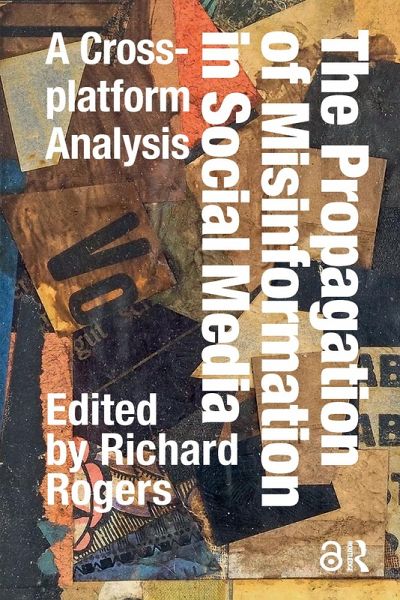
There is growing awareness about how social media circulate extreme viewpoints and turn up the temperature of public debate. Posts that exhibit agitation garner disproportionate engagement. Within this clamour, fringe sources and viewpoints are mainstreaming, and mainstream media are marginalized. This book takes up the mainstreaming of the fringe and the marginalization of the mainstream. In a cross-platform analysis of Google Web Search, Facebook, YouTube, Reddit, Twitter, Instagram, 4chan and TikTok, the authors found that hyperpartisan web operators, alternative influencers and ambivalent commentators are in ascendency. The book can be read as a form of platform criticism. It puts on display the current state of information online, noting how social media platforms have taken on the mantle of accidental authorities, privileging their own on-platform performers and at the same time adjudicating between claims of what is considered acceptable discourse.
Dieser Download kann aus rechtlichen Gründen nur mit Rechnungsadresse in A, B, BG, CY, CZ, D, DK, EW, E, FIN, F, GR, HR, H, IRL, I, LT, L, LR, M, NL, PL, P, R, S, SLO, SK ausgeliefert werden.