21,95 €
21,95 €
inkl. MwSt.
Sofort per Download lieferbar

11 °P sammeln
21,95 €
Als Download kaufen
21,95 €
inkl. MwSt.
Sofort per Download lieferbar
11 °P sammeln
Jetzt verschenken
Alle Infos zum eBook verschenken
21,95 €
inkl. MwSt.
Sofort per Download lieferbar
Alle Infos zum eBook verschenken
11 °P sammeln

Andere Kunden interessierten sich auch für
") The Psychology of Eyewitness Identification (eBook, PDF)21,95 €
The Psychology of Eyewitness Identification (eBook, PDF)21,95 €") Murder, Wrongful Conviction and the Law (eBook, ePUB)41,95 €
Murder, Wrongful Conviction and the Law (eBook, ePUB)41,95 €") Police Intelligence (eBook, ePUB)56,95 €
Police Intelligence (eBook, ePUB)56,95 €") The Psychology of Death Investigations (eBook, ePUB)67,95 €
The Psychology of Death Investigations (eBook, ePUB)67,95 €") Criminalising Coercive Control (eBook, ePUB)19,95 €
Criminalising Coercive Control (eBook, ePUB)19,95 €") Remorse and Criminal Justice (eBook, ePUB)41,95 €
Remorse and Criminal Justice (eBook, ePUB)41,95 €") Problem-Solving Courts, Criminal Justice, and the International Gold Standard (eBook, ePUB)41,95 €
Problem-Solving Courts, Criminal Justice, and the International Gold Standard (eBook, ePUB)41,95 €






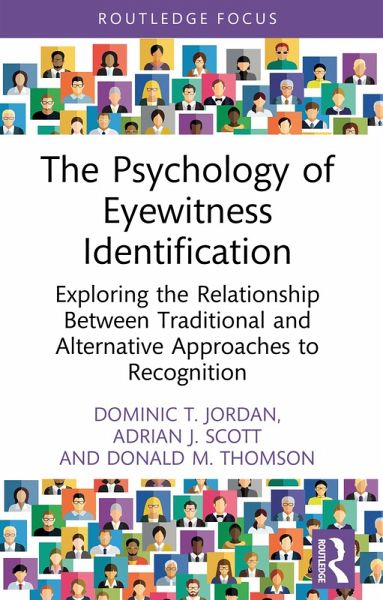
Arguing for a need to modify investigatory and legal processes so that they align with the capabilities of witnesses and reflect the memorial and decision processes that inform recognition judgements, this book examines two radical alternative approaches to lineup-based recognition that do not require witnesses to identify a perpetrator: Non-categorical confidence and non-categorical similarity judgements.
Using empirical data, the authors explore the relationship between identification decisions, confidence judgements, and similarity judgements in lineup-based recognition tasks and reflect on whether similarity underpins more complex judgements of identity and confidence. They also examine the practical utility of confidence and similarity judgements and consider how such alternatives might be conceptualised in a legal context. This book draws on the areas of psychology and law to outline the key issues of identification and calls for a revision in how we think about, obtain, and present eyewitness evidence from lineups.
Prompting a consideration of new solutions and concepts to help witness errors become a problem of the past, The Psychology of Eyewitness Identification will be of great interest to students, scholars, and practitioners across the fields of criminal justice, psychology, and law, and particularly those with a focus on eyewitness identification.
Using empirical data, the authors explore the relationship between identification decisions, confidence judgements, and similarity judgements in lineup-based recognition tasks and reflect on whether similarity underpins more complex judgements of identity and confidence. They also examine the practical utility of confidence and similarity judgements and consider how such alternatives might be conceptualised in a legal context. This book draws on the areas of psychology and law to outline the key issues of identification and calls for a revision in how we think about, obtain, and present eyewitness evidence from lineups.
Prompting a consideration of new solutions and concepts to help witness errors become a problem of the past, The Psychology of Eyewitness Identification will be of great interest to students, scholars, and practitioners across the fields of criminal justice, psychology, and law, and particularly those with a focus on eyewitness identification.
Dieser Download kann aus rechtlichen Gründen nur mit Rechnungsadresse in A, B, BG, CY, CZ, D, DK, EW, E, FIN, F, GR, HR, H, IRL, I, LT, L, LR, M, NL, PL, P, R, S, SLO, SK ausgeliefert werden.