71,95 €
71,95 €
inkl. MwSt.
Sofort per Download lieferbar

36 °P sammeln
71,95 €
Als Download kaufen
71,95 €
inkl. MwSt.
Sofort per Download lieferbar
36 °P sammeln
Jetzt verschenken
Alle Infos zum eBook verschenken
71,95 €
inkl. MwSt.
Sofort per Download lieferbar
Alle Infos zum eBook verschenken
36 °P sammeln

Andere Kunden interessierten sich auch für
") The German Idealism Reader (eBook, PDF)37,95 €
The German Idealism Reader (eBook, PDF)37,95 €") The Philosophy of Role-Playing Games (eBook, PDF)71,95 €
The Philosophy of Role-Playing Games (eBook, PDF)71,95 €") Pragmatism and the Reflective Life (eBook, PDF)36,95 €
Pragmatism and the Reflective Life (eBook, PDF)36,95 €") The Reinvention of Idealism (eBook, ePUB)71,95 €
The Reinvention of Idealism (eBook, ePUB)71,95 €") Community As Healing (eBook, PDF)23,95 €
Community As Healing (eBook, PDF)23,95 €") The Bloomsbury Companion to Pragmatism (eBook, PDF)30,95 €
The Bloomsbury Companion to Pragmatism (eBook, PDF)30,95 €") Giovanni Gentile and the State of Contemporary Constructivism (eBook, PDF)11,95 €
Giovanni Gentile and the State of Contemporary Constructivism (eBook, PDF)11,95 €


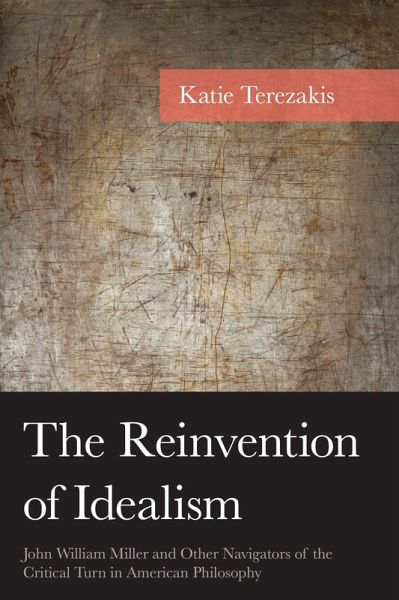
To understand the role Kant's critical idealism has played in the development of American philosophies, one must understand why the classical American pragmatists, different realists, and other anti-ideal theorists reject Kant's critical project, no less than how idealism has been evolving in transcendental linguistics, in philosophies of history and of technology, and in ethics. This book reconstructs the little-known system of twentieth-century American philosopher John William Miller (1895-1978), who contributed to the reinvention of critical idealism in ways that might have been too radical for his own moment, but which bear importance for ours. American philosophies tend to first fix their positions by the lodestar of Kantianism, even if their goal is to move away from it. The book tracks encounters with critical idealism among the classical American pragmatists, and in more recent expressions of anti-ideal theory and object-oriented ontology. It assesses Sellars' transcendental linguistics and Korsgaard's philosophy of agency as well as pragmatist feminist reconsiderations of the source of normative commitments. Along the way, the work finds the critical project to be evolving still, albeit in ways not anticipated by Kant.