37,95 €
inkl. MwSt.
Sofort per Download lieferbar
19 °P sammeln

Andere Kunden interessierten sich auch für
") Family Therapy Around the World (eBook, ePUB)41,95 €
Family Therapy Around the World (eBook, ePUB)41,95 €") Family Systems/Family Therapy (eBook, ePUB)22,95 €
Family Systems/Family Therapy (eBook, ePUB)22,95 €") Finishing Well: Aging And Reparation In The Intergenerational Family (eBook, ePUB)48,95 €
Finishing Well: Aging And Reparation In The Intergenerational Family (eBook, ePUB)48,95 €") The Use of Self in Therapy (eBook, ePUB)41,95 €
The Use of Self in Therapy (eBook, ePUB)41,95 €") Animals as the Third in Relational Psychotherapy (eBook, ePUB)28,95 €
Animals as the Third in Relational Psychotherapy (eBook, ePUB)28,95 €") The Marriage and Family Therapy Career Guide (eBook, ePUB)37,95 €
The Marriage and Family Therapy Career Guide (eBook, ePUB)37,95 €") The Routledge International Handbook of Couple and Family Therapy (eBook, ePUB)48,95 €
The Routledge International Handbook of Couple and Family Therapy (eBook, ePUB)48,95 €






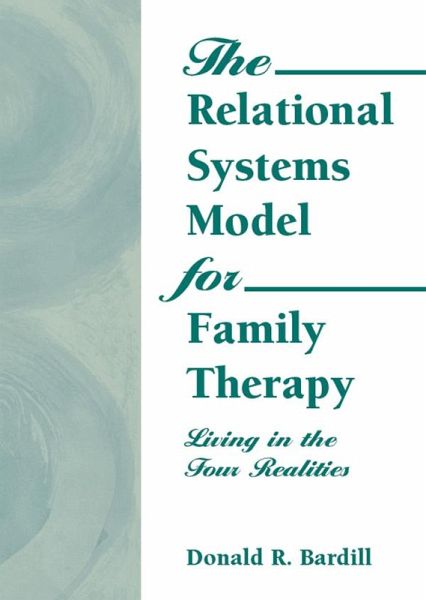
The Relational Systems Model for Family Therapy presents a multi-systems approach to family therapy that teaches the therapist important self-differentiating capacities that set the tone for creating a powerful therapeutic atmosphere. While the model demands no specific treatment procedures, it does rely on the therapist's capacity to adhere to its basic ideas, as she/he is the most vital factor in the model's success.In The Relational Systems Model for Family Therapy, Author Donald R. Bardill encourages the therapist to be the learning vehicle for the integration of the four realities of life (self, other, context, spiritual) and the differentiating process that is necessary for human survival, safety, and growth. Understanding this model allows therapists to lead clients to heightened self-awareness and the realization of their human potential--both important factors for intellectual growth, emotional maturity, and problem solving. To this end, readers learn about:
- the self-differentiating therapist--the person-of-the-therapist is the crucial variable in an effective family treatment process
- the facing process--the client faces such issues as self-identity, life-purpose, thought and behavior patterns, emotionalized fears, and the future
- emotionalized right/wrong--focus is on consequences of actions rather than right/wrong judgments in relationship issues
- life stances--the uniqueness of the individual affects their connection to the life realities
- family grid--a way for the therapist to organize and talk about important family systems dynamics
- the therapeutic paradox--the client's worldview is examined through the therapist's worldview and a new worldview is formedThe Relational Systems Model for Family Therapy is an important handbook for practitioners and students in the fields of clinical social work, psychology, marriage and family therapy, mental health counseling, counseling psychology, pastoral counseling, and psychiatric nursing. The book is also useful as a supplemental text for advanced undergraduate classes and postgraduate seminars in family therapy and family counseling. The self-differentiation nature of the content also lends this book useful to self-help readers.
Dieser Download kann aus rechtlichen Gründen nur mit Rechnungsadresse in A, B, BG, CY, CZ, D, DK, EW, E, FIN, F, GR, HR, H, IRL, I, LT, L, LR, M, NL, PL, P, R, S, SLO, SK ausgeliefert werden.